82,95 €
82,95 €
inkl. MwSt.
Sofort per Download lieferbar

41 °P sammeln
82,95 €
Als Download kaufen
82,95 €
inkl. MwSt.
Sofort per Download lieferbar
41 °P sammeln
Jetzt verschenken
Alle Infos zum eBook verschenken
82,95 €
inkl. MwSt.
Sofort per Download lieferbar
Alle Infos zum eBook verschenken
41 °P sammeln

Andere Kunden interessierten sich auch für
") Socio-Analytic Dialogue (eBook, ePUB)82,95 €
Socio-Analytic Dialogue (eBook, ePUB)82,95 €") Happiness and Hardship (eBook, PDF)14,95 €
Happiness and Hardship (eBook, PDF)14,95 €") Psychology and Behavioral Economics (eBook, PDF)39,95 €
Psychology and Behavioral Economics (eBook, PDF)39,95 €") Developing Minds (eBook, PDF)44,95 €
Developing Minds (eBook, PDF)44,95 €") Children and Television (eBook, PDF)42,95 €
Children and Television (eBook, PDF)42,95 €") Multicultural Psychology (eBook, PDF)97,95 €
Multicultural Psychology (eBook, PDF)97,95 €") Teaching Culture and Psychology (eBook, PDF)45,95 €
Teaching Culture and Psychology (eBook, PDF)45,95 €







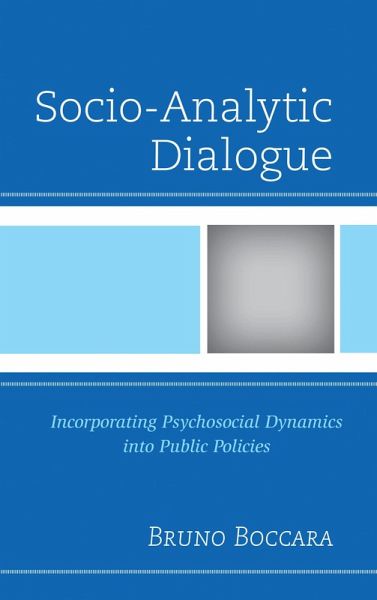
In this book, Bruno Boccara argues that complex and changing psychosocial issues, in particular those related to the societal unconscious, must be assessed and incorporated in public policy analysis through Socio-Analytic Dialogue, a psychosocial approach aimed at understanding and addressing emotional issues surrounding public policies worldwide through empathic dialogue. Taking into account societal level anxieties and defense mechanisms-at both the conscious and unconscious levels-when formulating and implementing policies increases the awareness and understanding of psychosocial issues, and decreases the need, and therefore the likelihood, of societies adopting regressive social defenses. Covering international topics including research from the United States; Tunisia and the Arab spring; discontent and riots in Chile, Israel, and the United Kingdom; and humiliation in Sub-Saharan Africa, the book identifies how country-level psychosocial dynamics impact public policies, and suggests that policies themselves can become social defenses. Two case studies, firstly on the World Bank and foreign aid, and secondly on Bolivia, illustrate how a deep understanding of psychosocial issues can provide new insights on the functioning of organizations (perverse dynamics) and on a country's policy choices and economic performance. Building upon recent work in sociology and psychoanalysis, the book demonstrates that Socio-Analytic Dialogue has the potential to make a significant contribution to understanding worldwide discontent and anxieties.