
8,99 €
8,99 €
inkl. MwSt.
Sofort per Download lieferbar

0 °P sammeln
8,99 €
Als Download kaufen
8,99 €
inkl. MwSt.
Sofort per Download lieferbar
0 °P sammeln
Jetzt verschenken
Alle Infos zum eBook verschenken
8,99 €
inkl. MwSt.
Sofort per Download lieferbar
Alle Infos zum eBook verschenken
0 °P sammeln

Andere Kunden interessierten sich auch für
") Una Serie introductoria: Un enfoque sociocultural del comportamiento (eBook, ePUB)4,99 €
Una Serie introductoria: Un enfoque sociocultural del comportamiento (eBook, ePUB)4,99 €") Expired Mindsets (eBook, ePUB)7,99 €
Expired Mindsets (eBook, ePUB)7,99 €") Foundations of Health Service Psychology (eBook, ePUB)50,95 €
Foundations of Health Service Psychology (eBook, ePUB)50,95 €") Cognitive Development (eBook, ePUB)7,99 €
Cognitive Development (eBook, ePUB)7,99 €") Social Learning Theory (eBook, ePUB)7,99 €
Social Learning Theory (eBook, ePUB)7,99 €") Self-Actualization Theory (eBook, ePUB)7,99 €
Self-Actualization Theory (eBook, ePUB)7,99 €") The Development of Judgment and Decision Making in Children and Adolescents (eBook, ePUB)55,95 €
The Development of Judgment and Decision Making in Children and Adolescents (eBook, ePUB)55,95 €



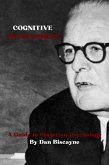



Lev Vygotsky's Sociocultural Theory stands as one of the most influential frameworks in modern psychology, offering profound insights into how human thought and behavior are shaped by the social and cultural environments in which they develop. Emerging from early 20th-century Russia-a period of great intellectual and political transformation-Vygotsky's ideas challenged the dominant psychological paradigms of his time, emphasizing that learning and cognitive growth are not isolated, internal processes, but deeply interactive, collective, and culturally mediated acts.
This book seeks to illuminate the relevance of Vygotsky's vision. Far more than a theory of child development, the sociocultural perspective reveals how language, tools, and social interaction form the very foundation of human consciousness. Concepts such as the Zone of Proximal Development, More Knowledgeable Others, scaffolding, and mediated learning have become cornerstones in education, developmental psychology, and even fields such as artificial intelligence and organizational learning. Yet, despite their ubiquity, these ideas are often simplified or detached from their original philosophical depth. The goal of this volume is to return to Vygotsky's writings, to trace their intellectual roots, and to explore their implications for contemporary psychological thought and practice.
Throughout these pages, you will encounter both the historical context and the modern interpretations of Vygotsky's work. We examine how his theory bridges the individual and the collective, thought and language, culture and mind; and how sociocultural principles continue to inform pedagogy, therapy, cross-cultural research, and digital learning environments.
In revisiting Vygotsky's legacy, this book invites scholars, students, and practitioners alike to view human development as a fundamentally social enterprise-one that unfolds through dialogue, cooperation, and shared meaning. It is a reminder that to understand the mind, we must first understand the culture that speaks through it.
This book seeks to illuminate the relevance of Vygotsky's vision. Far more than a theory of child development, the sociocultural perspective reveals how language, tools, and social interaction form the very foundation of human consciousness. Concepts such as the Zone of Proximal Development, More Knowledgeable Others, scaffolding, and mediated learning have become cornerstones in education, developmental psychology, and even fields such as artificial intelligence and organizational learning. Yet, despite their ubiquity, these ideas are often simplified or detached from their original philosophical depth. The goal of this volume is to return to Vygotsky's writings, to trace their intellectual roots, and to explore their implications for contemporary psychological thought and practice.
Throughout these pages, you will encounter both the historical context and the modern interpretations of Vygotsky's work. We examine how his theory bridges the individual and the collective, thought and language, culture and mind; and how sociocultural principles continue to inform pedagogy, therapy, cross-cultural research, and digital learning environments.
In revisiting Vygotsky's legacy, this book invites scholars, students, and practitioners alike to view human development as a fundamentally social enterprise-one that unfolds through dialogue, cooperation, and shared meaning. It is a reminder that to understand the mind, we must first understand the culture that speaks through it.
Dieser Download kann aus rechtlichen Gründen nur mit Rechnungsadresse in A, B, BG, CY, CZ, D, DK, EW, E, FIN, F, GR, H, IRL, I, LT, L, LR, M, NL, PL, P, R, S, SLO, SK ausgeliefert werden.