8,99 €
8,99 €
inkl. MwSt.
Sofort per Download lieferbar

0 °P sammeln
8,99 €
Als Download kaufen
8,99 €
inkl. MwSt.
Sofort per Download lieferbar
0 °P sammeln
Jetzt verschenken
Alle Infos zum eBook verschenken
8,99 €
inkl. MwSt.
Sofort per Download lieferbar
Alle Infos zum eBook verschenken
0 °P sammeln

Andere Kunden interessierten sich auch für
") 21st Century Executive Life (eBook, ePUB)21,99 €
21st Century Executive Life (eBook, ePUB)21,99 €") E-Systems for the 21st Century (eBook, ePUB)294,95 €
E-Systems for the 21st Century (eBook, ePUB)294,95 €") The Algorithmic Divide (eBook, ePUB)13,94 €
The Algorithmic Divide (eBook, ePUB)13,94 €") The Closing of the Auditor's Mind? (eBook, ePUB)44,95 €
The Closing of the Auditor's Mind? (eBook, ePUB)44,95 €") 12 CIO Personas: The Digital CIO's Situational Leadership Practices (eBook, ePUB)6,99 €
12 CIO Personas: The Digital CIO's Situational Leadership Practices (eBook, ePUB)6,99 €") 21st Century Chinese Cyberwarfare (eBook, ePUB)42,95 €
21st Century Chinese Cyberwarfare (eBook, ePUB)42,95 € (eBook, ePUB)") Encyclopaedia of Management for 21st Century (Effective Computer Management) (eBook, ePUB)142,95 €
Encyclopaedia of Management for 21st Century (Effective Computer Management) (eBook, ePUB)142,95 €



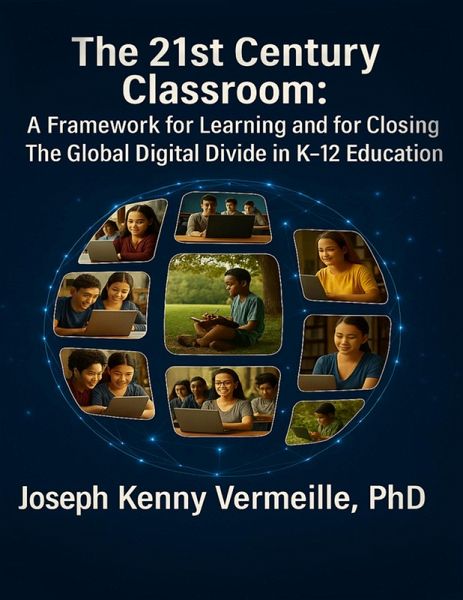
This book presents a rigorous, integrative framework for advancing K-12 education using technology, blending developmental theory, leading research, and practical solutions. Grounded in the seminal philosophies of Jean Piaget, Lev Vygotsky, and Jerome Bruner, it articulates how learning science, constructivist pedagogy, contemporary literature, and real-world innovation converge to meet the demands of the modern educational landscape.
The work unfolds in three major parts:
· Theoretical Foundations: Deeply analyzes the learning, cognitive, and developmental theories that underpin effective technology adoption-emphasizing curriculum design, scaffolding, and social collaboration.
· Research & Literary Synthesis: Synthesizes nearly two decades of educational literature around core themes including constructivism, Web 2.0 technologies, integration of standards, technology practicum, and the digital divide-always with an eye toward equity, access, and inclusivity.
· Applied Frameworks & Global Solutions: Delivers actionable guidance for high-tech, low-tech, and no-tech settings, featuring practical models for adaptive learning, offline and blended resources, teacher training, and community partnerships. Special focus is given to language tools for multilingual and indigenous contexts, scalable low-resource interventions, and strategies for bridging infrastructure gaps.
Supplemented by appendices that catalogue and evaluate EdTech tools, summarize best practices, rank global language and accessibility solutions, and explore the role of knowledge brokers, the book equips educators, administrators, policymakers, and innovators with an adaptable roadmap. Its evidence-based approach draws from case studies and nearly 90 peer-reviewed articles, distilling what works across diverse global educational settings.
A Comprehensive K-12 Educational Technology Framework for the 21st Century is an authoritative guide to creating inclusive, learner-centered, and future-ready K-12 education through technology-ensuring that every child, regardless of context, has the opportunity to thrive in a rapidly changing world.
The work unfolds in three major parts:
· Theoretical Foundations: Deeply analyzes the learning, cognitive, and developmental theories that underpin effective technology adoption-emphasizing curriculum design, scaffolding, and social collaboration.
· Research & Literary Synthesis: Synthesizes nearly two decades of educational literature around core themes including constructivism, Web 2.0 technologies, integration of standards, technology practicum, and the digital divide-always with an eye toward equity, access, and inclusivity.
· Applied Frameworks & Global Solutions: Delivers actionable guidance for high-tech, low-tech, and no-tech settings, featuring practical models for adaptive learning, offline and blended resources, teacher training, and community partnerships. Special focus is given to language tools for multilingual and indigenous contexts, scalable low-resource interventions, and strategies for bridging infrastructure gaps.
Supplemented by appendices that catalogue and evaluate EdTech tools, summarize best practices, rank global language and accessibility solutions, and explore the role of knowledge brokers, the book equips educators, administrators, policymakers, and innovators with an adaptable roadmap. Its evidence-based approach draws from case studies and nearly 90 peer-reviewed articles, distilling what works across diverse global educational settings.
A Comprehensive K-12 Educational Technology Framework for the 21st Century is an authoritative guide to creating inclusive, learner-centered, and future-ready K-12 education through technology-ensuring that every child, regardless of context, has the opportunity to thrive in a rapidly changing world.
Dieser Download kann aus rechtlichen Gründen nur mit Rechnungsadresse in A, B, CY, CZ, D, DK, EW, E, FIN, F, GR, H, IRL, I, LT, L, LR, M, NL, PL, P, R, S, SLO, SK ausgeliefert werden.