
104,95 €
104,95 €
inkl. MwSt.
Sofort per Download lieferbar

52 °P sammeln
104,95 €
Als Download kaufen
104,95 €
inkl. MwSt.
Sofort per Download lieferbar
52 °P sammeln
Jetzt verschenken
Alle Infos zum eBook verschenken
104,95 €
inkl. MwSt.
Sofort per Download lieferbar
Alle Infos zum eBook verschenken
52 °P sammeln

Andere Kunden interessierten sich auch für
") Chinese Legality (eBook, PDF)37,95 €
Chinese Legality (eBook, PDF)37,95 €") Mapping Chinese Investment in South Asia (eBook, PDF)88,95 €
Mapping Chinese Investment in South Asia (eBook, PDF)88,95 €") Hong Kong Identity (eBook, PDF)112,95 €
Hong Kong Identity (eBook, PDF)112,95 €") The Political Economy of Lobbying (eBook, PDF)120,95 €
The Political Economy of Lobbying (eBook, PDF)120,95 €") China's Social Credit System (eBook, PDF)96,95 €
China's Social Credit System (eBook, PDF)96,95 €") Democratizing China's Political Imaginaries (eBook, PDF)104,95 €
Democratizing China's Political Imaginaries (eBook, PDF)104,95 €") Communicating Climate Change in China (eBook, PDF)112,95 €
Communicating Climate Change in China (eBook, PDF)112,95 €




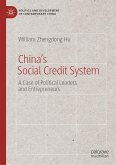


This book explores the accountability paradox in the Chinese bureaucracy. The purpose of accountability is to foster compliance and responsiveness among bureaucrats, but instead, it causes bureaucrats' coping tactics, blame-avoiding strategies, and defensive behavior, which constitutes a paradox or pathology of accountability. The accountability paradox is well documented in Western countries, but scarce attention has been paid to the accountability system in the Chinese context. It appears that the accountability paradox is also present in the Chinese context since a series of major transformations were initiated to overhaul the accountability system in China following the 18th National Party Congress in 2012, but exhibits characteristics that are unique to China. In a tightly argued book driven by comprehensive interviews and survey investigations, Dr. Tu sheds light on a subject of interest to sinologists, political scientists, and journalists.
Dieser Download kann aus rechtlichen Gründen nur mit Rechnungsadresse in A, B, BG, CY, CZ, D, DK, EW, E, FIN, F, GR, HR, H, IRL, I, LT, L, LR, M, NL, PL, P, R, S, SLO, SK ausgeliefert werden.