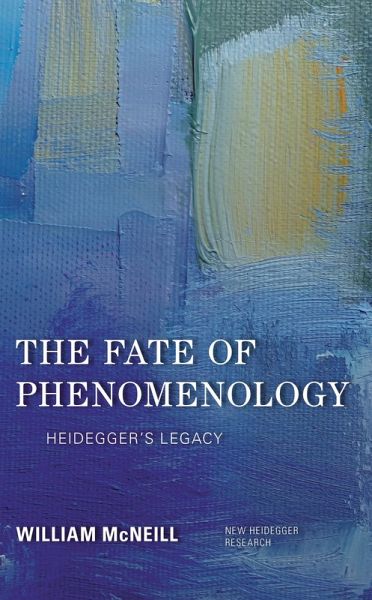
30,95 €
30,95 €
inkl. MwSt.
Sofort per Download lieferbar

15 °P sammeln
30,95 €
Als Download kaufen
30,95 €
inkl. MwSt.
Sofort per Download lieferbar
15 °P sammeln
Jetzt verschenken
Alle Infos zum eBook verschenken
30,95 €
inkl. MwSt.
Sofort per Download lieferbar
Alle Infos zum eBook verschenken
15 °P sammeln

Andere Kunden interessierten sich auch für
") After Heidegger? (eBook, ePUB)36,95 €
After Heidegger? (eBook, ePUB)36,95 €") The Fate of Phenomenology (eBook, PDF)30,95 €
The Fate of Phenomenology (eBook, PDF)30,95 €") Heidegger's Phenomenology of Perception (eBook, ePUB)34,95 €
Heidegger's Phenomenology of Perception (eBook, ePUB)34,95 €") Agency, Freedom, and Responsibility in the Early Heidegger (eBook, ePUB)22,95 €
Agency, Freedom, and Responsibility in the Early Heidegger (eBook, ePUB)22,95 €") Correspondence: 1919-1973 (eBook, ePUB)27,95 €
Correspondence: 1919-1973 (eBook, ePUB)27,95 €") Heidegger's Phenomenology of Perception (eBook, ePUB)31,95 €
Heidegger's Phenomenology of Perception (eBook, ePUB)31,95 €") Contexts of Suffering (eBook, ePUB)34,95 €
Contexts of Suffering (eBook, ePUB)34,95 €




It can be easily argued that the radical nature and challenge of Heidegger's thinking is grounded in his early embrace of the phenomenological method as providing an access to concrete lived experience (or "factical life," as he called it) beyond the imposition of theoretical constructs such as "subject" and "object," "mind" and "body." Yet shortly after the publication of his groundbreaking work Being and Time, Heidegger appeared to abandon phenomenology as the method of philosophy. Why? Heidegger was conspicuously quiet on this issue. Here, William McNeill examines the question of the fate of phenomenology in Heidegger's thinking and its transformation into a "thinking of Being" that regards its task as that of "letting be." The relation between phenomenology and "letting be," McNeill argues, is by no means a straightforward one. It poses the question of whether, and to what extent, Heidegger's thought of his middle and late periods still needs phenomenology in order to accomplish its task-and if so, what kind of phenomenology. What becomes of phenomenology in the course of Heidegger's thinking?