
21,95 €
21,95 €
inkl. MwSt.
Sofort per Download lieferbar

11 °P sammeln
21,95 €
Als Download kaufen
21,95 €
inkl. MwSt.
Sofort per Download lieferbar
11 °P sammeln
Jetzt verschenken
Alle Infos zum eBook verschenken
21,95 €
inkl. MwSt.
Sofort per Download lieferbar
Alle Infos zum eBook verschenken
11 °P sammeln

Andere Kunden interessierten sich auch für
") Revolution of the Ordinary (eBook, ePUB)16,95 €
Revolution of the Ordinary (eBook, ePUB)16,95 €") The Animal Claim (eBook, ePUB)13,95 €
The Animal Claim (eBook, ePUB)13,95 €") The Corporate Commonwealth (eBook, ePUB)22,95 €
The Corporate Commonwealth (eBook, ePUB)22,95 €") The Poet's Freedom (eBook, ePUB)22,95 €
The Poet's Freedom (eBook, ePUB)22,95 €") Dante & the Limits of the Law (eBook, ePUB)13,95 €
Dante & the Limits of the Law (eBook, ePUB)13,95 €") The Sexuality of History (eBook, ePUB)32,09 €
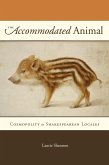
The Sexuality of History (eBook, ePUB)32,09 €") The Accommodated Animal (eBook, ePUB)22,95 €
The Accommodated Animal (eBook, ePUB)22,95 €


In recent years, the rise of fundamentalism and a related turn to religion in the humanities have led to a powerful resurgence of interest in the problem of political theology. In a critique of this contemporary fascination with the theological underpinnings of modern politics, Victoria Kahn proposes a return to secularism-whose origins she locates in the art, literature, and political theory of the early modern period-and argues in defense of literature and art as a force for secular liberal culture. Kahn draws on theorists such as Carl Schmitt, Leo Strauss, Walter Benjamin, and Hannah Arendt and their readings of Shakespeare, Hobbes, Machiavelli, and Spinoza to illustrate that the dialogue between these modern and early modern figures can help us rethink the contemporary problem of political theology. Twentieth-century critics, she shows, saw the early modern period as a break from the older form of political theology that entailed the theological legitimization of the state. Rather, the period signaled a new emphasis on a secular notion of human agency and a new preoccupation with the ways art and fiction intersected the terrain of religion.