17,95 €
17,95 €
inkl. MwSt.
Sofort per Download lieferbar

9 °P sammeln
17,95 €
Als Download kaufen
17,95 €
inkl. MwSt.
Sofort per Download lieferbar
9 °P sammeln
Jetzt verschenken
Alle Infos zum eBook verschenken
17,95 €
inkl. MwSt.
Sofort per Download lieferbar
Alle Infos zum eBook verschenken
9 °P sammeln

Andere Kunden interessierten sich auch für
") The Improbability of Othello (eBook, ePUB)13,95 €
The Improbability of Othello (eBook, ePUB)13,95 €") The Moment of Racial Sight (eBook, ePUB)13,95 €
The Moment of Racial Sight (eBook, ePUB)13,95 €") The Corporate Commonwealth (eBook, ePUB)22,95 €
The Corporate Commonwealth (eBook, ePUB)22,95 €") The Animal Claim (eBook, ePUB)13,95 €
The Animal Claim (eBook, ePUB)13,95 €") The Reformation of Emotions in the Age of Shakespeare (eBook, ePUB)22,95 €
The Reformation of Emotions in the Age of Shakespeare (eBook, ePUB)22,95 €") Romanticism and the Question of the Stranger (eBook, ePUB)21,95 €
Romanticism and the Question of the Stranger (eBook, ePUB)21,95 €") Infidel Poetics (eBook, ePUB)13,95 €
Infidel Poetics (eBook, ePUB)13,95 €


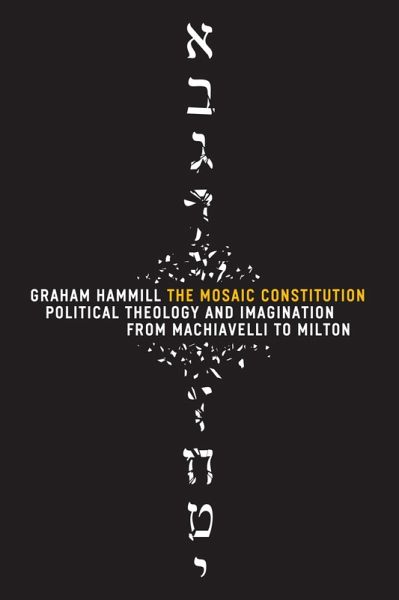
It is a common belief that scripture has no place in modern, secular politics. Graham Hammill challenges this notion in The Mosaic Constitution, arguing that Moses's constitution of Israel, which created people bound by the rule of law, was central to early modern writings about government and state.
Hammill shows how political writers from Machiavelli to Spinoza drew on Mosaic narrative to imagine constitutional forms of government. At the same time, literary writers like Christopher Marlowe, Michael Drayton, and John Milton turned to Hebrew scripture to probe such fundamental divisions as those between populace and multitude, citizenship and race, and obedience and individual choice. As these writers used biblical narrative to fuse politics with the creative resources of language, Mosaic narrative also gave them a means for exploring divine authority as a product of literary imagination. The first book to place Hebrew scripture at the cutting edge of seventeenth-century literary and political innovation, The Mosaic Constitution offers a fresh perspective on political theology and the relations between literary representation and the founding of political communities.
Hammill shows how political writers from Machiavelli to Spinoza drew on Mosaic narrative to imagine constitutional forms of government. At the same time, literary writers like Christopher Marlowe, Michael Drayton, and John Milton turned to Hebrew scripture to probe such fundamental divisions as those between populace and multitude, citizenship and race, and obedience and individual choice. As these writers used biblical narrative to fuse politics with the creative resources of language, Mosaic narrative also gave them a means for exploring divine authority as a product of literary imagination. The first book to place Hebrew scripture at the cutting edge of seventeenth-century literary and political innovation, The Mosaic Constitution offers a fresh perspective on political theology and the relations between literary representation and the founding of political communities.