Sie sind bereits eingeloggt. Klicken Sie auf 2. tolino select Abo, um fortzufahren.
Bitte loggen Sie sich zunächst in Ihr Kundenkonto ein oder registrieren Sie sich bei bücher.de, um das eBook-Abo tolino select nutzen zu können.
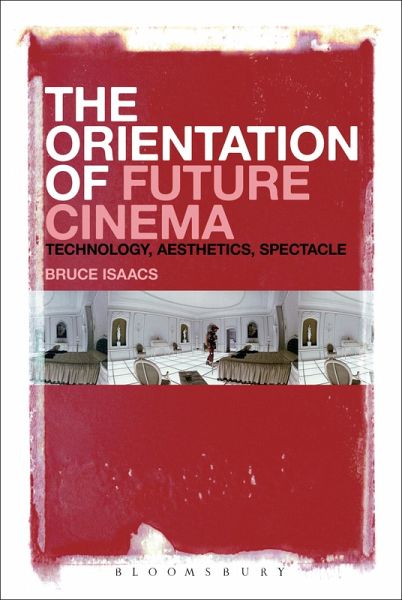
What is the fate of cinema in an age of new technologies, new aesthetic styles, new modes of cultural production and consumption? What becomes of cinema and a century-long history of the moving image when the theatre is outmoded as a social and aesthetic space, as celluloid gives over to digital technology, as the art-house and multiplex are overtaken by a proliferation of home entertainment systems? The Orientation of Future Cinema offers an ambitious and compelling argument for the continued life of cinema as image, narrative and experience. Commencing with Lumière's Arrival of a Train at a…mehr
What is the fate of cinema in an age of new technologies, new aesthetic styles, new modes of cultural production and consumption? What becomes of cinema and a century-long history of the moving image when the theatre is outmoded as a social and aesthetic space, as celluloid gives over to digital technology, as the art-house and multiplex are overtaken by a proliferation of home entertainment systems? The Orientation of Future Cinema offers an ambitious and compelling argument for the continued life of cinema as image, narrative and experience. Commencing with Lumière's Arrival of a Train at a Station, Bruce Isaacs confronts the threat of contemporary digital technologies and processes by returning to cinema's complex history as a technological and industrial phenomenon. The technology of moving images has profoundly changed; and yet cinema materialises ever more forcefully in digital capture and augmentation, 3-D perception and affect, High Frame Rate cinema, and the evolution of spectacle as the dominant aesthetic mode in contemporary studio production.
Die Herstellerinformationen sind derzeit nicht verfügbar.
Autorenporträt
Bruce Isaacs is Associate Professor and Chair of Film Studies at the University of Sydney, Australia. He is the author of three books on film history and aesthetics and is the co-creator and co-host of the popular podcast, Film Versus Film. He is a specialist in American cinema and Hollywood, with a special focus on the relationship between mainstream studio cinema and independent film traditions.
Inhaltsangabe
Part 1: The Age of Late Cinema Chapter 1: What is Cinema? Chapter 2: The Question of Cinema Art: The Legitimacy of Film Style Chapter 3: The Effect of the Screen - The Synthetic Narrative - The Synthetic Image Part 2: High Concept Cinema: Image, Effect, Spectacle Chapter 4: Historicizing Concept Cinema: A Crisis in the Image Chapter 5: The Industrial Context of High Concept Production: Continuities and Discontinuities Chapter 6: Classical High Concept Aesthetics - A Case Study of Steven Spielberg and James Cameron - Incorporating Cinema: The Commoditization of the Image Part 3: Beyond Cinema: Reflections on a Future Chapter 7: New Technologies of the Image Chapter 8: The New Wave - Christopher Nolan - Michael Bay - Roland Emmerich Chapter 9: Future Modalities of the Image (The Paradox of High Concept 3-D Cinema) Chapter 10: The Orientation of Future Cinema
Es gelten unsere Allgemeinen Geschäftsbedingungen: www.buecher.de/agb
Impressum
www.buecher.de ist ein Internetauftritt der buecher.de internetstores GmbH
Geschäftsführung: Monica Sawhney | Roland Kölbl | Günter Hilger
Sitz der Gesellschaft: Batheyer Straße 115 - 117, 58099 Hagen
Postanschrift: Bürgermeister-Wegele-Str. 12, 86167 Augsburg
Amtsgericht Hagen HRB 13257
Steuernummer: 321/5800/1497
USt-IdNr: DE450055826