13,95 €
13,95 €
inkl. MwSt.
Sofort per Download lieferbar

7 °P sammeln
13,95 €
Als Download kaufen
13,95 €
inkl. MwSt.
Sofort per Download lieferbar
7 °P sammeln
Jetzt verschenken
Alle Infos zum eBook verschenken
13,95 €
inkl. MwSt.
Sofort per Download lieferbar
Alle Infos zum eBook verschenken
7 °P sammeln

Andere Kunden interessierten sich auch für
") The Other Renaissance (eBook, ePUB)31,02 €
The Other Renaissance (eBook, ePUB)31,02 €") The Corporate Commonwealth (eBook, ePUB)22,95 €
The Corporate Commonwealth (eBook, ePUB)22,95 €") The Accommodated Animal (eBook, ePUB)22,95 €
The Accommodated Animal (eBook, ePUB)22,95 €") The Lucretian Renaissance (eBook, ePUB)13,95 €
The Lucretian Renaissance (eBook, ePUB)13,95 €") Posthumous Love (eBook, ePUB)31,95 €
Posthumous Love (eBook, ePUB)31,95 €") Petrarch (eBook, ePUB)13,95 €
Petrarch (eBook, ePUB)13,95 €") The Improbability of Othello (eBook, ePUB)13,95 €
The Improbability of Othello (eBook, ePUB)13,95 €



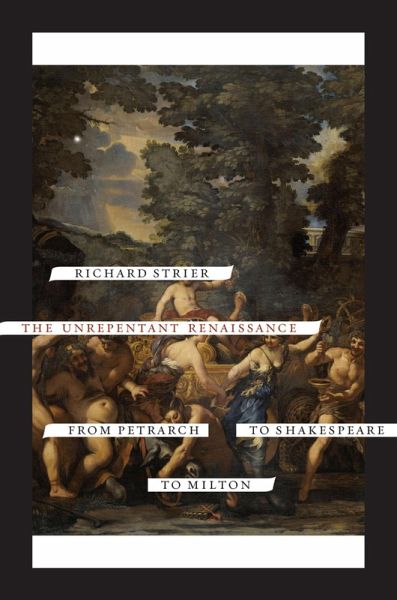
Who during the Renaissance could have dissented from the values of reason and restraint, patience and humility, rejection of the worldly and the physical? These widely articulated values were part of the inherited Christian tradition and were reinforced by key elements in the Renaissance, especially the revival of Stoicism and Platonism. This book is devoted to those who did dissent from them.Richard Strier reveals that many long-recognized major texts did question the most traditional values and uncovers a Renaissance far more bumptious and affirmative than much recent scholarship has allowed. The Unrepentant Renaissance counters the prevalent view of the period as dominated by the regulation of bodies and passions, aiming to reclaim the Renaissance as an era happily churning with surprising, worldly, and self -assertive energies. Reviving the perspective of Jacob Burckhardt and Nietzsche, Strier provides fresh and uninhibited readings of texts by Petrarch, More, Shakespeare, Ignatius Loyola, Montaigne, Descartes, and Milton. Strier's lively argument will stir debate throughout the field of Renaissance studies.