72,95 €
72,95 €
inkl. MwSt.
Sofort per Download lieferbar

36 °P sammeln
72,95 €
Als Download kaufen
72,95 €
inkl. MwSt.
Sofort per Download lieferbar
36 °P sammeln
Jetzt verschenken
Alle Infos zum eBook verschenken
72,95 €
inkl. MwSt.
Sofort per Download lieferbar
Alle Infos zum eBook verschenken
36 °P sammeln

Andere Kunden interessierten sich auch für
") Was the Good Samaritan a Bad Economist? (eBook, PDF)72,95 €
Was the Good Samaritan a Bad Economist? (eBook, PDF)72,95 €") Unlocking the Wealth of Indian Nations (eBook, ePUB)37,95 €
Unlocking the Wealth of Indian Nations (eBook, ePUB)37,95 €") Closing the Deficit (eBook, ePUB)18,95 €
Closing the Deficit (eBook, ePUB)18,95 €") Sharing in the Success of the Digital Economy (eBook, ePUB)15,95 €
Sharing in the Success of the Digital Economy (eBook, ePUB)15,95 €") The Ecology of Money (eBook, ePUB)33,95 €
The Ecology of Money (eBook, ePUB)33,95 €") When Bad Policy Makes Good Politics (eBook, ePUB)18,95 €
When Bad Policy Makes Good Politics (eBook, ePUB)18,95 €") Democracy Reinvented (eBook, ePUB)19,95 €
Democracy Reinvented (eBook, ePUB)19,95 €




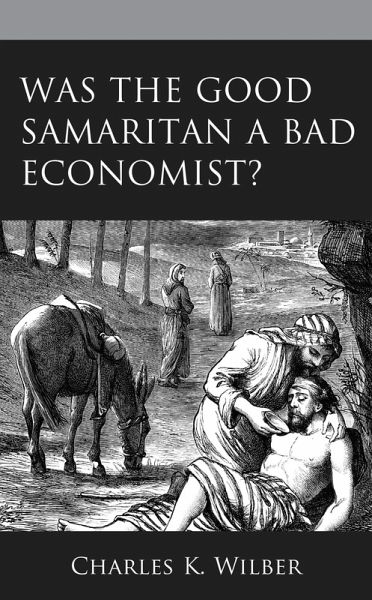
In Was the Good Samaritan a Bad Economist? Charles K. Wilber argues that the American economy has not only failed to overcome poverty, it has generated extreme inequality that in turn restricts social mobility and further marginalizes the poor. Wilber argues that economic theory is permeated with ethical values and any economics must be so; that human behavior is more complex than the economists' simple self-interest model; that people are also driven by deeply embedded moral values; that markets require intervention to create equity; and that Catholic social thought provides the perspective and values to develop a more relevant social economics. The author takes that modified economics and uses it to analyze specific social problems: labor markets, poverty, inequality, financial crisis, and development. Wilber next focuses on the important role of families, labor unions, parishes, and small Christian communities, such as the Catholic Worker movement, as mediating institutions in the economy. He concludes with a final look at the questions, "Was the Good Samaritan a Bad Economist?".