25,99 €
25,99 €
inkl. MwSt.
Sofort per Download lieferbar

13 °P sammeln
25,99 €
Als Download kaufen
25,99 €
inkl. MwSt.
Sofort per Download lieferbar
13 °P sammeln
Jetzt verschenken
Alle Infos zum verschenken
25,99 €
inkl. MwSt.
Sofort per Download lieferbar
Alle Infos zum verschenken
13 °P sammeln
Andere Kunden interessierten sich auch für
") Good Relations (MP3-Download)17,99 €
Good Relations (MP3-Download)17,99 €") This Is the Story of a Happy Marriage (MP3-Download)18,99 €
This Is the Story of a Happy Marriage (MP3-Download)18,99 €") Boy Friends (MP3-Download)27,99 €
Boy Friends (MP3-Download)27,99 €") Minority Rule (MP3-Download)14,99 €
Minority Rule (MP3-Download)14,99 €") Girl Friends (MP3-Download)17,99 €
Girl Friends (MP3-Download)17,99 €") Defending Your Marriage (MP3-Download)15,99 €
Defending Your Marriage (MP3-Download)15,99 €") Win Some (MP3-Download)15,99 €
Win Some (MP3-Download)15,99 €





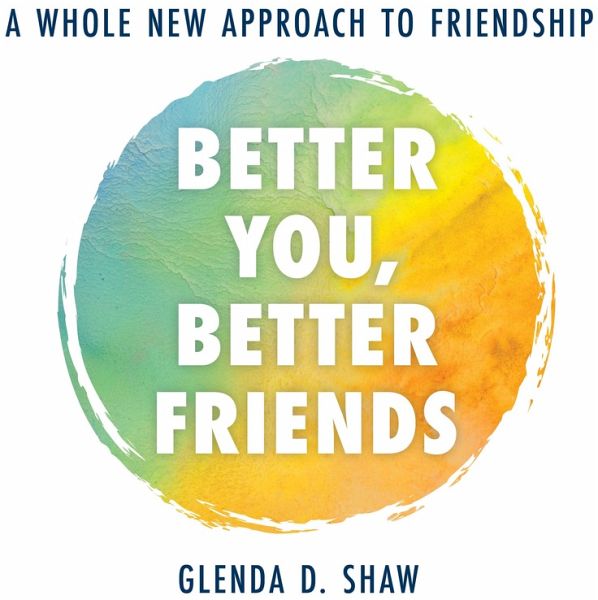
Bloomsbury presents Better You, Better Friends by Glenda D. Shaw, read by Sandra Murphy. Offers a unique approach to becoming a better friend to FIND better friendships We know that our friendships increase our happiness, our health, and our longevity, yet people in the U.S. have fewer close confidantes today than we did three decades ago. Even though there's a huge amount of information in the media discussing these relationships, and our social media feeds run 24/7, most of us haven't come up with a constructive approach to friendship. But learning to BE a better friend is the first step to acquiring and cultivating better, more rewarding friendships. At her own birthday celebration, Glenda Shaw found herself questioning the friends and the friendships there to help her. It dawned on her that she did not feel truly connected to most of them. Something felt terribly wrong. She realized that what she shared with her birthday guests was proximity: they worked together, they lived close to each other, they went to the same networking events and movies. There were, however, other friends with whom she shared more fundamental qualities: the disposition of being encouraging to people, an attitude of looking for purpose in life, a spirit of adventure. Those were the friendships that meant something, the ones that felt truly deep and real. Friendship is voluntary; it's not legally binding; and it usually has no economic consequences. Yet, friendship, true friendship, is important and comes with challenges the can make or break a relationship. Each chapter of Better You, Better Friends: A Whole New Approach to Friendship explores and addresses a particular kind of challenge—envy, money, honesty—and discusses ways to overcome them or to know when to bow out of a relationship that brings more stress than happiness. Through expert input and personal stories, including her own, Shaw offers a new level of understanding of what makes a good friendship and a good friend.
Shaw mines her personal history to offer a simple guide on how readers can better navigate finding friends and maintaining friendships. She organizes friendships into categories—essentials, collaborators, associates, mentors/mentees—and addresses how to manage expectations and boundaries within each. Unwanted feelings that can arise in a friendship, such as jealousy and envy ("primitive survival mechanisms that are often no longer relevant to our physical well-being"), are explored, and to help deepen and maintain existing friendships, Shaw advises paying attention and asking follow-up questions. The easy-to-follow guidance will be of particular use to those who are unhappy within their friendships but can't quite figure out why.