
Andere Kunden interessierten sich auch für
 Security Sector Reform19,99 €
 A Case Study in Security Sector Reform15,99 €
 Means of Effective Security Sector Reform15,99 €
 Building Security and Partnership Through African Regional Organizations14,99 €
 A Passion for Policy: Essays in Public Sector Reform22,99 €
") ASEAN's Constructive Engagement Policy Toward Myanmar (Burma)17,99 €
ASEAN's Constructive Engagement Policy Toward Myanmar (Burma)17,99 € Indonesia's Modern Food Retail Sector15,99 €







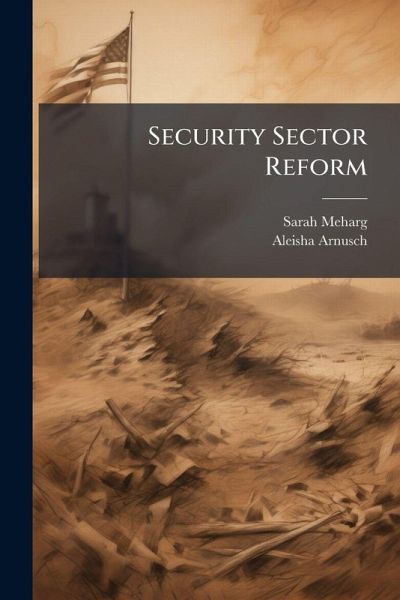
The authors explore the definition of SSR as it has emerged in the international community. The makeup of the security sector is examined, emergent principles are identified for implementing SSR in the community of practice, and the outcomes that SSR is designed to produce are specified. The supporting case studies of Haiti, Liberia, and Kosovo assess the impact of SSR programs on host nation security sectors. The authors conclude that those conducting SSR programs must understand and continually revisit the policy goals of SSR programs so as to develop concepts that support a transitional process that moves forward over time. Intermediate objectives required in support of this transition also articulate what is good enough and fair enough at various stages in the transformational process. State actors must acknowledge and often accommodate nonstate security actors more effectively in SSR planning and implementation, while recognizing both the advantages and the risks of collaborating with such actors. The authors also identify a need for rebalancing resources committed to SSR, especially given that justice and civil law enforcement typically are badly under-resourced as elements of SSR programs. Finally, the authors note the need for more flexible and better integrated funding processes to support SSR activities within the U.S. Government. This work has been selected by scholars as being culturally important, and is part of the knowledge base of civilization as we know it. This work was reproduced from the original artifact, and remains as true to the original work as possible. Therefore, you will see the original copyright references, library stamps (as most of these works have been housed in our most important libraries around the world), and other notations in the work. This work is in the public domain in the United States of America, and possibly other nations. Within the United States, you may freely copy and distribute this work, as no entity (individual or corporate) has a copyright on the body of the work. As a reproduction of a historical artifact, this work may contain missing or blurred pages, poor pictures, errant marks, etc. Scholars believe, and we concur, that this work is important enough to be preserved, reproduced, and made generally available to the public. We appreciate your support of the preservation process, and thank you for being an important part of keeping this knowledge alive and relevant.