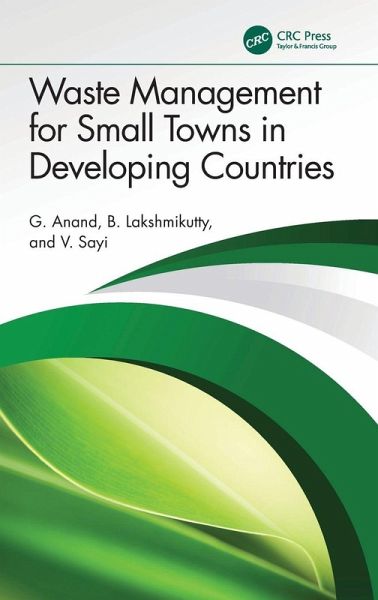
This book provides a comprehensive technical overview of waste management strategies tailored for small towns, emphasising innovative approaches to integrated waste management. It explores methods to transform various types of waste into value-added products, fostering circular economy practices at both micro and macro levels. The text examines the implementation of waste management solutions across different countries, addressing market development, pricing strategies, and financial viability to achieve sustainability goals. Key topics include municipal solid waste management, faecal sludge…mehr
This book provides a comprehensive technical overview of waste management strategies tailored for small towns, emphasising innovative approaches to integrated waste management. It explores methods to transform various types of waste into value-added products, fostering circular economy practices at both micro and macro levels. The text examines the implementation of waste management solutions across different countries, addressing market development, pricing strategies, and financial viability to achieve sustainability goals. Key topics include municipal solid waste management, faecal sludge treatment, sewage treatment, and grey water management, supported by case studies and practical examples. Features: * Reviews integrated waste management systems for small towns with a focus on circular economy principles. * Highlights indigenous and sustainable waste management practices. * Explores innovative techniques such as degradable waste segregation and manufacturing value-added products from waste components. * Covers municipal solid waste management, faecal sludge treatment, sewage treatment, and grey water management, particularly in developing countries. * Discusses project management aspects and financial implications of waste management initiatives. * Includes numerical examples, practical problems, and case studies from various countries to illustrate real-world applications. This book is designed for students, researchers, and professionals in Environmental, Chemical, and Civil Engineering, Urban Planning, and related fields, as well as NGOs, administrators, and stakeholders in waste management.
G. Anand graduated in Chemical Engineering from Government Engineering College, Trichur, India and did a post-graduation in Environmental Science. He pursued a career in manufacturing industry for 13 years before switching to Consultancy in Environment Management. During the 30 years of active consultancy work, his field of activities included Water Supply and Treatment, Sanitation and Solid and Liquid Waste Management. His clients included various INGOs including various UN organizations, NGOs, Local self-governments and private enterprises. He had authored/co-authored several manuals and guides on Sanitation and Waste Management and a handbook on Hospital Waste Management. He has conducted several training programmes on Sanitation and Waste Management for NGOs in India, Sri Lanka, Bangladesh, Ghana, Ethiopia, Kenya and Uganda. He has focused on Waste management in small towns and had been stressing on economic sustainability of waste management systems. His contributions to Waste Management includes developing value-added products from different types of wastes in small towns. Post retirement, he works as an advisor to some NGOs and government organizations. B. Lakshmikutty PhD is a professor with more than thirty years of teaching experience in Chemical Engineering, retired as the Head of the Department, from Government Engineering College Thrissur. She worked as Process Engineer in Fertilisers and Chemicals Travancore Ltd, a premier fertiliser company before joining the teaching profession. She has authored/coauthored research papers, articles and two textbooks in Chemical Engineering, 'Stoichiometry and Process Calculations', 'Mass Transfer Operations', and is an active member of several professional bodies including Indian Institute of Chemical Engineers (IIChE) and Indian society for Technical Education (ISTE). Presently doing academic consultancy work and consultancy in waste management. V. Sayi graduated in Chemical Engineering from Govt. Engineering College, Trichur, India in 1980. He had been in the processing industry for eight years before joining the Kerala State Pollution Control Board in 1987. During 27 years stint in Kerala State Pollution Control Board, which is the statutory body implementing various Pollution Control Laws in Kerala, he was instrumental in implementing rules related to water pollution, air pollution, hazardous waste pollution, biometrical waste pollution etc. and imparting training in various levels. After retiring in 2014, he worked as Solid Waste Management Expert in various Government bodies like Suchitwa Mission, Local Self Government Department and Kerala State Solid Waste Management project (KSWMP). Currently he is working as Solid Waste Management Expert in KPMG, which is the Management Consultant of KSWMP.
Inhaltsangabe
Chapter 1. Introduction. 1.1 Why this book?. 1.2 Municipal Waste Management. 1.3 How is waste defined?. 1.4 Waste management. 1.5 Approaches to Waste Management in peri urban areas - Integrated waste management. 1.6 Zero Waste Zero Cost Concept. 1.7 Classification of Waste. 1.8 The way forward. 1.9 Involving the society in Waste Management. 1.10 Case study of waste management of a small town. 1.11 Climate Impact and Ecological Impact. 1.12 Long term sustainability. 1.13 Climate Change and Solid Waste management. Chapter 2. Legislations for Environmental Protection. 2.1 Regulatory Aspects in the Global Scene. 2.2 Environmental regulations in India. 2.3 Environmental Policy. Chapter 3. Solid Waste Management. 3.1 Introduction. 3.2 Characteristics of MSW. 3.3 Segregation, Collection and Transportation of MSW. 3.4 General Processing Methods-Composting. 3.5 Refuse Derived Fuel (RDF). 3.6 Waste Incineration. 3.7 Gasification of MSW. 3.8 Pyrolysis. 3.9 Sanitary Landfills. 3.10 Case Studies. Chapter 4. Faecal Sludge Management. 4.1 Introduction. 4.2 Common Terms used. 4.3 Faecal Sludge Treatment and Disposal. 4.4 Traditional methods of disposal of FS. 4.5 Technologies for Treatment of Faecal Sludge - Practical Options. 4.6 Selection of Technology and Decision-making Process. 4.7 World Health Organisation (WHO) Guidelines. Chapter 5. Sewage Treatment. 5.1 Introduction. 5.2 Pretreatment units. 5.3 Primary Treatment. 5.4 Secondary Treatment. 5.5 Aerobic process. 5.6 Aeration systems. 5.7 Secondary Sedimentation. 5.8 Electrocoagulation. 5.9 Constructed Wetland. 5.10 Tertiary Treatments. 5.11 Disinfection. 5.12 Sludge Treatment. 5.13 Pump Selection. 5.14 Selection of Technology and Decision-making Process. 5.15 Case Studies. Chapter 6. Grey Water Management. 6.1 Grey water Management in Villages and Small Towns - Introduction. 6.2 Types of Waste water. 6.3. Characteristics of waste water. 6.4 Technology selection and Decision-making process. 6.5 Types of Treatment. 6.6 Secondary Treatment. 6.7 Low Maintenance Technologies for Grey Water Treatment. 6.8 Constructed Wetlands. 6.9 Tertiary Treatment. 6.10 Typical treatment system for canals with low organic load in Small Towns. 6.11 Case Studies as examples with different technologies for Grey Water Treatment. 6.12 Ecological Rejuvenation Project of a highly polluted Lake. Chapter 7. Project Management and Financial Implications. 7.1 Project Planning, Financing and Economic implications for waste management in Small Towns. 7.2. Project Planning and Implementation for Sewage Treatment. 7.3 Grey Water Treatment Project Implementation. 7.4 Contracting, Contract Management and Project Management. 7.5 Conclusions from the success stories. References
Chapter 1. Introduction. 1.1 Why this book?. 1.2 Municipal Waste Management. 1.3 How is waste defined?. 1.4 Waste management. 1.5 Approaches to Waste Management in peri urban areas - Integrated waste management. 1.6 Zero Waste Zero Cost Concept. 1.7 Classification of Waste. 1.8 The way forward. 1.9 Involving the society in Waste Management. 1.10 Case study of waste management of a small town. 1.11 Climate Impact and Ecological Impact. 1.12 Long term sustainability. 1.13 Climate Change and Solid Waste management. Chapter 2. Legislations for Environmental Protection. 2.1 Regulatory Aspects in the Global Scene. 2.2 Environmental regulations in India. 2.3 Environmental Policy. Chapter 3. Solid Waste Management. 3.1 Introduction. 3.2 Characteristics of MSW. 3.3 Segregation, Collection and Transportation of MSW. 3.4 General Processing Methods-Composting. 3.5 Refuse Derived Fuel (RDF). 3.6 Waste Incineration. 3.7 Gasification of MSW. 3.8 Pyrolysis. 3.9 Sanitary Landfills. 3.10 Case Studies. Chapter 4. Faecal Sludge Management. 4.1 Introduction. 4.2 Common Terms used. 4.3 Faecal Sludge Treatment and Disposal. 4.4 Traditional methods of disposal of FS. 4.5 Technologies for Treatment of Faecal Sludge - Practical Options. 4.6 Selection of Technology and Decision-making Process. 4.7 World Health Organisation (WHO) Guidelines. Chapter 5. Sewage Treatment. 5.1 Introduction. 5.2 Pretreatment units. 5.3 Primary Treatment. 5.4 Secondary Treatment. 5.5 Aerobic process. 5.6 Aeration systems. 5.7 Secondary Sedimentation. 5.8 Electrocoagulation. 5.9 Constructed Wetland. 5.10 Tertiary Treatments. 5.11 Disinfection. 5.12 Sludge Treatment. 5.13 Pump Selection. 5.14 Selection of Technology and Decision-making Process. 5.15 Case Studies. Chapter 6. Grey Water Management. 6.1 Grey water Management in Villages and Small Towns - Introduction. 6.2 Types of Waste water. 6.3. Characteristics of waste water. 6.4 Technology selection and Decision-making process. 6.5 Types of Treatment. 6.6 Secondary Treatment. 6.7 Low Maintenance Technologies for Grey Water Treatment. 6.8 Constructed Wetlands. 6.9 Tertiary Treatment. 6.10 Typical treatment system for canals with low organic load in Small Towns. 6.11 Case Studies as examples with different technologies for Grey Water Treatment. 6.12 Ecological Rejuvenation Project of a highly polluted Lake. Chapter 7. Project Management and Financial Implications. 7.1 Project Planning, Financing and Economic implications for waste management in Small Towns. 7.2. Project Planning and Implementation for Sewage Treatment. 7.3 Grey Water Treatment Project Implementation. 7.4 Contracting, Contract Management and Project Management. 7.5 Conclusions from the success stories. References
Es gelten unsere Allgemeinen Geschäftsbedingungen: www.buecher.de/agb
Impressum
www.buecher.de ist ein Internetauftritt der buecher.de internetstores GmbH
Geschäftsführung: Monica Sawhney | Roland Kölbl | Günter Hilger
Sitz der Gesellschaft: Batheyer Straße 115 - 117, 58099 Hagen
Postanschrift: Bürgermeister-Wegele-Str. 12, 86167 Augsburg
Amtsgericht Hagen HRB 13257
Steuernummer: 321/5800/1497
USt-IdNr: DE450055826