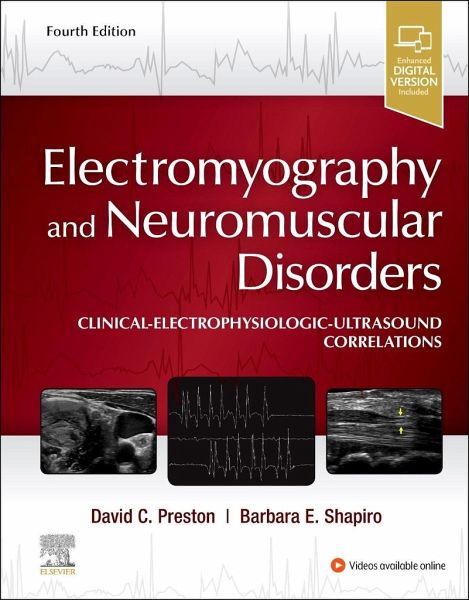
Successfully correlate electrodiagnostic findings and neuromuscular ultrasound with key clinical findings with Electromyography and Neuromuscular Disorders, 4th Edition. This popular text is the go-to resource for clinicians at all levels of experience who have an interest in neuromuscular medicine, including those studying for the AANEM board exam. An easy-to-read writing style, abundant case studies, and learning features online help you master the electrodiagnostic evaluation and improve safety and accuracy.
Successfully correlate electrodiagnostic findings and neuromuscular ultrasound with key clinical findings with Electromyography and Neuromuscular Disorders, 4th Edition. This popular text is the go-to resource for clinicians at all levels of experience who have an interest in neuromuscular medicine, including those studying for the AANEM board exam. An easy-to-read writing style, abundant case studies, and learning features online help you master the electrodiagnostic evaluation and improve safety and accuracy.
David C Preston, MD: Professor, Case Western Reserve University, School of Medicine; Vice Chairman, Neurology for Academic and Educational Affairs, University Hospitals Cleveland Medical Center; Program Director, Neurology Residency Program, University Hospitals Cleveland Medical Center; Director, Neuromuscular Ultrasound Laboratory, Neurological Institute; Co-Director, EMG Laboratory, University Hospitals Cleveland Medical Center Research Interests: Neuromuscular disorders, EMG and nerve conduction studies, entrapment neuropathies, medical education, computers in medicine, web design, neuroradiology, neuromuscular ultrasound, cerebrovascular disorders
Inhaltsangabe
Section I: Overview of Nerve Conduction Studies and Electromyography Chapter-1: Approach to Nerve Conduction Studies and Electromyography Chapter-2: Anatomy and Neurophysiology Section II: Fundamentals of Nerve Conduction Studies Chapter-3: Basic Nerve Conduction Studies Chapter-4: Late Responses Chapter-5: Blink Reflex Chapter-6: Repetitive Nerve Stimulation Section III: Sources of Error: Anomalies, Artifacts, Technical Factors and Statistics Chapter-7: Anomalous Innervations Chapter-8: Artifacts and Technical Factors Chapter-9: Basic Statistics for Electrodiagnostic Studies Section IV: Detailed Nerve Conduction Studies Chapter-10: Routine Upper Extremity, Facial, and Phrenic Nerve Conduction Techniques Chapter-11: Routine Lower Extremity Nerve Conduction Techniques Section V: Fundamentals of Electromyography Chapter-12: Basic Overview of Electromyography Chapter-13: Anatomy for Needle Electromyography Chapter-14: Basic Electromyography: Analysis of Spontaneous Activity Chapter-15: Basic Electromyography: Analysis of Motor Unit Action Potentials Section VI: Clinical-Electrophysiologic Correlations Part I: Common Mononeuropathies: Chapter-16: Clinical-Electrophysiologic Correlations: Overview and Common Patterns Chapter-17: Median Neuropathy at the Wrist Chapter-18: Proximal Median Neuropathy Chapter-19: Ulnar Neuropathy at the Elbow Chapter-20: Ulnar Neuropathy at the Wrist Chapter-21: Radial Neuropathy Chapter-22: Peroneal Neuropathy Chapter-23: Femoral Neuropathy Chapter-24: Tarsal Tunnel Syndrome Chapter-25: Facial and Trigeminal Neuropathy Part II: Polyneuropathy Chapter-26: Polyneuropathy Part III: Motor Neuron Disease Chapter-27: Amyotrophic Lateral Sclerosis and Its Variants Chapter-28: Atypical Motor Neuron Disorders Part IV: Radiculopathy, Plexopathies, and Proximal Neuropathies Chapter-29: Radiculopathy Chapter-30: Brachial Plexopathy Chapter-31: Proximal Neuropathies of the Shoulder and Arm Chapter-32: Lumbosacral Plexopathy Chapter-33: Sciatic Neuropathy Part V: Disorders of Neuromuscular Junction and Muscle Chapter-34: Neuromuscular Junction Disorders Chapter-35: Myopathy Chapter-36: Myotonic Muscle Disorders and Periodic Paralysis Syndromes Section VII: Electromyography in Special Clinical Settings Chapter-37: Approach to Electrodiagnostic Studies in the Intensive Care Unit Chapter-38: Approach to Pediatric Electromyography Section VIII: Electronics and Instrumentation Chapter-39: Basics of Electricity and Electronics for Electrodiagnostic Studies Chapter-40: Electrical Safety and Iatrogenic Complications of Electrodiagnostic Studies
Section I: Overview of Nerve Conduction Studies and Electromyography Chapter-1: Approach to Nerve Conduction Studies and Electromyography Chapter-2: Anatomy and Neurophysiology Section II: Fundamentals of Nerve Conduction Studies Chapter-3: Basic Nerve Conduction Studies Chapter-4: Late Responses Chapter-5: Blink Reflex Chapter-6: Repetitive Nerve Stimulation Section III: Sources of Error: Anomalies, Artifacts, Technical Factors and Statistics Chapter-7: Anomalous Innervations Chapter-8: Artifacts and Technical Factors Chapter-9: Basic Statistics for Electrodiagnostic Studies Section IV: Detailed Nerve Conduction Studies Chapter-10: Routine Upper Extremity, Facial, and Phrenic Nerve Conduction Techniques Chapter-11: Routine Lower Extremity Nerve Conduction Techniques Section V: Fundamentals of Electromyography Chapter-12: Basic Overview of Electromyography Chapter-13: Anatomy for Needle Electromyography Chapter-14: Basic Electromyography: Analysis of Spontaneous Activity Chapter-15: Basic Electromyography: Analysis of Motor Unit Action Potentials Section VI: Clinical-Electrophysiologic Correlations Part I: Common Mononeuropathies: Chapter-16: Clinical-Electrophysiologic Correlations: Overview and Common Patterns Chapter-17: Median Neuropathy at the Wrist Chapter-18: Proximal Median Neuropathy Chapter-19: Ulnar Neuropathy at the Elbow Chapter-20: Ulnar Neuropathy at the Wrist Chapter-21: Radial Neuropathy Chapter-22: Peroneal Neuropathy Chapter-23: Femoral Neuropathy Chapter-24: Tarsal Tunnel Syndrome Chapter-25: Facial and Trigeminal Neuropathy Part II: Polyneuropathy Chapter-26: Polyneuropathy Part III: Motor Neuron Disease Chapter-27: Amyotrophic Lateral Sclerosis and Its Variants Chapter-28: Atypical Motor Neuron Disorders Part IV: Radiculopathy, Plexopathies, and Proximal Neuropathies Chapter-29: Radiculopathy Chapter-30: Brachial Plexopathy Chapter-31: Proximal Neuropathies of the Shoulder and Arm Chapter-32: Lumbosacral Plexopathy Chapter-33: Sciatic Neuropathy Part V: Disorders of Neuromuscular Junction and Muscle Chapter-34: Neuromuscular Junction Disorders Chapter-35: Myopathy Chapter-36: Myotonic Muscle Disorders and Periodic Paralysis Syndromes Section VII: Electromyography in Special Clinical Settings Chapter-37: Approach to Electrodiagnostic Studies in the Intensive Care Unit Chapter-38: Approach to Pediatric Electromyography Section VIII: Electronics and Instrumentation Chapter-39: Basics of Electricity and Electronics for Electrodiagnostic Studies Chapter-40: Electrical Safety and Iatrogenic Complications of Electrodiagnostic Studies
Es gelten unsere Allgemeinen Geschäftsbedingungen: www.buecher.de/agb
Impressum
www.buecher.de ist ein Internetauftritt der buecher.de internetstores GmbH
Geschäftsführung: Monica Sawhney | Roland Kölbl | Günter Hilger
Sitz der Gesellschaft: Batheyer Straße 115 - 117, 58099 Hagen
Postanschrift: Bürgermeister-Wegele-Str. 12, 86167 Augsburg
Amtsgericht Hagen HRB 13257
Steuernummer: 321/5800/1497
USt-IdNr: DE450055826