
Andere Kunden interessierten sich auch für
 Regional Policy in a Changing World153,99 €
 Success Factors of Regional Strategies for Multinational Corporations76,99 €
 Success Factors of Regional Strategies for Multinational Corporations76,99 €
 Maverick16,99 €
 Productivity in Indian Manufacturing55,99 €
 The Regional Multinationals46,99 €
 Firm-level impacts of regional cluster affiliation33,99 €





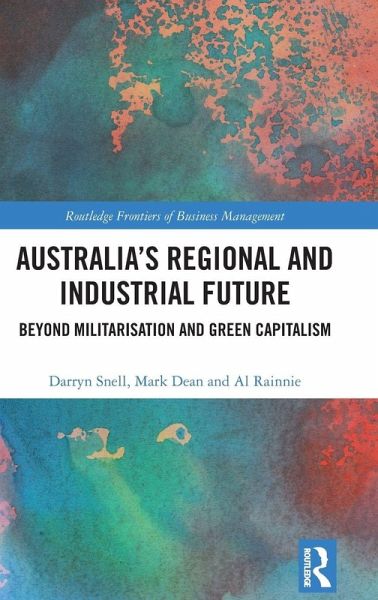
This book promotes a critical and analytical view of what the emerging New Cold War and climate change mitigation means for Australia's struggling regions and dwindling manufacturing industries. The authors argue that Australia's push for regional energy and decarbonization cannot be understood in isolation from an increasing militarised industrial policy and the challenging AUKUS relationships with the US and UK. They connect issues of industrial transformation to growing geopolitical tensions and international policy developments exacerbated by climate change. The book facilitates a critical evaluation of claims that are made for the job creating potential of renewable energies and expanded sovereign defence capabilities. It will also consider what AUKUS and the build-up of an Australian defence industry means for Australia's attempts to decarbonise its economy and the importance of the 'greening' of the AUKUS military industrial complex. Written by a team of academic and union researchers, the book will be of great interest to a diverse range of researchers and students, including those in geography, sociology, international relations, and business management.