


Andere Kunden interessierten sich auch für
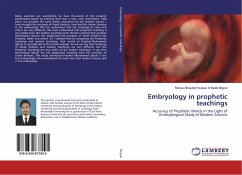
 Embryology in prophetic teachings36,99 €
 Discourses on Aspects of the Sciences of the Glorious Qur'an. Part 127,99 €
 On the Significance of Religion in Climate Change137,99 €
 The Routledge Handbook of Islam and Race204,99 €
 Transloyalties, Connected Histories and World Christianity during the Interwar Period137,99 €
 Transhumanism, Ethics and the Therapeutic Revolution37,99 €
 Explorations in Islamic Scholarship29,99 €



This book examines two English translations of Mishkat ul-Masabih by Al-Tabrizi and reflects on some of the key issues relating to Hadith translation. The highly instructional nature of the Prophetic Hadith means that the comprehensibility of any translation is of great importance to a non-Arabic-speaking Muslim, and there is a need to analyze available translations to determine whether these texts can function properly in the target culture. The volume considers the relevance of skopos theory, the concept of loyalty, and the strategies of the translators in question. There are also chapters that focus on the translation of Islamic legal terms and metaphors related to women, formulaic expressions, and reported nonverbal behavior in Fazlul Karim's (1938) and Robson's (1960) versions of the text.