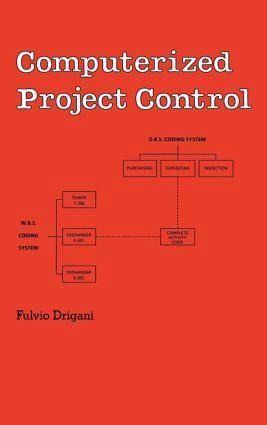
Highlights advantages, disadvantages, and future trends of computerization to project control activity. Stresses identification of when computerization is needed and explores how to convert. Covers fundamentals of project control theory, software technology, and labor and cost analysis. Includes glo
Highlights advantages, disadvantages, and future trends of computerization to project control activity. Stresses identification of when computerization is needed and explores how to convert. Covers fundamentals of project control theory, software technology, and labor and cost analysis. Includes glo
Fulvio Drigani is Project Controller of the Solar Terrestrial Space Program at the European Space Research and Technology Center (E.S.T.E.C.) in Noordwijk, The Netherlands. Prior to that he worked at Foster Wheeler Italiana in Milan, Italy, where he was responsible for project control system development and organization. Mr. Drigani has published numerous articles on cost engineering and its computer applications as well as lectured on project management and cost engineering. A member of the Italian Association of Cost Engineers, Mr. Drigani is a graduate of the Institute of Quantitative Methods, Universiti Commerciale Luigi Bocconi, in Milan, Italy, where he studied economics.
Inhaltsangabe
Preface Basic Issues of Project Control Computerization I. Introduction II. Considerations of Engineering Organization A. The Engineering Organization B. The Organization Breakdown Structure C. The Work Breakdown Structure D. The Project Control Coding System III. Considerations of the Computerization Approach A. Computer Versus Manual B. In house Development or Off the shelf Software? References 2 The Project Control Computerized System I. Introduction A. General Considerations B . Software Assumptions II. The Planning and Scheduling Subsystem A. Critical Path Method B. Advanced Network Analysis Models C. Project Schedule Generation D. Physical Progress Calculation E. Spent Manhours Accumulation F. Performance Analysis G. Backlog Statistical Forecasting IiI. The Cost estimating and Control Subsystem A. Cost Estimating B. Cost Report Generation C. Contract Changes D. Profit and Reserves Forecasting IV. The Construction Subsystem V. Project Control: Statistical Database VI. Integration Within the System VII. Integration with Other Packages A. Introduction B. Accounting C. Computer aided Design D. Procurement E. The Common Database Approach VIII. Design Perspectives Appendix 1. Vendors Appendix 2. CPM Fields Appendix 3. Network Plotting Appendix 4. The Historical Database References 3 The Software Tools I. Introduction II. Identification of the Software Tools A. CPM and Risk Analysis Software B. Progress and Productivity Evaluation: Work Load and Forecasting Software C. Cost Control and Reporting Software D. Profitability and Cash Flow Software E. Historical Data Collection and Statistical Analysis Software F. Conclusions III. Software Tools: Detailed Features A. Database File Definition and Linking B. Database File Inquiry and Modification C. The Command Language D. Report Writing E. Standa
Preface Basic Issues of Project Control Computerization I. Introduction II. Considerations of Engineering Organization A. The Engineering Organization B. The Organization Breakdown Structure C. The Work Breakdown Structure D. The Project Control Coding System III. Considerations of the Computerization Approach A. Computer Versus Manual B. In house Development or Off the shelf Software? References 2 The Project Control Computerized System I. Introduction A. General Considerations B . Software Assumptions II. The Planning and Scheduling Subsystem A. Critical Path Method B. Advanced Network Analysis Models C. Project Schedule Generation D. Physical Progress Calculation E. Spent Manhours Accumulation F. Performance Analysis G. Backlog Statistical Forecasting IiI. The Cost estimating and Control Subsystem A. Cost Estimating B. Cost Report Generation C. Contract Changes D. Profit and Reserves Forecasting IV. The Construction Subsystem V. Project Control: Statistical Database VI. Integration Within the System VII. Integration with Other Packages A. Introduction B. Accounting C. Computer aided Design D. Procurement E. The Common Database Approach VIII. Design Perspectives Appendix 1. Vendors Appendix 2. CPM Fields Appendix 3. Network Plotting Appendix 4. The Historical Database References 3 The Software Tools I. Introduction II. Identification of the Software Tools A. CPM and Risk Analysis Software B. Progress and Productivity Evaluation: Work Load and Forecasting Software C. Cost Control and Reporting Software D. Profitability and Cash Flow Software E. Historical Data Collection and Statistical Analysis Software F. Conclusions III. Software Tools: Detailed Features A. Database File Definition and Linking B. Database File Inquiry and Modification C. The Command Language D. Report Writing E. Standa
Es gelten unsere Allgemeinen Geschäftsbedingungen: www.buecher.de/agb
Impressum
www.buecher.de ist ein Internetauftritt der buecher.de internetstores GmbH
Geschäftsführung: Monica Sawhney | Roland Kölbl | Günter Hilger
Sitz der Gesellschaft: Batheyer Straße 115 - 117, 58099 Hagen
Postanschrift: Bürgermeister-Wegele-Str. 12, 86167 Augsburg
Amtsgericht Hagen HRB 13257
Steuernummer: 321/5800/1497
USt-IdNr: DE450055826