
Andere Kunden interessierten sich auch für
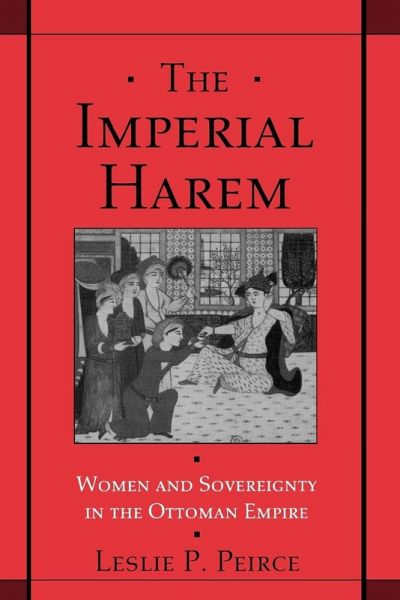
 The Chief Eunuch of the Ottoman Harem43,99 €
 The Chief Eunuch of the Ottoman Harem109,99 €
 The English Governess in Egypt. Harem Life in Egypt and Constantinople.Vol. II32,99 €
 Rivers of the Sultan49,99 €
 The Rise and Fall of Turkey's Democrat Party112,99 €
 The British Labour Movement and Zionism, 1917-1948167,99 €
 The Israel-Palestine Conflict107,99 €
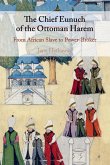

The unprecedented political power of the Ottoman imperial harem in the sixteenth and seventeenth centuries is widely viewed as illegitimate and corrupting. This book examines the sources of royal women's power and assesses the reactions of contemporaries, which ranged from loyal devotion to armed opposition. By examining political action in the context of household networks, Leslie Peirce demonstrates that female power was a logical, indeed an intended, consequence of political structures. Royal women were custodians of sovereign power, training their sons in its use and exercising it directly as regents when necessary. Furthermore, they played central roles in the public culture of sovereignty--royal ceremonial, monumental building, and patronage of artistic production. The Imperial Harem argues that the exercise of political power was tied to definitions of sexuality. Within the dynasty, the hierarchy of female power, like the hierarchy of male power, reflected the broader society's concern for social control of the sexually active.
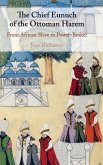
The rise to power of the imperial harem is one of the most dramatic developments in the history of the Ottoman empire. From the beginning of the reign of Suleyman the Magnificent in 1520 until the mid-17th century, high-ranking women of the Ottoman dynasty enjoyed a degree of political power greater than ever before or after. Leslie Peirce challenges the notion that the gender segregation of traditional Islamic society precluded women from playing anything more than a subordinate role within the household. In part one, Peirce examines the dynasty's reproduction policies and argues that the decisions about reproduction and the training or princes was tied to an ideology of power. Part two, examines the sources of women's direct and indirect political power. Peirce discusses how women participated in diplomacy, negotiating treaties and corresponding with figures such as Elizabeth I and Catherine de Medicis. Of equal importance, was women's participation in what Peirce terms `the public culture of sovereignty' by which is meant royal ceremonies and the patronage of artists. This book reinterprets definitions of sovereignty and political action to show the centrality of women. It makes an important contribution to the study both of the history of Turkey in the 16th and 17th centuries and to the study of women and politics.
The rise to power of the imperial harem is one of the most dramatic developments in the history of the Ottoman empire. From the beginning of the reign of Suleyman the Magnificent in 1520 until the mid-17th century, high-ranking women of the Ottoman dynasty enjoyed a degree of political power greater than ever before or after. Leslie Peirce challenges the notion that the gender segregation of traditional Islamic society precluded women from playing anything more than a subordinate role within the household. In part one, Peirce examines the dynasty's reproduction policies and argues that the decisions about reproduction and the training or princes was tied to an ideology of power. Part two, examines the sources of women's direct and indirect political power. Peirce discusses how women participated in diplomacy, negotiating treaties and corresponding with figures such as Elizabeth I and Catherine de Medicis. Of equal importance, was women's participation in what Peirce terms `the public culture of sovereignty' by which is meant royal ceremonies and the patronage of artists. This book reinterprets definitions of sovereignty and political action to show the centrality of women. It makes an important contribution to the study both of the history of Turkey in the 16th and 17th centuries and to the study of women and politics.