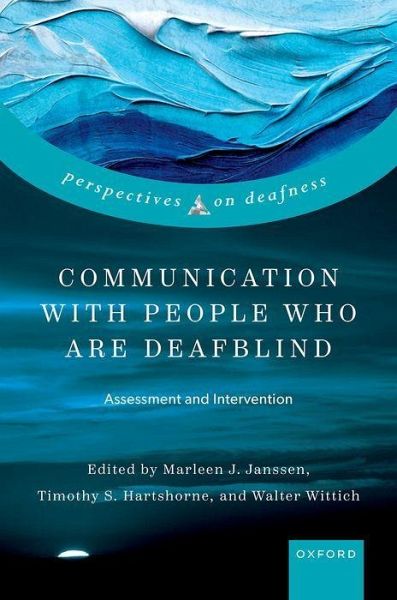
This volume presents research on the assessment and intervention of communication in people who are deafblind, based on the most important studies of the last two decades, with topics from the fields of both congenital and acquired deafblindness. An overview of the latest interdisciplinary research is provided, bridging the gap between theory and practice to support the knowledge base of educators (including teachers, support workers, parents, educational psychologists, students, therapists, and rehabilitation workers) and other professionals, along with deafblind people themselves. With over…mehr
This volume presents research on the assessment and intervention of communication in people who are deafblind, based on the most important studies of the last two decades, with topics from the fields of both congenital and acquired deafblindness. An overview of the latest interdisciplinary research is provided, bridging the gap between theory and practice to support the knowledge base of educators (including teachers, support workers, parents, educational psychologists, students, therapists, and rehabilitation workers) and other professionals, along with deafblind people themselves. With over sixty contributors, this volume records the latest work of recognized researchers and practitioners across the fields of deafblindness, as well as offering contributions from authors living with deafblindness, and parents of individuals with deafblindness. Divided into six sections, the themes covered include: identification and genetics of deafblindness; assessment; social interaction and behavior; communication, development, and interventions; dialogical approaches in communication; and tactile communication and language. Communication with People who are Deafblind aims to transform and describe international, interdisciplinary research findings, theoretical models, and concepts into valuable implications for educational and rehabilitation practice, and to stimulate new research in this field.
Marleen J. Janssen is a Professor Emeritus of Educational Psychology, in the research unit for Inclusive and Special Needs Education at the University of Groningen in the Netherlands. Her interests include communication development and learning in people with deafblindness. Her research is focused on communication assessment and intervention studies with people who are congenitally deafblind. Previously she was Editor-in-Chief of the Journal of Deafblind Studies on Communication, and Curriculum Coordinator of the MSc program in Pedagogical Sciences Communication and Deafblindness. She founded the University of Groningen Institute for Deafblindness and continues research and writing. Marleen was appointed Knight of the Order of the Netherlands Lion in 2019 and awarded the Deafblind International Lifetime Achievement Award in 2023. Timothy S. Hartshorne is a Professor Emeritus of Psychology, specialized in school psychology, at Central Michigan University. His interests include understanding the challenging behavior exhibited by many individuals with CHARGE syndrome, a rare genetic disorder, and how severe disability impacts the family. Prior to his retirement he was the grant holder for Deafblind Central, Michigan's deafblind project. He has been awarded a Star in CHARGE by the CHARGE Syndrome Foundation. He is first editor of the book CHARGE Syndrome, Second Edition. He holds a Diplomate in Adlerian Psychology from the North American Society of Adlerian Psychology. Walter Wittich is an Associate Professor at the School of Optometry, University of Montreal, in Canada. His research focuses on the rehabilitation of older adults with combined vision and hearing loss. His research domains include basic sensory science, as well as medical, psychosocial, and rehabilitation approaches to sensory loss. He is the inaugural chair of the Deafblind International Research Network, the 2020 recipient of the Canadian Helen Keller Centre 10th Annual JT Award, is a Fellow of both the American Academy of Optometry, and the Association for Research in Vision and Ophthalmology, and is Quebec's first Certified Low Vision Therapist.
Inhaltsangabe
* Introduction * Section 1. Identification and Genetics of Deafblindness * 1: Saskia Damen, Jesper Dammeyer, and John Ravenscroft: Identification Practices of Children and Adults with Deafblindness in the Netherlands, Denmark, and Scotland * 2: Kim D. Blake and Angela Arra: Identification of CHARGE Syndrome * 3: Audrey L. Widner and Donna M. Martin: Genetics of Deafblindness * Section 2. Assessment * 4: Susan M. Bruce, L. Beth Brady, and Tracy Evans Luiselli: Assessment of Communication in Learners who are Deafblind * 5: Marleen J. Janssen, Catherine Nelson, Saskia Damen, and Trees van Nunen: The van Dijk Approach of Child Guided Strategies for Assessment and Intervention * 6: Erika Pranger-Boers: Dynamic Assessment * 7: Charity Rowland, Emily D. Quinn, Alexandria Cook, and Deirdre Galvin-McLaughlin: Using the Communication Matrix to Evaluate and Facilitate Expressive Communication in Children who are Deafblind * Section 3. Social Interaction and Behavior * 8: Marga M.A.W. Martens: Fostering Affective Involvement and Positive Emotions in Individuals with Congenital Deafblindness. An Intervention Model for Training Communication Partners * 9: Timothy S. Hartshorne: Challenging Behavior in CHARGE Syndrome * 10: Catherine Nelson and Sarah Ivy: The Relationship between Stress and Challenging Behavior in Children who are Deafblind * 11: Kitty A. Bloeming-Wolbrink: An Intervention Program on Interaction and Bodily Emotional Traces * 12: Meredith Prain: Let's Connect: Social Interaction, Research, and Support of Adults with Congenital Deafblindness * Section 4. Communication, Development, and Interventions * 13: Deborah Chen: Young Children who are Deafblind: Implications for Practitioners * 14: Andrea Wanka: Communication Development in Children with CHARGE Syndrome * 15: Marleen J. Janssen, Saskia Damen, and Kirsten Wolthuis: Interventions to Improve the Quality and Development of Intersubjective Communication * 16: Susan M. Bruce: Colby's Growth to Language and Literacy: a Longitudinal Case Study of a Young Man who is Congenitally Deafblind * 17: L. Beth Brady: Measuring Multimodal Classroom Environments of Deafblind Learners * 18: Chiara Filippini, Patrizia Ceccarani, Pawlos Kassu Abebe, Akhil Paul, Uttam Kumar, Atul Jaiswal, Hiroyuki Sugai, Yoshimi Tsuchiya, and Yi-Tun Tseng: International Perspectives and Local Communication Contexts in Italy, Ethiopia, India, Japan, and Taiwan * Section 5. Dialogical Approaches to Communication * 19: Anne V. Nafstad, Marlene Daelman, Inger Rødbroe, Ingrid Axelhed, Sanne Brink, Pia Haugaard, Sofi Malmgren, and Håkon Lie: Communicative Relations and the Authentic Communication of Persons with Congenital Deafblindness * 20: Marlene Daelman, Paul G. Hart, Marleen J. Janssen, Anne V. Nafstad, Ivana Markova, and Jacques Souriau: Dialogical Dimensions in Communication * 21: Anstein Gregersen and Anne V. Nafstad: Multiparty Conversations, Mutual Recognition and Congenital Deafblindness * 22: Håkon Lie: Improvisation and Communicative Agency: Contribution of an Improvisational Model to the Analysis of Communicative Agency of a Person with Congenital Deafblindness * Section 6. Tactile Communication and Language * 23: Lisa van der Mark: Protactile in Europe: The Experiences of Deafblind Signers in Cross-Linguistic Settings, Including a Protactile Training * 24: Saskia Damen and Marianne Rorije: Supporting the Communicative Agency of Individuals with Congenital Deafblindness in the Tactile Modality * 25: Jesper Dammeyer and Madeleine Chapman: Tactile Language Development in Children with Congenital Deafblindness: Possibilities and Impossibilities * 26: Riitta Lahtinen and Russ Palmer: The Application of Social-Haptic Communication: Haptices and Haptemes with Acquired and Congenitally Deafblind People * 27: Shimako Iwasaki, Meredith Bartlett, Howard Manns, and Louisa Willoughby: Sensorial Participation and Recipient Actions in Deafblind Signed Interactions * 28: Eli Raanes: The Differences Between Sign Language Interpreting and Tactile Sign Language Interpreting * 29: Johanna Mesch, Sílvia Gabarró-López, and Eli Raanes: The Use of Sign Space by Deafblind Signers
* Introduction * Section 1. Identification and Genetics of Deafblindness * 1: Saskia Damen, Jesper Dammeyer, and John Ravenscroft: Identification Practices of Children and Adults with Deafblindness in the Netherlands, Denmark, and Scotland * 2: Kim D. Blake and Angela Arra: Identification of CHARGE Syndrome * 3: Audrey L. Widner and Donna M. Martin: Genetics of Deafblindness * Section 2. Assessment * 4: Susan M. Bruce, L. Beth Brady, and Tracy Evans Luiselli: Assessment of Communication in Learners who are Deafblind * 5: Marleen J. Janssen, Catherine Nelson, Saskia Damen, and Trees van Nunen: The van Dijk Approach of Child Guided Strategies for Assessment and Intervention * 6: Erika Pranger-Boers: Dynamic Assessment * 7: Charity Rowland, Emily D. Quinn, Alexandria Cook, and Deirdre Galvin-McLaughlin: Using the Communication Matrix to Evaluate and Facilitate Expressive Communication in Children who are Deafblind * Section 3. Social Interaction and Behavior * 8: Marga M.A.W. Martens: Fostering Affective Involvement and Positive Emotions in Individuals with Congenital Deafblindness. An Intervention Model for Training Communication Partners * 9: Timothy S. Hartshorne: Challenging Behavior in CHARGE Syndrome * 10: Catherine Nelson and Sarah Ivy: The Relationship between Stress and Challenging Behavior in Children who are Deafblind * 11: Kitty A. Bloeming-Wolbrink: An Intervention Program on Interaction and Bodily Emotional Traces * 12: Meredith Prain: Let's Connect: Social Interaction, Research, and Support of Adults with Congenital Deafblindness * Section 4. Communication, Development, and Interventions * 13: Deborah Chen: Young Children who are Deafblind: Implications for Practitioners * 14: Andrea Wanka: Communication Development in Children with CHARGE Syndrome * 15: Marleen J. Janssen, Saskia Damen, and Kirsten Wolthuis: Interventions to Improve the Quality and Development of Intersubjective Communication * 16: Susan M. Bruce: Colby's Growth to Language and Literacy: a Longitudinal Case Study of a Young Man who is Congenitally Deafblind * 17: L. Beth Brady: Measuring Multimodal Classroom Environments of Deafblind Learners * 18: Chiara Filippini, Patrizia Ceccarani, Pawlos Kassu Abebe, Akhil Paul, Uttam Kumar, Atul Jaiswal, Hiroyuki Sugai, Yoshimi Tsuchiya, and Yi-Tun Tseng: International Perspectives and Local Communication Contexts in Italy, Ethiopia, India, Japan, and Taiwan * Section 5. Dialogical Approaches to Communication * 19: Anne V. Nafstad, Marlene Daelman, Inger Rødbroe, Ingrid Axelhed, Sanne Brink, Pia Haugaard, Sofi Malmgren, and Håkon Lie: Communicative Relations and the Authentic Communication of Persons with Congenital Deafblindness * 20: Marlene Daelman, Paul G. Hart, Marleen J. Janssen, Anne V. Nafstad, Ivana Markova, and Jacques Souriau: Dialogical Dimensions in Communication * 21: Anstein Gregersen and Anne V. Nafstad: Multiparty Conversations, Mutual Recognition and Congenital Deafblindness * 22: Håkon Lie: Improvisation and Communicative Agency: Contribution of an Improvisational Model to the Analysis of Communicative Agency of a Person with Congenital Deafblindness * Section 6. Tactile Communication and Language * 23: Lisa van der Mark: Protactile in Europe: The Experiences of Deafblind Signers in Cross-Linguistic Settings, Including a Protactile Training * 24: Saskia Damen and Marianne Rorije: Supporting the Communicative Agency of Individuals with Congenital Deafblindness in the Tactile Modality * 25: Jesper Dammeyer and Madeleine Chapman: Tactile Language Development in Children with Congenital Deafblindness: Possibilities and Impossibilities * 26: Riitta Lahtinen and Russ Palmer: The Application of Social-Haptic Communication: Haptices and Haptemes with Acquired and Congenitally Deafblind People * 27: Shimako Iwasaki, Meredith Bartlett, Howard Manns, and Louisa Willoughby: Sensorial Participation and Recipient Actions in Deafblind Signed Interactions * 28: Eli Raanes: The Differences Between Sign Language Interpreting and Tactile Sign Language Interpreting * 29: Johanna Mesch, Sílvia Gabarró-López, and Eli Raanes: The Use of Sign Space by Deafblind Signers
Es gelten unsere Allgemeinen Geschäftsbedingungen: www.buecher.de/agb
Impressum
www.buecher.de ist ein Internetauftritt der buecher.de internetstores GmbH
Geschäftsführung: Monica Sawhney | Roland Kölbl | Günter Hilger
Sitz der Gesellschaft: Batheyer Straße 115 - 117, 58099 Hagen
Postanschrift: Bürgermeister-Wegele-Str. 12, 86167 Augsburg
Amtsgericht Hagen HRB 13257
Steuernummer: 321/5800/1497
USt-IdNr: DE450055826