
Andere Kunden interessierten sich auch für
 Rethinking Expectations72,99 €
 The Economist's Tale46,99 €
 The Structure of Post-Keynesian Economics111,99 €
 Monetary Policy262,99 €
 Capital in the Twenty-First Century21,99 €
 The Evolution of Central Banks31,99 €
 The Next Money Crash-and How to Avoid It26,99 €
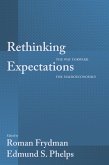

This lucid text brings together and explains the main theoretical developments in economic thinking about financial markets, institutions, and regulations over the last twenty-five years. It relates the theory of asymmetric information to the main financial developments in the US, UK, and other Anglo-Saxon countries. After a preliminary discussion of financial markets and their transparency, it looks at the role of financial intermediaries such as banks. It argues that these institutions can compete with efficient markets because they are confidential. The book goes on to discuss bank credit rationing, bank failure and systemic risk, and the way in which regulation can control these risks.
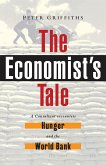
Aimed at advanced undergraduate and graduate students in economics, banking, and finance, this is a core textbook for the financial markets, institutions, and regulation option of courses in financial economics. It integrates modern theories of asymmetric information into the analysis of financial institutions, relating the theory to current developments. The text begins with an analysis of adverse selection in retail financial products like life assurance before looking at open capital markets where trades and prices provide information. It then progresses to the more complex areas of corporate governance and financial intermediation in which information is confidential and moral hazard and verification problems become important. These chapters study the various mechanisms that the financial markets have developed to allow investors to delegate the management of their assets to others. This analysis is used to show how regulation can reduce the risk of financial failure and how legal, accounting, and regulatory mechanisms can help shape a country's corporate and financial architecture. These difficult theoretical concepts are conveyed through the careful use of numerical illustrations and topical case studies. Each chapter ends with a set of exercises to test and reinforce students' comprehension of the material. Worked solutions are provided for the numerical exercises.
Aimed at advanced undergraduate and graduate students in economics, banking, and finance, this is a core textbook for the financial markets, institutions, and regulation option of courses in financial economics. It integrates modern theories of asymmetric information into the analysis of financial institutions, relating the theory to current developments. The text begins with an analysis of adverse selection in retail financial products like life assurance before looking at open capital markets where trades and prices provide information. It then progresses to the more complex areas of corporate governance and financial intermediation in which information is confidential and moral hazard and verification problems become important. These chapters study the various mechanisms that the financial markets have developed to allow investors to delegate the management of their assets to others. This analysis is used to show how regulation can reduce the risk of financial failure and how legal, accounting, and regulatory mechanisms can help shape a country's corporate and financial architecture. These difficult theoretical concepts are conveyed through the careful use of numerical illustrations and topical case studies. Each chapter ends with a set of exercises to test and reinforce students' comprehension of the material. Worked solutions are provided for the numerical exercises.