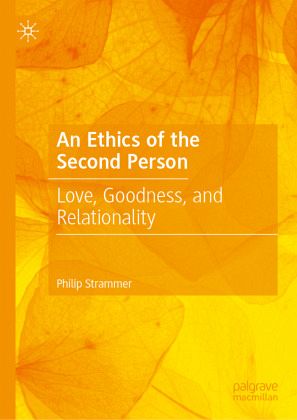
91,99 €
inkl. MwSt.
Versandkostenfrei*Erscheint vorauss. Mai 2026
Melden Sie sich
hier
hier
für den Produktalarm an, um über die Verfügbarkeit des Produkts informiert zu werden.

46 °P sammeln
Andere Kunden interessierten sich auch für
 The Second-Person Perspective in Aquinas's Ethics185,99 €
 The Phenomenology of the Second-Person Plural179,99 €
 The Second-Person Perspective in Aquinas's Ethics69,99 €
 A Supplement To The Second Edition Of The Methods Of Ethics22,99 €
 The Sage & the Second Sex: Confucianism, Ethics & Gender40,99 €
 The Second Declaration25,99 €
 Second Characters or the Language of Forms42,99 €





This book reimagines the foundations of moral philosophy by centering on the ethical significance of second-personal experience our direct, lived responsiveness to others. Philip Strammer challenges the dominance of both naturalist and transcendental traditions, arguing that neither adequately accounts for the moral depth of the I You relation.
Drawing on Martin Buber s dialogical philosophy and enriched by post-Wittgensteinian moral thought, the book explores conscience, remorse, and saintliness as second-personal phenomena. At its heart is the concept of lovingness a wholehearted, unmediated openness to otherness as the key to understanding moral meaning and the manifestation of goodness.
Through rigorous philosophical analysis and vivid phenomenological examples, Strammer offers a compelling alternative to moral theories moving within the subject-object dichotomy. This work will appeal to scholars and advanced students in ethics, phenomenology, moral psychology, and religious thought, offering a fresh and challenging perspective on what it means to live a morally responsive life with and among others.
Drawing on Martin Buber s dialogical philosophy and enriched by post-Wittgensteinian moral thought, the book explores conscience, remorse, and saintliness as second-personal phenomena. At its heart is the concept of lovingness a wholehearted, unmediated openness to otherness as the key to understanding moral meaning and the manifestation of goodness.
Through rigorous philosophical analysis and vivid phenomenological examples, Strammer offers a compelling alternative to moral theories moving within the subject-object dichotomy. This work will appeal to scholars and advanced students in ethics, phenomenology, moral psychology, and religious thought, offering a fresh and challenging perspective on what it means to live a morally responsive life with and among others.