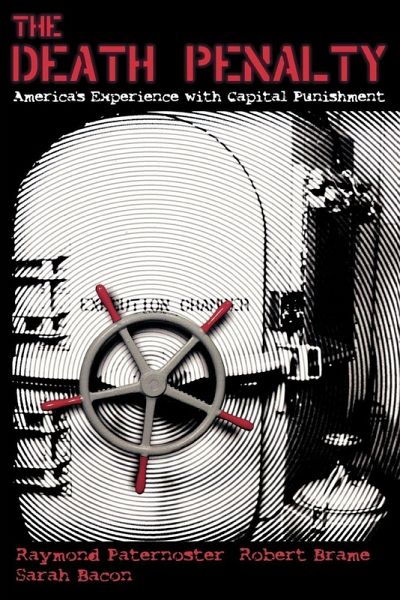
This book addresses one of the most controversial issues in the criminal justice system today--the death penalty. Paternoster et al. present a balanced perspective that focuses on both the arguments for and against capital punishment. Coverage draws on legal, historical, philosophical, economic, sociological, and religious points of view. Topics include: * The history of the death penalty in the United States, from the 1600s to today * The changing nature of the death penalty--changes in the types of crimes that warranted the penalty, the procedures employed to put capital offenders on trial,…mehr
This book addresses one of the most controversial issues in the criminal justice system today--the death penalty. Paternoster et al. present a balanced perspective that focuses on both the arguments for and against capital punishment. Coverage draws on legal, historical, philosophical, economic, sociological, and religious points of view. Topics include: * The history of the death penalty in the United States, from the 1600s to today * The changing nature of the death penalty--changes in the types of crimes that warranted the penalty, the procedures employed to put capital offenders on trial, and the methods used to impose death * Constitutional/legal issues surrounding the death penalty * The influence of race on the administration of the death penalty, both in the past and in the present * Justifications for and against the death penalty (retribution, cost, public safety, and religious arguments) * Questions about the execution of innocents, exonerated capital offenders, and flaws in the operation of the death penalty * Public opinion and the death penalty * The death penalty and international law and practice * The future of the death penalty in America
Raymond Paternoster is Professor of Criminology and Criminal Justice and Director of the Office of Academic Computing Services at the University of Maryland. Robert Brame is Associate Professor in the Department of Criminology and Criminal Justice at the University of South Carolina. Sarah Bacon is Visiting Assistant Professor in the College of Criminology and Criminal Justice at Florida State University.
Inhaltsangabe
* Each chapter begins with an Introduction and ends with a Chapter Summary, Discussion Questions, and Further Reading. * Part I: The Enduring Legacy of Capital Punishment in the United States * Chapter 1. Capital Punishment in the Early Period: 1608-1929 * Capital Crimes and Capital Statutes in the Early Period * Characteristics of Executions in the Early Period * Changes in the Practice of the Death Penalty in the Early Period * Methods of Execution in the Early Period * Location of the Death Penalty in the Early Period * Chapter 2. Capital Punishment in the Pre-Modern Period: 1930-1967 * Capital Crimes and Capital Statutes During the Premodern Period * Characteristics of Executions in the Premodern Period * Methods of Execution During the Premodern Period * Location of the Death Penalty in the Premodern Period * Chapter 3. Capital Punishment in the Modern Period: 1977-Present * Capital Crimes and Capital Statutes During the Modern Period * Characteristics of Executions in the Modern Period * Methods of Execution During the Modern Period * Location of the Death Penalty in the Modern Period * Changes in the Practice of the Death Penalty in the Modern Period * The Federal and Military Death Penalty * Part II: Legal History, Constitutional Requirements, and Common Justifications for Capital Punishment in the United States * Chapter 4. A Brief Legal History of Capital Punishment in the United States * Early Constitutional Challenges to the Method of Imposing Death * Constitutional Theories About What the Eighth Amendment Prohibits * The Death Penalty's Decline in Popularity and Challenges to Its Constitutionality * The Death Penalty is not Procedurally Flawed--The Case of McGautha v. California * The Death Penalty as Currently Administered is so Procedurally Flawed That It Constitutes Cruel and Unusual Punishment--The Case of Furman v. Georgia * Chapter 5. Constitutional Requirements for Capital Punishment in the United States * The Response to Furman: Mandatory and Guided Discretion Capital Statutes * The Execution of Special Groups--The Young, The Retarded and the Mentally Ill * Chapter 6. Common Justifications for the Death Penalty * Retribution: The Moral Argument for the Death Penalty * Cost: The Financial Argument for the Death Penalty * Incapacitation: One of the Public Safety Arguments for the Death Penalty * General Deterrence: The Other Public Safety Argument for the Death Penalty * Religious Positions for and Against the Death Penalty * Part III: The Administration of the Death Penalty: Issues of Race and Human Fallibility * Chapter 7. Race, the Law, and Punishment * The Peculiar Institution * Race and Legal Institutions After the Civil War * Chapter 8. Race and Capital Punishment * Race and Capital Punishment: 1930-1967 * Evidence of Racially Disparate Treatment in the Courts * Race and Capital Punishment: 1997-Present * Post-Furman Evidence of Racial Discrimination in Capital Sentencing Before the Courts--McCleskey v. Kemp * Chapter 9. Problems in Administering the Death Penalty * The Possibly Innocent * The Exonerated * A Broken System * Part IV: What's to Come of the Death Penalty * Chapter 10. Capital Punishment in America's Future * Public Support for the Death Penalty in the United States * The Death Penalty in Other Countries * Predictions About the Future of the Death Penalty in America * What About Life Without the Possibility of Parole?
* Each chapter begins with an Introduction and ends with a Chapter Summary, Discussion Questions, and Further Reading. * Part I: The Enduring Legacy of Capital Punishment in the United States * Chapter 1. Capital Punishment in the Early Period: 1608-1929 * Capital Crimes and Capital Statutes in the Early Period * Characteristics of Executions in the Early Period * Changes in the Practice of the Death Penalty in the Early Period * Methods of Execution in the Early Period * Location of the Death Penalty in the Early Period * Chapter 2. Capital Punishment in the Pre-Modern Period: 1930-1967 * Capital Crimes and Capital Statutes During the Premodern Period * Characteristics of Executions in the Premodern Period * Methods of Execution During the Premodern Period * Location of the Death Penalty in the Premodern Period * Chapter 3. Capital Punishment in the Modern Period: 1977-Present * Capital Crimes and Capital Statutes During the Modern Period * Characteristics of Executions in the Modern Period * Methods of Execution During the Modern Period * Location of the Death Penalty in the Modern Period * Changes in the Practice of the Death Penalty in the Modern Period * The Federal and Military Death Penalty * Part II: Legal History, Constitutional Requirements, and Common Justifications for Capital Punishment in the United States * Chapter 4. A Brief Legal History of Capital Punishment in the United States * Early Constitutional Challenges to the Method of Imposing Death * Constitutional Theories About What the Eighth Amendment Prohibits * The Death Penalty's Decline in Popularity and Challenges to Its Constitutionality * The Death Penalty is not Procedurally Flawed--The Case of McGautha v. California * The Death Penalty as Currently Administered is so Procedurally Flawed That It Constitutes Cruel and Unusual Punishment--The Case of Furman v. Georgia * Chapter 5. Constitutional Requirements for Capital Punishment in the United States * The Response to Furman: Mandatory and Guided Discretion Capital Statutes * The Execution of Special Groups--The Young, The Retarded and the Mentally Ill * Chapter 6. Common Justifications for the Death Penalty * Retribution: The Moral Argument for the Death Penalty * Cost: The Financial Argument for the Death Penalty * Incapacitation: One of the Public Safety Arguments for the Death Penalty * General Deterrence: The Other Public Safety Argument for the Death Penalty * Religious Positions for and Against the Death Penalty * Part III: The Administration of the Death Penalty: Issues of Race and Human Fallibility * Chapter 7. Race, the Law, and Punishment * The Peculiar Institution * Race and Legal Institutions After the Civil War * Chapter 8. Race and Capital Punishment * Race and Capital Punishment: 1930-1967 * Evidence of Racially Disparate Treatment in the Courts * Race and Capital Punishment: 1997-Present * Post-Furman Evidence of Racial Discrimination in Capital Sentencing Before the Courts--McCleskey v. Kemp * Chapter 9. Problems in Administering the Death Penalty * The Possibly Innocent * The Exonerated * A Broken System * Part IV: What's to Come of the Death Penalty * Chapter 10. Capital Punishment in America's Future * Public Support for the Death Penalty in the United States * The Death Penalty in Other Countries * Predictions About the Future of the Death Penalty in America * What About Life Without the Possibility of Parole?
Es gelten unsere Allgemeinen Geschäftsbedingungen: www.buecher.de/agb
Impressum
www.buecher.de ist ein Internetauftritt der buecher.de internetstores GmbH
Geschäftsführung: Monica Sawhney | Roland Kölbl | Günter Hilger
Sitz der Gesellschaft: Batheyer Straße 115 - 117, 58099 Hagen
Postanschrift: Bürgermeister-Wegele-Str. 12, 86167 Augsburg
Amtsgericht Hagen HRB 13257
Steuernummer: 321/5800/1497
USt-IdNr: DE450055826