7,99 €
7,99 €
inkl. MwSt.
Sofort per Download lieferbar

0 °P sammeln
7,99 €
Als Download kaufen
7,99 €
inkl. MwSt.
Sofort per Download lieferbar
0 °P sammeln
Jetzt verschenken
Alle Infos zum eBook verschenken
7,99 €
inkl. MwSt.
Sofort per Download lieferbar
Alle Infos zum eBook verschenken
0 °P sammeln

Andere Kunden interessierten sich auch für
") We Crossed a Bridge and It Trembled (eBook, ePUB)28,88 €
We Crossed a Bridge and It Trembled (eBook, ePUB)28,88 €") We Are Each Other's Harvest (eBook, ePUB)29,95 €
We Are Each Other's Harvest (eBook, ePUB)29,95 €") We Were There (eBook, ePUB)18,18 €
We Were There (eBook, ePUB)18,18 €") We Learnt About Hitler at the Mickey Mouse Club (eBook, ePUB)5,99 €
We Learnt About Hitler at the Mickey Mouse Club (eBook, ePUB)5,99 €") Lest We Forget (eBook, ePUB)18,18 €
Lest We Forget (eBook, ePUB)18,18 €") That Place We Call Home (eBook, ePUB)15,59 €
That Place We Call Home (eBook, ePUB)15,59 €") We Bled Together (eBook, ePUB)13,99 €
We Bled Together (eBook, ePUB)13,99 €







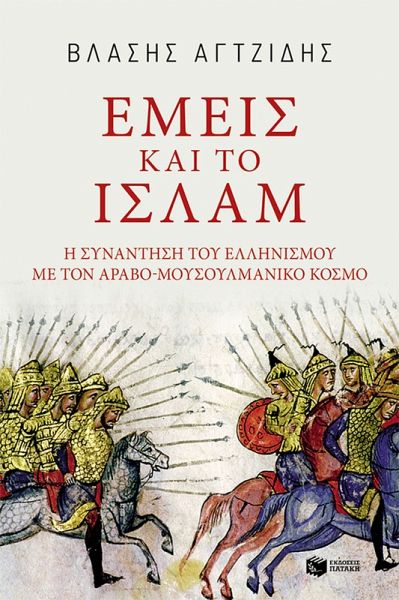
The reemergence of religious wars, the strengthening of the Islamic world, and the spread of Islamist terrorism once again make timely the search for the causes that lead modern people to seek refuge in the metaphysical. Developing an autonomous study of the phenomenon itself is of great importance, since Greek Orthodox populations were among the first to encounter Islam during its expansion from the Arabian Peninsula. Moreover, contemporary Greece continues to lie at the boundary between the two worlds, even if these borders are neither solid nor impenetrable. The present study focuses on the first Arab period of Islam. At the same time, it investigates the conditions under which extremist Islam developed and the notion of Holy War (jihad) reappeared. It also defines the frame of reference-the "we"-through which the Islamic phenomenon is approached. The factors that contributed to the formation of modern Hellenism are presented, along with the form and modes of composition of its identity. The history of Islam is then presented from its emergence in the deserts of Arabia. The development of the new religion is followed, as well as its relationship and differences with the other monotheistic religions. Its fundamental views, the mechanisms of its spread, the expansionist policy of the first caliphs, and the multifaceted encounter between Hellenism and the Islamic world are outlined. Special mention is made of the Emirate of Crete, a distinctive Arab state of the 9th-10th century AD. Finally, the major conflict between Islam and the West is presented as it was manifested through the Muslim Holy War and the Christian Crusades.
Dieser Download kann aus rechtlichen Gründen nur mit Rechnungsadresse in A, B, BG, CY, CZ, D, DK, EW, E, FIN, F, GR, H, IRL, I, LT, L, LR, M, NL, PL, P, R, S, SLO, SK ausgeliefert werden.