

Andere Kunden interessierten sich auch für
 On Quality15,99 €
 Bel Canto12,99 €
 Not in Love22,99 €
 The Sins of the Father31,99 €
 Geology and Mineralogy Considered with Reference to Natural Theology89,90 €
 SEA GARDEN29,99 €
 The Lancashire Wedding27,99 €






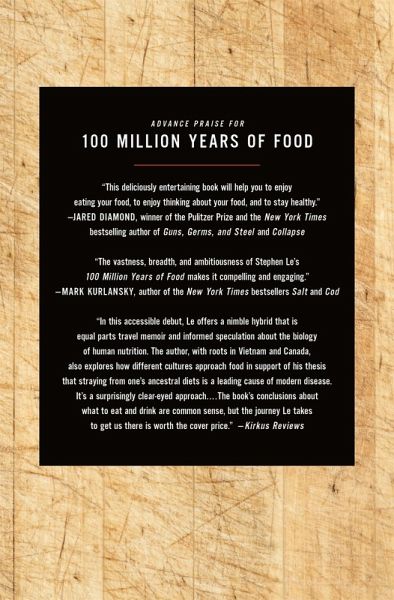
A fascinating tour through the evolution of the human diet and how we can improve our health by understanding our complicated history with food. There are few areas of modern life that are burdened by as much information and advice, often contradictory, as our diet and health: eat a lot of meat, eat no meat; whole grains are healthy, whole grains are a disaster; eat everything in moderation; eat only certain foods--and on and on. In 100 Million Years of Food, biological anthropologist Stephen Le explains how cuisines of different cultures are a result of centuries of evolution, finely tuned to our biology and surroundings. Today many cultures have strayed from their ancestral diets, relying instead on mass-produced food often made with chemicals that may be contributing to a rise in so-called Western diseases, such as cancer, heart disease, and obesity.