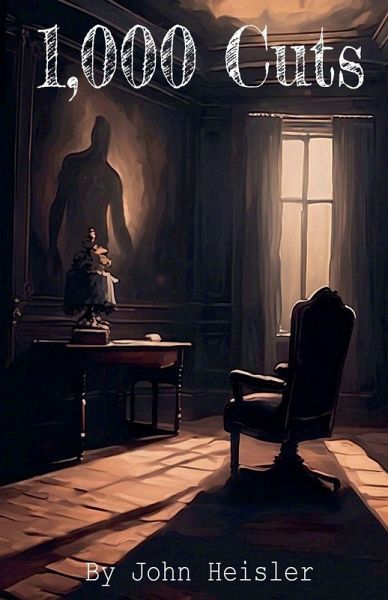
What happens when the systems meant to heal become weapons of control? Rebecca Chen survived eighteen months of court-mandated therapy with Dr. Allen Morrison, sessions that left her fighting to retain custody of her daughter. When Morrison appears at her coffee shop with intimate knowledge of her case, she realizes the "treatment" wasn't help-it was psychological warfare designed to make her doubt her own reality. The evidence Morrison leaves behind exposes a network of institutional abuse: RX-47, an experimental drug tested on youth in custody; scripted phrases drilled into vulnerable minds;…mehr
What happens when the systems meant to heal become weapons of control? Rebecca Chen survived eighteen months of court-mandated therapy with Dr. Allen Morrison, sessions that left her fighting to retain custody of her daughter. When Morrison appears at her coffee shop with intimate knowledge of her case, she realizes the "treatment" wasn't help-it was psychological warfare designed to make her doubt her own reality. The evidence Morrison leaves behind exposes a network of institutional abuse: RX-47, an experimental drug tested on youth in custody; scripted phrases drilled into vulnerable minds; compliance metrics tracked like profit margins. Michael Torres, seventeen, tried to document it before he vanished. Jamie Kovak killed Morrison to escape it. Jennifer Walsh, Rebecca's support group ally, might still be controlled by it. Inspired by documented patterns of misconduct in BC youth facilities, 1,000 Cuts follows a survivor coalition as they expose Dr. Lydia Brennan's Dominion Protocol-Morrison's methods scaled nationwide and sold as "wellness care." From Victoria to Vancouver to Ottawa's courtrooms, Rebecca and her allies build a case against a machine designed to erase resistance itself. Some wounds cut deeper than memory. Some become evidence that institutions can't rewrite. A psychological thriller about survival, testimony, and the power of refusing to be silenced.
1,000 Cuts was never conceived as just a thriller. From the beginning, it was a compilation of personal journals. In my attempt to navigate a reflection note, I ended up writing a fictional novel. Writing this story meant confronting the uncomfortable truth that institutional violence is what society hopes to have happen while a person is in custody. The novel's psychological and institutional landscape draws from documented histories of misconduct in British Columbia's youth custody system, to which I was exposed to. A central influence was Public Report No. 34, Building Respect: A Review of Youth Custody Centres in British Columbia (BC Ombudsperson, June 1994). That report examined the Victoria, Burnaby, and Prince George Youth Custody Centres and revealed disturbing patterns: peer-on-peer abuse, inconsistent staff intervention, coercive control framed as "behavior management," and the routine use of isolation as a disciplinary shortcut. Most troubling was the system's architecture of oversight-its ability to appear compliant on paper while permitting an environment where young people absorbed lasting psychological injury. Although the events in 1,000 Cuts are fictional, the emotional logic of the story is grounded in these real-world findings. The report documented how minors-some as young as twelve-were placed in settings that prioritized custody over care, compliance over humanity. When I read survivor interviews and examined the policy language surrounding these practices, it became clear how easily trauma can be disguised as procedure. Writing 1,000 Cuts required balancing realism with narrative restraint. The goal was not to sensationalize trauma, but to portray it honestly. The novel asks a simple but difficult question: What happens when the systems designed to protect us become the source of harm? This project is, ultimately, a contribution to an ongoing conversation in British Columbia and across Canada-one about accountability, transparency, and the dignity owed to every young person in state care. Fiction can't fix systems. But it can witness them. And sometimes, it can make visible what official reports and archived files cannot fully hold: the interior cost of being harmed, and the quiet courage of surviving.
Es gelten unsere Allgemeinen Geschäftsbedingungen: www.buecher.de/agb
Impressum
www.buecher.de ist ein Internetauftritt der buecher.de internetstores GmbH
Geschäftsführung: Monica Sawhney | Roland Kölbl | Günter Hilger
Sitz der Gesellschaft: Batheyer Straße 115 - 117, 58099 Hagen
Postanschrift: Bürgermeister-Wegele-Str. 12, 86167 Augsburg
Amtsgericht Hagen HRB 13257
Steuernummer: 321/5800/1497
USt-IdNr: DE450055826