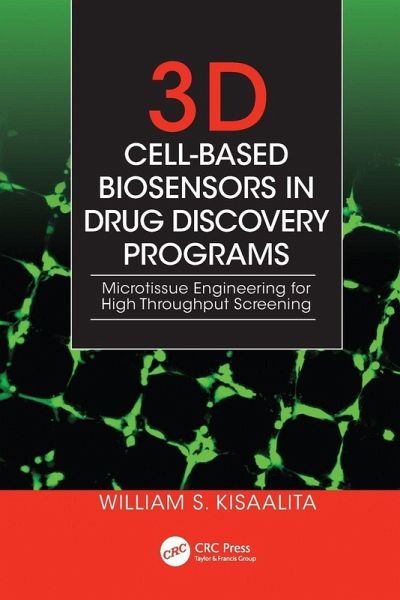
Written by William Kisaalita, one of the foremost experts in this field, this book provides the latest information - from theory to practice - on challenges and opportunities for incorporating 3D cell-based biosensors or assays in drug discovery programs. It supplies a historical perspective and defines the problem 3D cultures can solve. It also discusses how genomics and combinatorial chemistry have changed the way drug are discovered and presents data from the literature to underscore the less-than-desirable pharmaceutical industry performance under the new paradigm.
Written by William Kisaalita, one of the foremost experts in this field, this book provides the latest information - from theory to practice - on challenges and opportunities for incorporating 3D cell-based biosensors or assays in drug discovery programs. It supplies a historical perspective and defines the problem 3D cultures can solve. It also discusses how genomics and combinatorial chemistry have changed the way drug are discovered and presents data from the literature to underscore the less-than-desirable pharmaceutical industry performance under the new paradigm.
William S. Kisaalita, PhD is professor and former coordinator of graduate engineering programs at the University of Georgia, where he also directs the Cellular Bioengineering Laboratory. The main research focus of his laboratory is cell-surface interactions with applications in cell-based biosensing in drug discovery. He has published more than 80 peer reviewed and trade press papers and made more than 100 poster and podium presentations. He has received numerous instructional awards including membership in the University of Georgia Teaching Academy. He is a member of ACS, AAAS, ASEE, and SBS. Dr. Kisaalita serves on the editorial boards of The Open Biotechnology Journal and The Journal of Community Engagement and Scholarship.
Inhaltsangabe
Introduction. Biosensors and Bioassays. Target-Driven Drug Discovery. 3D versus 2D Cultures. Comparative Genomics and Proteomics. Comparative Structure and Function. Emerging Design Principles. Chemical Microenvironmental Factors. Spatial and Temporal Microenvironmental Factors. Material Physical Property and Force Microenvironmental Factors. Proteomics as a Promising Tool in the Search for 3D Biomarkers. Readout Present and Near Future. Ready-to-Use Commercial 3D Plates. Technology Deployment Challenges and Opportunities. Challenges to Adopting 3D Cultures in HTS Programs. Cases for 3D Cultures in Drug Discovery. Ideal Case Study Design. Appendices. Index.
Introduction. Biosensors and Bioassays. Target-Driven Drug Discovery. 3D versus 2D Cultures. Comparative Genomics and Proteomics. Comparative Structure and Function. Emerging Design Principles. Chemical Microenvironmental Factors. Spatial and Temporal Microenvironmental Factors. Material Physical Property and Force Microenvironmental Factors. Proteomics as a Promising Tool in the Search for 3D Biomarkers. Readout Present and Near Future. Ready-to-Use Commercial 3D Plates. Technology Deployment Challenges and Opportunities. Challenges to Adopting 3D Cultures in HTS Programs. Cases for 3D Cultures in Drug Discovery. Ideal Case Study Design. Appendices. Index.
Es gelten unsere Allgemeinen Geschäftsbedingungen: www.buecher.de/agb
Impressum
www.buecher.de ist ein Internetauftritt der buecher.de internetstores GmbH
Geschäftsführung: Monica Sawhney | Roland Kölbl | Günter Hilger
Sitz der Gesellschaft: Batheyer Straße 115 - 117, 58099 Hagen
Postanschrift: Bürgermeister-Wegele-Str. 12, 86167 Augsburg
Amtsgericht Hagen HRB 13257
Steuernummer: 321/5800/1497
USt-IdNr: DE450055826