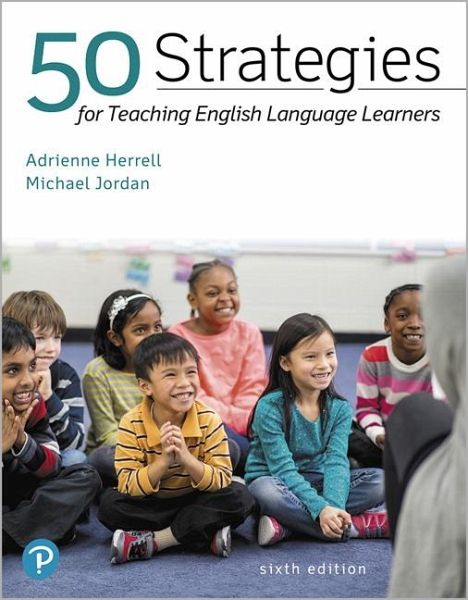
50 Strategies for Teaching English Language Learners includes an assortment of practical strategies aligned to TESOL standards, which have been field-tested in diverse classrooms. Each strategy includes a brief explanation, step-by-step instructions on how to plan and use the strategy, and classroom scenarios demonstrating how the strategy can be adapted for different grade levels and content areas. The authors have included additional strategies in language and literacy development, technology, and assessment to support both pre- and in-service teachers. The 6th Edition presents a major focus…mehr
50 Strategies for Teaching English Language Learners includes an assortment of practical strategies aligned to TESOL standards, which have been field-tested in diverse classrooms. Each strategy includes a brief explanation, step-by-step instructions on how to plan and use the strategy, and classroom scenarios demonstrating how the strategy can be adapted for different grade levels and content areas. The authors have included additional strategies in language and literacy development, technology, and assessment to support both pre- and in-service teachers. The 6th Edition presents a major focus in identifying and teaching students at their language development level. Included are a new chapter addressing the choice and use of technology strategies based on students' unique needs, additional adaptation charts, and expanded teacher self-evaluation rubrics.
About our authors Adrienne Herrell is retired as a visiting professor and ESOL Coordinator at Florida State University. She taught classes in early literacy, assessment, and strategies for teaching English language learners at California State University, Fresno, until her retirement in 2004. 50 Strategies for Teaching English Language Learners, 6th Edition, is her 18th book for Pearson. Michael Jordan is retired from California State University, Fresno, where he coordinated the multiple subjects (elementary) credential program and taught classes in Curriculum and Instruction, Social Foundations of Education, and Psychological Foundations of Education. 50 Strategies for Teaching English Language Learners, 6th Edition, is his 11th book for Pearson.
Inhaltsangabe
1. Predictable Routines and Signals: Reducing Anxiety 2. Total Physical Response and Total Physical Response Storytelling (TPR and TPRS): Integrating Movement into Language Acquisition 3. Modeled Talk: Demonstrating as You Talk 4. Visual Scaffolding: Providing Language Support through Visual Images 5. Realia Strategies: Connecting Language Acquisition to the Real World 6. Vocabulary Role-Play: Building Vocabulary through Dramatization 7. Collecting and Processing Words: Making Vocabulary Your Own 8. Manipulatives Strategies: Using Objects to Connect Concepts 9. Choosing Technology Based on Student Needs: Advancing Progress in English Language and Content Learning 10. Moving into Reading: Using Multiple Strategies to Foster Comprehension 11. Close Reading: Engaging with Text to Improve Reading Comprehension 12. Repeated Reading: Using Script Writing and Readers Theater 13. Scaffolding English Writing: Matching Instruction to Language Development 14. Reporting Back: Verbal Practice in Curriculum Connections 15. Leveled Questions: Adjusting Questioning Strategies to the Language Levels of Students 16. Bilingual Books and Labels: Supporting Biliteracy Awareness 17. Sorting Activities: Organizing Information into Categories 18. Cloze: Using Context to Create Meaning 19. Verb Action: Teaching Irregular Verbs through Experience 20. Syntax Surgery: Visually Manipulating English Grammar 21. Checking for Understanding: Using Questioning Strategies to Differentiate Instruction 22. Learning Centers: Extending Learning through Hands-On Practice 23. Communication Games: Creating Opportunities for Verbal Interaction 24. Cognate Strategies: Using the Home Language to Support English Acquisition 25. RTI for English Language Learners: Documenting and Monitoring Student Progress and the Effectiveness of Intervention 26. Preview/Review: Building Vocabulary and Concepts to Support Understanding 27. Story Reenactment: Making Stories Come to Life! 28. Repetition and Innovation: Exploring a Book to Deepen Comprehension 29. Language Focus Lessons: Supporting English Vocabulary and Structure Acquisition 30. Graphic Organizers: Visually Representing Ideas, Text, and Connections 31. Advance Organizers: Getting the Mind in Gear for Instruction 32. Guided Reading: Providing Individual Support within a Group Setting 33. Cohesion Links: Understanding the Glue That Holds Paragraphs Together 34. Language Framework Planning: Supporting Academic Language and Content Acquisition 35. Free Voluntary Reading: Nothing Helps Reading Like Reading 36. Culture Studies: Learning Research Skills and Valuing Home Cultures in One Project 37. Microselection: Finding Key Words and Main Ideas 38. Read, Pair, Share: Working with a Partner to Negotiate Meaning 39. Attribute Charting: Organizing Information to Support Understanding 40. Integrated Curriculum Projects: Using Authentic Projects to Integrate Content Knowledge 41. KWL and Data Charts: Researching and Organizing Information 42. Collaborative Reading: What to Do When They Cant Read the Textbook 43. Cooperative Learning: Group Interactions to Accomplish Goals 44. Learning Strategy Instruction: Acquiring Self-Help Skills 45. Multiple Intelligences Strategies: Teaching and Testing to Student-Preferred Learning Modes 46. Multimedia Presentations: Oral Reports for the New Millennium 47. Small Groups and Partners: Interactions to Enhance Instruction 48. GIST: Exploring Tough Text 49. Tutorials: Closing the Achievement Gap 50. Combining and Scheduling Strategies: Supporting Learning through Differentiation
1. Predictable Routines and Signals: Reducing Anxiety 2. Total Physical Response and Total Physical Response Storytelling (TPR and TPRS): Integrating Movement into Language Acquisition 3. Modeled Talk: Demonstrating as You Talk 4. Visual Scaffolding: Providing Language Support through Visual Images 5. Realia Strategies: Connecting Language Acquisition to the Real World 6. Vocabulary Role-Play: Building Vocabulary through Dramatization 7. Collecting and Processing Words: Making Vocabulary Your Own 8. Manipulatives Strategies: Using Objects to Connect Concepts 9. Choosing Technology Based on Student Needs: Advancing Progress in English Language and Content Learning 10. Moving into Reading: Using Multiple Strategies to Foster Comprehension 11. Close Reading: Engaging with Text to Improve Reading Comprehension 12. Repeated Reading: Using Script Writing and Readers Theater 13. Scaffolding English Writing: Matching Instruction to Language Development 14. Reporting Back: Verbal Practice in Curriculum Connections 15. Leveled Questions: Adjusting Questioning Strategies to the Language Levels of Students 16. Bilingual Books and Labels: Supporting Biliteracy Awareness 17. Sorting Activities: Organizing Information into Categories 18. Cloze: Using Context to Create Meaning 19. Verb Action: Teaching Irregular Verbs through Experience 20. Syntax Surgery: Visually Manipulating English Grammar 21. Checking for Understanding: Using Questioning Strategies to Differentiate Instruction 22. Learning Centers: Extending Learning through Hands-On Practice 23. Communication Games: Creating Opportunities for Verbal Interaction 24. Cognate Strategies: Using the Home Language to Support English Acquisition 25. RTI for English Language Learners: Documenting and Monitoring Student Progress and the Effectiveness of Intervention 26. Preview/Review: Building Vocabulary and Concepts to Support Understanding 27. Story Reenactment: Making Stories Come to Life! 28. Repetition and Innovation: Exploring a Book to Deepen Comprehension 29. Language Focus Lessons: Supporting English Vocabulary and Structure Acquisition 30. Graphic Organizers: Visually Representing Ideas, Text, and Connections 31. Advance Organizers: Getting the Mind in Gear for Instruction 32. Guided Reading: Providing Individual Support within a Group Setting 33. Cohesion Links: Understanding the Glue That Holds Paragraphs Together 34. Language Framework Planning: Supporting Academic Language and Content Acquisition 35. Free Voluntary Reading: Nothing Helps Reading Like Reading 36. Culture Studies: Learning Research Skills and Valuing Home Cultures in One Project 37. Microselection: Finding Key Words and Main Ideas 38. Read, Pair, Share: Working with a Partner to Negotiate Meaning 39. Attribute Charting: Organizing Information to Support Understanding 40. Integrated Curriculum Projects: Using Authentic Projects to Integrate Content Knowledge 41. KWL and Data Charts: Researching and Organizing Information 42. Collaborative Reading: What to Do When They Cant Read the Textbook 43. Cooperative Learning: Group Interactions to Accomplish Goals 44. Learning Strategy Instruction: Acquiring Self-Help Skills 45. Multiple Intelligences Strategies: Teaching and Testing to Student-Preferred Learning Modes 46. Multimedia Presentations: Oral Reports for the New Millennium 47. Small Groups and Partners: Interactions to Enhance Instruction 48. GIST: Exploring Tough Text 49. Tutorials: Closing the Achievement Gap 50. Combining and Scheduling Strategies: Supporting Learning through Differentiation
Es gelten unsere Allgemeinen Geschäftsbedingungen: www.buecher.de/agb
Impressum
www.buecher.de ist ein Internetauftritt der buecher.de internetstores GmbH
Geschäftsführung: Monica Sawhney | Roland Kölbl | Günter Hilger
Sitz der Gesellschaft: Batheyer Straße 115 - 117, 58099 Hagen
Postanschrift: Bürgermeister-Wegele-Str. 12, 86167 Augsburg
Amtsgericht Hagen HRB 13257
Steuernummer: 321/5800/1497
USt-IdNr: DE450055826