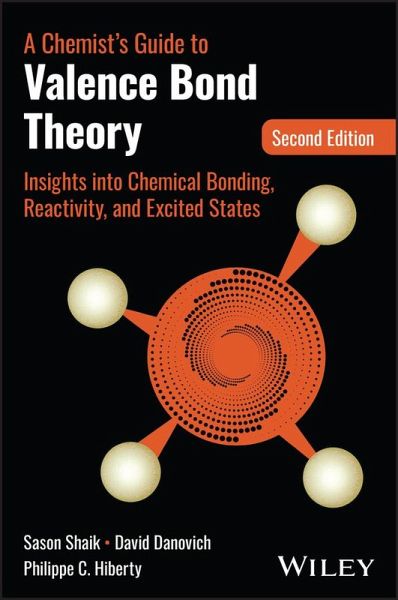
Updated resource on theoretical aspects and applications of valence bond methods to chemical calculations A Chemist's Guide to Valence Bond Theory explains how to use valence bond theory to think concisely and rigorously and how to use VB computations. It familiarizes the reader with the various VB-based computational tools and methods available today and their use for a given chemical problem and provides samples of inputs/outputs that instruct the reader on how to interpret the results. The book also covers the theoretical basis of Valence Bond (VB) theory and its applications to chemistry…mehr
Updated resource on theoretical aspects and applications of valence bond methods to chemical calculations A Chemist's Guide to Valence Bond Theory explains how to use valence bond theory to think concisely and rigorously and how to use VB computations. It familiarizes the reader with the various VB-based computational tools and methods available today and their use for a given chemical problem and provides samples of inputs/outputs that instruct the reader on how to interpret the results. The book also covers the theoretical basis of Valence Bond (VB) theory and its applications to chemistry in the ground- and excited-states. Applications discussed in the book include sets of exercises and corresponding answers on bonding problems, organic reactions, inorganic/organometallic reactions, and bioinorganic/ biochemical reactions. This Second Edition contains a new chapter on chemical bonds which includes sections on covalent, ionic, and charge-shift bonds as well as triplet bond pairs, a new chapter on the Breathing-Orbital VB method with its application to molecular excited states, and several new sections discussing recent developments such as DFT-based methods and solvent effects via the Polarizable Continuum Model (PCM). A Chemist's Guide to Valence Bond Theory includes information on: * Writing and representing valence bond wave functions, overlaps between determinants, and valence bond formalism using the exact Hamiltonian * Generating a set of valence bond structures and mapping a molecular orbital-configuration interaction wave function into a valence bond wave function * The alleged "failures" of valence bond theory, such as the triplet ground state of dioxygen, and whether or not these failures are "real" * Spin Hamiltonian valence bond theory and its applications to organic radicals, diradicals, and polyradicals A Chemist's Guide to Valence Bond Theory is an essential reference on the subject for chemists who are not necessarily experts on theory but have some background in quantum chemistry. The text is also appropriate for upper undergraduate and graduate students in advanced courses on valence bond theory.
Sason Shaik is a Saerree K. and Louis P. Fiedler Emeritus Professor of Chemistry at the Hebrew University. He has developed a number of new paradigms and concepts using valence bond theory and participated in the initiation of various valence bond methods. David Danovich is a senior computational chemist at the Institute of Chemistry in the Hebrew University, and an expert on VB calculations Philippe C. Hiberty is an Emeritus Director of Research at the Centre National de la Recherche Scientifique in the Université Paris-Saclay. He has developed the Breathing-Orbital VB method.
Inhaltsangabe
PREFACE xv 1 A Brief Story of Valence Bond Theory, its Rivalry with Molecular Orbital Theory, its Demise, and Resurgence 1 1.1 Roots of VB Theory 2 1.2 Origins of MO Theory and the Roots of VB-MO Rivalry 5 1.3 One Theory is Up, The Other is Down 7 1.4 Mythical Failures of VB Theory: More Ground is Gained by MO Theory 8 1.5 Are the Failures of VB Theory Real? 12 1.6 Valence Bond is a Legitimate Theory Alongside Molecular Orbital Theory 14 1.7 Modern VB Theory: Valence Bond Theory is Coming of Age 15 2 A Brief Tour Through Some Valence Bond Outputs and Terminology 26 2.1 Valence Bond Output for the H2 Molecule 26 2.2 Valence Bond Mixing Diagrams 32 2.3 Valence Bond Output for the HF Molecule 33 3 Basic Valence Bond Theory 40 3.1 Writing and Representing Valence Bond Wave Functions 40 3.2 Overlaps Between Determinants 45 3.3 Valence Bond Formalism Using the Exact Hamiltonian 47 3.4 Valence Bond Formalism Using an Effective Hamiltonian 49 3.5 Some Simple Formulas for Elementary Interactions 51 3.6 Structural Coefficients and Weights of Valence Bond Wave Functions 56 3.7 Bridges Between Molecular Orbital and Valence Bond Theories 57 4 Mapping Molecular Orbital-Configuration Interaction to Valence Bond Wave Functions 83 4.1 Generating a Set of Valence Bond Structures 83 4.2 Mapping a Molecular Orbital-Configuration Interaction Wave Function into a Valence Bond Wave Function 85 4.3 Using Half-Determinants to Calculate Overlaps between Valence Bond Structures 90 5 Are The "Failures" of Valence Bond Theory Real? 96 5.1 Introduction 96 5.2 The Triplet Ground State of Dioxygen 96 5.3 Aromaticity-Antiaromaticity in Ionic Rings CnHn± 100 5.4 Aromaticity/Antiaromaticity in Neutral Rings 103 5.5 The Valence Ionization Spectrum of CH4 108 5.6 The Valence Ionization Spectrum of H2O and the "Rabbit-Ear" Lone Pairs 110 5.7 A Summary 113 6 Valence Bond Diagrams for Chemical Reactivity 120 6.1 Introduction 120 6.2 Two Archetypal Valence Bond Diagrams 121 6.3 The Valence Bond State Correlation Diagram Model and its General Outlook on Reactivity 122 6.4 Construction of Valence Bond State Correlation Diagrams for Elementary Processes 123 6.5 Barrier Expressions Based on the Valence Bond State Correlation Diagram Model 131 6.6 Making Qualitative Reactivity Predictions with the Valence Bond State Correlation Diagram 133 6.7 Valence Bond Configuration Mixing Diagrams: General Features 149 6.8 Valence Bond Configuration Mixing Diagram with Ionic Intermediate Curves 149 6.9 Valence Bond Configuration Mixing Diagram with Intermediates Nascent from "Foreign States" 154 6.10 Valence Bond State Correlation Diagram: A General Model for Electronic Delocalization in Clusters 157 6.11 Valence Bond State Correlation Diagram: Application to Photochemical Reactivity 163 6.12 A Summary 169 7 Using Valence Bond Theory to Compute and Conceptualize Excited States 203 7.1 Excited States of a Single Bond 205 7.2 Excited States of Molecules with Conjugated Bonds 207 7.3 A Summary 223 8 Spin Hamiltonian Valence Bond Theory and its Applications to Organic Radicals, Diradicals, and Polyradicals 232 8.1 A Topological Semiempirical Hamiltonian 233 8.2 Applications 235 8.3 A Summary 241 9 Currently Available Ab Initio Valence Bond Computational Methods and Their Principles 249 9.1 Introduction 249 9.2 Valence Bond Methods Based on Semi-Localized Orbitals 250 9.3 Valence Bond Methods Based on Localized Orbitals 258 9.4 Methods for Getting Valence Bond Quantities from Molecular Orbital-Based Procedures 266 9.5 A Valence Bond Method with Polarizable Continuum Model 268 9.6 Perspective 269 10 Do Your Own Valence Bond Calculation-A Practical Guide 282 10.1 Introduction 282 10.2 Wave Functions and Energies for the Ground State of F2 282 10.3 Valence Bond Calculations of Diabatic States and Resonance Energies 293 10.4 Comments on Calculations of VBSCDS and VBCMDS 298 11 The Chemical Bonds in Valence Bond Theory: Review Chapters on Specific Topics in Valence Bond Theory 318 11.1 Introduction 318 11.2 VB Approaches: Their Bond Descriptions and Representations 319 11.3 Applications of VB Theory to Chemical Bonding 325 11.4 Why and When Will Atoms Form Hypervalent Molecules? 343 11.5 Features of Orbital Hybridization in Modern VB Theory 346 11.6 Description of Multiple Bonding 353 11.7 Triplet-Pair Bonds (TPB) in Ferromagnetic Metal Clusters 375 11.8 Concluding Remarks 388 11.9 Supporting Information 391 12 Breathing-Orbital Valence Bond: Methods and Applications 417 12.1 Introduction 417 12.2 Methodology 418 12.3 Some Applications of the BOVB Method 426 12.4 Concluding Remarks 441 Epilogue 447 Glossary 450 Index 455
PREFACE xv 1 A Brief Story of Valence Bond Theory, its Rivalry with Molecular Orbital Theory, its Demise, and Resurgence 1 1.1 Roots of VB Theory 2 1.2 Origins of MO Theory and the Roots of VB-MO Rivalry 5 1.3 One Theory is Up, The Other is Down 7 1.4 Mythical Failures of VB Theory: More Ground is Gained by MO Theory 8 1.5 Are the Failures of VB Theory Real? 12 1.6 Valence Bond is a Legitimate Theory Alongside Molecular Orbital Theory 14 1.7 Modern VB Theory: Valence Bond Theory is Coming of Age 15 2 A Brief Tour Through Some Valence Bond Outputs and Terminology 26 2.1 Valence Bond Output for the H2 Molecule 26 2.2 Valence Bond Mixing Diagrams 32 2.3 Valence Bond Output for the HF Molecule 33 3 Basic Valence Bond Theory 40 3.1 Writing and Representing Valence Bond Wave Functions 40 3.2 Overlaps Between Determinants 45 3.3 Valence Bond Formalism Using the Exact Hamiltonian 47 3.4 Valence Bond Formalism Using an Effective Hamiltonian 49 3.5 Some Simple Formulas for Elementary Interactions 51 3.6 Structural Coefficients and Weights of Valence Bond Wave Functions 56 3.7 Bridges Between Molecular Orbital and Valence Bond Theories 57 4 Mapping Molecular Orbital-Configuration Interaction to Valence Bond Wave Functions 83 4.1 Generating a Set of Valence Bond Structures 83 4.2 Mapping a Molecular Orbital-Configuration Interaction Wave Function into a Valence Bond Wave Function 85 4.3 Using Half-Determinants to Calculate Overlaps between Valence Bond Structures 90 5 Are The "Failures" of Valence Bond Theory Real? 96 5.1 Introduction 96 5.2 The Triplet Ground State of Dioxygen 96 5.3 Aromaticity-Antiaromaticity in Ionic Rings CnHn± 100 5.4 Aromaticity/Antiaromaticity in Neutral Rings 103 5.5 The Valence Ionization Spectrum of CH4 108 5.6 The Valence Ionization Spectrum of H2O and the "Rabbit-Ear" Lone Pairs 110 5.7 A Summary 113 6 Valence Bond Diagrams for Chemical Reactivity 120 6.1 Introduction 120 6.2 Two Archetypal Valence Bond Diagrams 121 6.3 The Valence Bond State Correlation Diagram Model and its General Outlook on Reactivity 122 6.4 Construction of Valence Bond State Correlation Diagrams for Elementary Processes 123 6.5 Barrier Expressions Based on the Valence Bond State Correlation Diagram Model 131 6.6 Making Qualitative Reactivity Predictions with the Valence Bond State Correlation Diagram 133 6.7 Valence Bond Configuration Mixing Diagrams: General Features 149 6.8 Valence Bond Configuration Mixing Diagram with Ionic Intermediate Curves 149 6.9 Valence Bond Configuration Mixing Diagram with Intermediates Nascent from "Foreign States" 154 6.10 Valence Bond State Correlation Diagram: A General Model for Electronic Delocalization in Clusters 157 6.11 Valence Bond State Correlation Diagram: Application to Photochemical Reactivity 163 6.12 A Summary 169 7 Using Valence Bond Theory to Compute and Conceptualize Excited States 203 7.1 Excited States of a Single Bond 205 7.2 Excited States of Molecules with Conjugated Bonds 207 7.3 A Summary 223 8 Spin Hamiltonian Valence Bond Theory and its Applications to Organic Radicals, Diradicals, and Polyradicals 232 8.1 A Topological Semiempirical Hamiltonian 233 8.2 Applications 235 8.3 A Summary 241 9 Currently Available Ab Initio Valence Bond Computational Methods and Their Principles 249 9.1 Introduction 249 9.2 Valence Bond Methods Based on Semi-Localized Orbitals 250 9.3 Valence Bond Methods Based on Localized Orbitals 258 9.4 Methods for Getting Valence Bond Quantities from Molecular Orbital-Based Procedures 266 9.5 A Valence Bond Method with Polarizable Continuum Model 268 9.6 Perspective 269 10 Do Your Own Valence Bond Calculation-A Practical Guide 282 10.1 Introduction 282 10.2 Wave Functions and Energies for the Ground State of F2 282 10.3 Valence Bond Calculations of Diabatic States and Resonance Energies 293 10.4 Comments on Calculations of VBSCDS and VBCMDS 298 11 The Chemical Bonds in Valence Bond Theory: Review Chapters on Specific Topics in Valence Bond Theory 318 11.1 Introduction 318 11.2 VB Approaches: Their Bond Descriptions and Representations 319 11.3 Applications of VB Theory to Chemical Bonding 325 11.4 Why and When Will Atoms Form Hypervalent Molecules? 343 11.5 Features of Orbital Hybridization in Modern VB Theory 346 11.6 Description of Multiple Bonding 353 11.7 Triplet-Pair Bonds (TPB) in Ferromagnetic Metal Clusters 375 11.8 Concluding Remarks 388 11.9 Supporting Information 391 12 Breathing-Orbital Valence Bond: Methods and Applications 417 12.1 Introduction 417 12.2 Methodology 418 12.3 Some Applications of the BOVB Method 426 12.4 Concluding Remarks 441 Epilogue 447 Glossary 450 Index 455
Es gelten unsere Allgemeinen Geschäftsbedingungen: www.buecher.de/agb
Impressum
www.buecher.de ist ein Internetauftritt der buecher.de internetstores GmbH
Geschäftsführung: Monica Sawhney | Roland Kölbl | Günter Hilger
Sitz der Gesellschaft: Batheyer Straße 115 - 117, 58099 Hagen
Postanschrift: Bürgermeister-Wegele-Str. 12, 86167 Augsburg
Amtsgericht Hagen HRB 13257
Steuernummer: 321/5800/1497
USt-IdNr: DE450055826