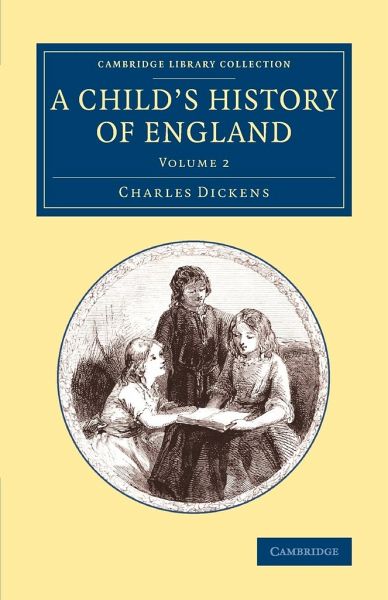
This three-volume history of England from before the Roman conquest through to the Glorious Revolution of 1688 was originally serialised in Charles Dickens' magazine Household Words between 1851 and 1853. The text was published in book form in the same period, although each volume was post-dated to the following year. Dickens dedicated the work to his own children, intending it to be a stepping stone to more substantial histories. The volumes were popular with readers for decades, and were used in British schools well into the twentieth century. Dickens employs his signature style to bring…mehr
This three-volume history of England from before the Roman conquest through to the Glorious Revolution of 1688 was originally serialised in Charles Dickens' magazine Household Words between 1851 and 1853. The text was published in book form in the same period, although each volume was post-dated to the following year. Dickens dedicated the work to his own children, intending it to be a stepping stone to more substantial histories. The volumes were popular with readers for decades, and were used in British schools well into the twentieth century. Dickens employs his signature style to bring events and personalities to life, making use of vivid similes, unabashedly partisan language and direct speech, as well as the occasional moral lesson. Volume 2 covers the period from the reign of Henry III through to the death in 1485 of the 'usurper and murderer' Richard III.
Charles Dickens (1812-1870) was a prominent English novelist and social critic, celebrated for his vivid storytelling and keen observations of Victorian society. Born on February 7, 1812, in Portsmouth, England, Dickens experienced a difficult childhood marked by financial instability and a stint in a workhouse. These early experiences deeply influenced his writing and social consciousness. Dickens's novels are renowned for their memorable characters, intricate plots, and sharp social commentary. His works often critique the social and economic injustices of his time, including the harsh conditions faced by the poor and the inadequacies of the legal and educational systems. Dickens's writing is characterized by its rich, descriptive prose and its ability to blend humor with serious social issues. In addition to his novels, Dickens was an active public figure, engaging in various social causes and reform efforts. He was a passionate advocate for children's rights, labor reforms, and improvements to the criminal justice system. Charles Dickens passed away on June 9, 1870, but his legacy endures through his substantial contributions to literature and social reform. His works continue to be widely read and adapted, reflecting his lasting impact on both literary and social spheres.
Inhaltsangabe
15. England under Henry the Third 16. England under Edward the First, called Longshanks 17. England under Edward the Second 18. England under Edward the Third 19. England under Richard the Second 20. England under Henry the Fourth, called Bolingbroke 21. England under Henry the Fifth 22. England under Henry the Sixth 23. England under Edward the Fourth 24. England under Edward the Fifth 25. England under Richard the Third.
15. England under Henry the Third 16. England under Edward the First, called Longshanks 17. England under Edward the Second 18. England under Edward the Third 19. England under Richard the Second 20. England under Henry the Fourth, called Bolingbroke 21. England under Henry the Fifth 22. England under Henry the Sixth 23. England under Edward the Fourth 24. England under Edward the Fifth 25. England under Richard the Third.
Es gelten unsere Allgemeinen Geschäftsbedingungen: www.buecher.de/agb
Impressum
www.buecher.de ist ein Internetauftritt der buecher.de internetstores GmbH
Geschäftsführung: Monica Sawhney | Roland Kölbl | Günter Hilger
Sitz der Gesellschaft: Batheyer Straße 115 - 117, 58099 Hagen
Postanschrift: Bürgermeister-Wegele-Str. 12, 86167 Augsburg
Amtsgericht Hagen HRB 13257
Steuernummer: 321/5800/1497
USt-IdNr: DE450055826