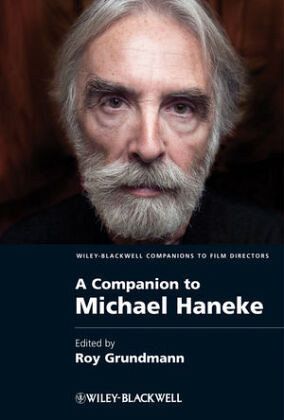
A Companion to Michael Haneke is a definitive collection ofnewly-commissioned work that covers Haneke s body of work in itsentirety, catering to students and scholars of Haneke at a timewhen interest in the director and his work is soaring. Introduces one of the most important directors to have emergedon the global cinema scene in the past fifteen years Includes exclusive interviews with Michael Haneke, including aninterview discussion of The White Ribbon Considers themes, topics, and subjects that have formed thenucleus of the director s life s work: the fate of European cinema,Haneke in…mehr
A Companion to Michael Haneke is a definitive collection ofnewly-commissioned work that covers Haneke s body of work in itsentirety, catering to students and scholars of Haneke at a timewhen interest in the director and his work is soaring.
Introduces one of the most important directors to have emergedon the global cinema scene in the past fifteen years Includes exclusive interviews with Michael Haneke, including aninterview discussion of The White Ribbon Considers themes, topics, and subjects that have formed thenucleus of the director s life s work: the fate of European cinema,Haneke in Hollywood, pornography, alienation, citizenship,colonialism, and the gaze of surveillance Features critical examinations of La Pianiste, Time of theWolf, Three Paths to the Lake and Caché, amongstothers
Roy Grundmann is Associate Professor of Film Studies, and Film Studies Program Director in the Department of Film and Television, Boston University. He is co-editor of the multi-volume Blackwell History of American Film.
Inhaltsangabe
Notes on Contributors viii Acknowledgments xiv Introduction: Haneke's Anachronism 1 Roy Grundmann Part I Critical and Topical Approaches to Haneke's Cinema 51 1 Performative Self-Contradictions: Michael Haneke's Mind Games 53 Thomas Elsaesser 2 Five Tapes, Four Halls, Two Dreams: Vicissitudes of Surveillant Narration in Michael Haneke's Caché 75 Thomas Y. Levin 3 Infectious Images: Haneke, Cameron, Egoyan, and the Dueling Epistemologies of Video and Film 91 Vinzenz Hediger 4 Tracking Code Unknown 113 Tom Conley 5 Michael Haneke and the New Subjectivity: Architecture and Film 124 Peter Eisenman 6 Games Haneke Plays: Reality and Performance 130 Brigitte Peucker 7 Figures of Disgust 147 Christa Blümlinger 8 Without Music: On Caché 161 Michel Chion 9 Fighting the Melodramatic Condition: Haneke's Polemics 168 Jörg Metelmann 10 "Mourning for the Gods Who Have Died": The Role of Religion in Michael Haneke's Glaciation Trilogy 187 Gregor Thuswaldner Part II The Television Films 203 11 A Melancholy Labor of Love, or Film Adaptation as Translation: Three Paths to the Lake 205 Fatima Naqvi 12 Michael Haneke and the Television Years: A Reading of Lemmings 227 Peter Brunette 13 Variations on Themes: Spheres and Space in Haneke's Variation 243 Monica Filimon and Fatima Naqvi 14 Projecting Desire, Rewriting Cinematic Memory: Gender and German Reconstruction in Michael Haneke's Fraulein 263 Tobias Nagl 15 (Don't) Look Now: Hallucinatory Art History in Who Was Edgar Allan? 279 Janelle Blankenship 16 Bureaucracy and Visual Style 301 Brian Price Part III The German-Language Theatrical Features 321 17 Structures of Glaciation: Gaze, Perspective, and Gestus in the Films of Michael Haneke 323 Georg Seeßlen 18 The Void at the Center of Things: Figures of Identity in Michael Haneke's Glaciation Trilogy 337 Peter J. Schwartz 19 How to Do Things with Violences 354 Eugenie Brinkema 20 Between Adorno and Lyotard: Michael Haneke's Aesthetic of Fragmentation 371 Roy Grundmann 21 Hollywood Endgames 420 Leland Monk Part IV The French-Language Theatrical Features 439 22 Class Conflict and Urban Public Space: Haneke and Mass Transit 441 Barton Byg 23 Multicultural Encounters in Haneke's French-Language Cinema 455 Alex Lykidis 24 Haneke's Secession: Perspectivism and Anti-Nihilism in Code Unknown and Caché 477 Kevin L. Stoehr 25 The Unknown Piano Teacher 495 Charles Warren 26 Discordant Desires, Violent Refrains: La Pianiste (The Piano Teacher) 511 Jean Ma 27 Civilization's Endless Shadow: Haneke's Time of the Wolf 532 Evan Torner 28 The Intertextual and Discursive Origins of Terror in Michael Haneke's Caché 551 T. Jefferson Kline Part V Michael Haneke Speaks 563 29 Terror and Utopia of Form: Robert Bresson's Au hasard Balthazar 565 Michael Haneke 30 Violence and the Media 575 Michael Haneke 31 The World That Is Known: An Interview with Michael Haneke 580 Christopher Sharrett 32 Unsentimental Education: An Interview with Michael Haneke 591 Roy Grundmann Filmography 607 Index 619
Notes on Contributors viii Acknowledgments xiv Introduction: Haneke's Anachronism 1 Roy Grundmann Part I Critical and Topical Approaches to Haneke's Cinema 51 1 Performative Self-Contradictions: Michael Haneke's Mind Games 53 Thomas Elsaesser 2 Five Tapes, Four Halls, Two Dreams: Vicissitudes of Surveillant Narration in Michael Haneke's Caché 75 Thomas Y. Levin 3 Infectious Images: Haneke, Cameron, Egoyan, and the Dueling Epistemologies of Video and Film 91 Vinzenz Hediger 4 Tracking Code Unknown 113 Tom Conley 5 Michael Haneke and the New Subjectivity: Architecture and Film 124 Peter Eisenman 6 Games Haneke Plays: Reality and Performance 130 Brigitte Peucker 7 Figures of Disgust 147 Christa Blümlinger 8 Without Music: On Caché 161 Michel Chion 9 Fighting the Melodramatic Condition: Haneke's Polemics 168 Jörg Metelmann 10 "Mourning for the Gods Who Have Died": The Role of Religion in Michael Haneke's Glaciation Trilogy 187 Gregor Thuswaldner Part II The Television Films 203 11 A Melancholy Labor of Love, or Film Adaptation as Translation: Three Paths to the Lake 205 Fatima Naqvi 12 Michael Haneke and the Television Years: A Reading of Lemmings 227 Peter Brunette 13 Variations on Themes: Spheres and Space in Haneke's Variation 243 Monica Filimon and Fatima Naqvi 14 Projecting Desire, Rewriting Cinematic Memory: Gender and German Reconstruction in Michael Haneke's Fraulein 263 Tobias Nagl 15 (Don't) Look Now: Hallucinatory Art History in Who Was Edgar Allan? 279 Janelle Blankenship 16 Bureaucracy and Visual Style 301 Brian Price Part III The German-Language Theatrical Features 321 17 Structures of Glaciation: Gaze, Perspective, and Gestus in the Films of Michael Haneke 323 Georg Seeßlen 18 The Void at the Center of Things: Figures of Identity in Michael Haneke's Glaciation Trilogy 337 Peter J. Schwartz 19 How to Do Things with Violences 354 Eugenie Brinkema 20 Between Adorno and Lyotard: Michael Haneke's Aesthetic of Fragmentation 371 Roy Grundmann 21 Hollywood Endgames 420 Leland Monk Part IV The French-Language Theatrical Features 439 22 Class Conflict and Urban Public Space: Haneke and Mass Transit 441 Barton Byg 23 Multicultural Encounters in Haneke's French-Language Cinema 455 Alex Lykidis 24 Haneke's Secession: Perspectivism and Anti-Nihilism in Code Unknown and Caché 477 Kevin L. Stoehr 25 The Unknown Piano Teacher 495 Charles Warren 26 Discordant Desires, Violent Refrains: La Pianiste (The Piano Teacher) 511 Jean Ma 27 Civilization's Endless Shadow: Haneke's Time of the Wolf 532 Evan Torner 28 The Intertextual and Discursive Origins of Terror in Michael Haneke's Caché 551 T. Jefferson Kline Part V Michael Haneke Speaks 563 29 Terror and Utopia of Form: Robert Bresson's Au hasard Balthazar 565 Michael Haneke 30 Violence and the Media 575 Michael Haneke 31 The World That Is Known: An Interview with Michael Haneke 580 Christopher Sharrett 32 Unsentimental Education: An Interview with Michael Haneke 591 Roy Grundmann Filmography 607 Index 619
Es gelten unsere Allgemeinen Geschäftsbedingungen: www.buecher.de/agb
Impressum
www.buecher.de ist ein Internetauftritt der buecher.de internetstores GmbH
Geschäftsführung: Monica Sawhney | Roland Kölbl | Günter Hilger
Sitz der Gesellschaft: Batheyer Straße 115 - 117, 58099 Hagen
Postanschrift: Bürgermeister-Wegele-Str. 12, 86167 Augsburg
Amtsgericht Hagen HRB 13257
Steuernummer: 321/5800/1497
USt-IdNr: DE450055826