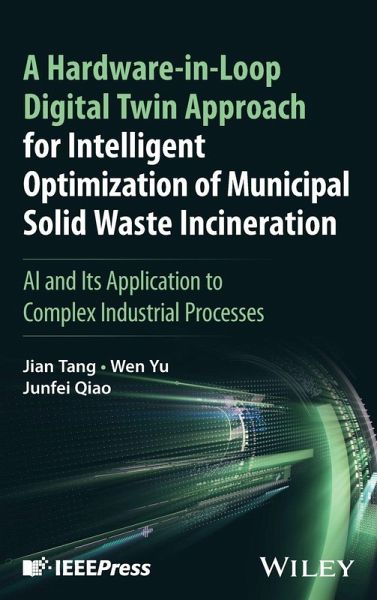
An expert discussion of intelligent optimization control in complex industrial processes In A Hardware-in-Loop Digital Twin Approach for Intelligent Optimization of Municipal Solid Waste Incineration: AI and Its Application to Complex Industrial Processes, a team of distinguished researchers delivers an innovative new approach to integrating virtual mechanism data generated through coupled numerical simulation and orthogonal experimental design with real historical data. The book explains how to create a heterogenous ensemble prediction model for carbon monoxide emissions in municipal solid…mehr
An expert discussion of intelligent optimization control in complex industrial processes In A Hardware-in-Loop Digital Twin Approach for Intelligent Optimization of Municipal Solid Waste Incineration: AI and Its Application to Complex Industrial Processes, a team of distinguished researchers delivers an innovative new approach to integrating virtual mechanism data generated through coupled numerical simulation and orthogonal experimental design with real historical data. The book explains how to create a heterogenous ensemble prediction model for carbon monoxide emissions in municipal solid waste incineration (MSWI) processes. The authors focus on intelligent optimization control of MSWI processes based on hardware-in-loop DT platforms. They demonstrate AI-driven modeling, control, optimization algorithms in real-world applications, including virtual-real data hybrid-driven deep modeling and intelligent optimal controls based on multiple objectives. Additional topics include: * A thorough introduction to numerical simulation modeling of whole industrial processes * Comprehensive explorations of the design, implementation, and validation of hardware-in-loop digital twin platforms * Practical discussions of AI-driven modeling, control, and optimization * Fulsome descriptions of the skills required to address challenges posed by complex industrial processes Perfect for environmental engineers and researchers, A Hardware-in-Loop Digital Twin Approach for Intelligent Optimization of Municipal Solid Waste Incineration will also benefit MSWI plant operators and managers, as well as AI and machine learning researchers and developers of environmental monitoring and control systems.
Jian Tang, PhD, is a Professor and Researcher with the Department of Artificial Intelligence and Automation in the Faculty of Information Technology at the Beijing University of Technology. Wen Yu, PhD, is a Professor and Head of Department of the Departamento de Control Automatico at CINVESTAV-IPN (National Polytechnic Institute) in Mexico City, Mexico. Junfei Qiao, PhD, is a Professor with the Beijing University of Technology and Director of Beijing Laboratory of Smart Environmental Protection in Beijing, China.
Inhaltsangabe
List of Figures xvii List of Tables xxix About the Authors xxxiii Preface xxxv Abbreviations xxxvii Symbol Meaning xliii 1 Introduction 1 1.1 Municipal Solid Waste Incineration (MSWI) Process and Optimal Control 1 1.2 AI-Based Modeling and Monitoring 17 1.3 Control and Optimization Based on AI and DT 32 1.4 Hardware-in-Loop DT for MSWI Processes 36 1.5 Book's Structure 42 Part I 42 Part II 45 Part III 47 References 48 Part I Modeling and Monitoring Based on AI 67 2 Numerical Simulation and Modeling Analysis on Whole Industrial Process by Coupling Multiple Software 69 2.1 Simulated Plant and Simulation Modeling 69 2.2 Modeling Strategy with Virtual Data-driven 92 2.3 Modeling Implementation for Whole Process 94 2.4 Numerical Simulation and Modeling Results 103 2.5 Conclusion 124 References 125 3 Conventional Pollutant Deep Modeling Using Virtual Data and Real Data Hybrid-Driven 129 3.1 Virtual-Real Data-Driven Conventional Pollutant Modeling 129 3.2 Real Data Hybrid-Driven Modeling Implementation 133 3.3 Deep Modeling Results and Discussion 142 3.4 Conclusion 157 References 160 4 Trace Pollutant Modeling Using the Selective Ensemble Algorithm 163 4.1 Selective Ensemble Modeling Strategy 163 4.2 Trace Pollutant Modeling Implementation 168 4.3 Data-Driven Ensemble Modeling Results and Discussion 176 4.4 Conclusion 201 References 201 5 Trace Pollutant Modeling Based on Semi-supervised Random Forest Optimization 205 5.1 Data-Driven Trace Pollutant Semi-supervised Random Forest Optimization Modeling Strategy 205 5.2 Data-Driven Trace Pollutant Modeling Implementation 212 5.3 Experimental Verification 221 5.4 Conclusion 238 References 239 6 Combustion State Identification Using ViT-IDFC with Global Flame Feature 243 6.1 Combustion State Identification and Global Flame Feature 243 6.2 State Monitoring Implementation Using ViT-IDFC 249 6.3 Experimental Results 256 6.4 Conclusion 273 References 273 7 Online Combustion Status Recognition of Using IDFC based on Convolutional Multi-Layer Feature Fusion 277 7.1 Convolutional Multi-layer Feature Fusion Based Online Combustion Identification 277 7.2 Convolutional-Feature-IDFC-Based Implementation 280 7.3 State Monitoring Results and Discussion 289 7.4 Conclusion 298 References 298 Part II Control and Optimization Based on AI and Digital Twin 301 8 Bayesian Optimization-Based Interval Type-2 Fuzzy Neural Network (IT2FNN) for Furnace Temperature Control 303 8.1 Bayesian Optimization-Based Interval Type-2 Fuzzy Neural Network Control Strategy 303 8.2 BO-Based Interval Type-2 Fuzzy Neural Network Control 309 8.3 Simulation Results 320 8.4 Conclusion 339 References 340 9 Interval Type-2 Fuzzy Control with Multiple Event Triggers for Furnace Temperature Control 345 9.1 Type-2 Fuzzy Broad Control with Multiple Event Triggers 345 9.2 METM-Based Interval Type-2 Fuzzy Broad Control 351 9.3 Stability Analysis 358 9.4 Simulation Results 362 9.5 Conclusion 376 References 377 10 Intelligent Optimal Control of Furnace Temperature Using Multi-loop Controller and PSO Optimization 381 10.1 Multi-loop Controller Using PSO Optimization 381 10.2 Data-Driven Furnace Temperature Optimization 392 10.3 Simulation Results 400 10.4 Conclusion 415 References 416 11 Data-Driven Multi-objective Intelligent Optimal Control of Industrial Process 419 11.1 Multiple Objectives Multiple Controlled Variables Optimization 419 11.2 Data-Driven Multiple Controlled Variables Optimization Implementation 429 11.3 Simulation Results 437 11.4 Conclusion 453 References 454 Part III Hardware-in-loop Digital Twin Platform Design and Validation 457 12 Description of Hardware-in-Loop Digital Twin Platform Requirements for Industrial Process 459 12.1 Overview 459 12.2 Laboratory Research on Platform Functionality Requirements 459 12.3 Industrial Applications on Platform Functionality Requirements 461 12.4 Platform Functional Requirements from a Flex Reconfiguration Perspective 463 12.5 Conclusion 466 13 Design and Realization of Hardware-in-Loop Digital Twin Platform 467 13.1 Digital Twin Functional Design 467 13.2 Hardware-in-Loop Structural Design 468 13.3 Hardware Setup 477 13.4 Software Design 479 13.5 Platform Realization 487 14 Testing and Validation of Hardware-in-Loop Digital Twin Platform 495 14.1 System Effectiveness Testing and Verification 495 14.2 Laboratory Scene Intelligent Algorithm Testing and Validation 500 14.3 Intelligent Algorithm Transplantation Application in Industrial Scenarios 512 15 Summary and Outlook of Hardware-in-Loop Digital Twin Platform 519 15.1 Summary 519 15.2 Future AI Algorithm Research and Validation End-Edge-Cloud Platform 520 Index 537
List of Figures xvii List of Tables xxix About the Authors xxxiii Preface xxxv Abbreviations xxxvii Symbol Meaning xliii 1 Introduction 1 1.1 Municipal Solid Waste Incineration (MSWI) Process and Optimal Control 1 1.2 AI-Based Modeling and Monitoring 17 1.3 Control and Optimization Based on AI and DT 32 1.4 Hardware-in-Loop DT for MSWI Processes 36 1.5 Book's Structure 42 Part I 42 Part II 45 Part III 47 References 48 Part I Modeling and Monitoring Based on AI 67 2 Numerical Simulation and Modeling Analysis on Whole Industrial Process by Coupling Multiple Software 69 2.1 Simulated Plant and Simulation Modeling 69 2.2 Modeling Strategy with Virtual Data-driven 92 2.3 Modeling Implementation for Whole Process 94 2.4 Numerical Simulation and Modeling Results 103 2.5 Conclusion 124 References 125 3 Conventional Pollutant Deep Modeling Using Virtual Data and Real Data Hybrid-Driven 129 3.1 Virtual-Real Data-Driven Conventional Pollutant Modeling 129 3.2 Real Data Hybrid-Driven Modeling Implementation 133 3.3 Deep Modeling Results and Discussion 142 3.4 Conclusion 157 References 160 4 Trace Pollutant Modeling Using the Selective Ensemble Algorithm 163 4.1 Selective Ensemble Modeling Strategy 163 4.2 Trace Pollutant Modeling Implementation 168 4.3 Data-Driven Ensemble Modeling Results and Discussion 176 4.4 Conclusion 201 References 201 5 Trace Pollutant Modeling Based on Semi-supervised Random Forest Optimization 205 5.1 Data-Driven Trace Pollutant Semi-supervised Random Forest Optimization Modeling Strategy 205 5.2 Data-Driven Trace Pollutant Modeling Implementation 212 5.3 Experimental Verification 221 5.4 Conclusion 238 References 239 6 Combustion State Identification Using ViT-IDFC with Global Flame Feature 243 6.1 Combustion State Identification and Global Flame Feature 243 6.2 State Monitoring Implementation Using ViT-IDFC 249 6.3 Experimental Results 256 6.4 Conclusion 273 References 273 7 Online Combustion Status Recognition of Using IDFC based on Convolutional Multi-Layer Feature Fusion 277 7.1 Convolutional Multi-layer Feature Fusion Based Online Combustion Identification 277 7.2 Convolutional-Feature-IDFC-Based Implementation 280 7.3 State Monitoring Results and Discussion 289 7.4 Conclusion 298 References 298 Part II Control and Optimization Based on AI and Digital Twin 301 8 Bayesian Optimization-Based Interval Type-2 Fuzzy Neural Network (IT2FNN) for Furnace Temperature Control 303 8.1 Bayesian Optimization-Based Interval Type-2 Fuzzy Neural Network Control Strategy 303 8.2 BO-Based Interval Type-2 Fuzzy Neural Network Control 309 8.3 Simulation Results 320 8.4 Conclusion 339 References 340 9 Interval Type-2 Fuzzy Control with Multiple Event Triggers for Furnace Temperature Control 345 9.1 Type-2 Fuzzy Broad Control with Multiple Event Triggers 345 9.2 METM-Based Interval Type-2 Fuzzy Broad Control 351 9.3 Stability Analysis 358 9.4 Simulation Results 362 9.5 Conclusion 376 References 377 10 Intelligent Optimal Control of Furnace Temperature Using Multi-loop Controller and PSO Optimization 381 10.1 Multi-loop Controller Using PSO Optimization 381 10.2 Data-Driven Furnace Temperature Optimization 392 10.3 Simulation Results 400 10.4 Conclusion 415 References 416 11 Data-Driven Multi-objective Intelligent Optimal Control of Industrial Process 419 11.1 Multiple Objectives Multiple Controlled Variables Optimization 419 11.2 Data-Driven Multiple Controlled Variables Optimization Implementation 429 11.3 Simulation Results 437 11.4 Conclusion 453 References 454 Part III Hardware-in-loop Digital Twin Platform Design and Validation 457 12 Description of Hardware-in-Loop Digital Twin Platform Requirements for Industrial Process 459 12.1 Overview 459 12.2 Laboratory Research on Platform Functionality Requirements 459 12.3 Industrial Applications on Platform Functionality Requirements 461 12.4 Platform Functional Requirements from a Flex Reconfiguration Perspective 463 12.5 Conclusion 466 13 Design and Realization of Hardware-in-Loop Digital Twin Platform 467 13.1 Digital Twin Functional Design 467 13.2 Hardware-in-Loop Structural Design 468 13.3 Hardware Setup 477 13.4 Software Design 479 13.5 Platform Realization 487 14 Testing and Validation of Hardware-in-Loop Digital Twin Platform 495 14.1 System Effectiveness Testing and Verification 495 14.2 Laboratory Scene Intelligent Algorithm Testing and Validation 500 14.3 Intelligent Algorithm Transplantation Application in Industrial Scenarios 512 15 Summary and Outlook of Hardware-in-Loop Digital Twin Platform 519 15.1 Summary 519 15.2 Future AI Algorithm Research and Validation End-Edge-Cloud Platform 520 Index 537
Es gelten unsere Allgemeinen Geschäftsbedingungen: www.buecher.de/agb
Impressum
www.buecher.de ist ein Internetauftritt der buecher.de internetstores GmbH
Geschäftsführung: Monica Sawhney | Roland Kölbl | Günter Hilger
Sitz der Gesellschaft: Batheyer Straße 115 - 117, 58099 Hagen
Postanschrift: Bürgermeister-Wegele-Str. 12, 86167 Augsburg
Amtsgericht Hagen HRB 13257
Steuernummer: 321/5800/1497
USt-IdNr: DE450055826