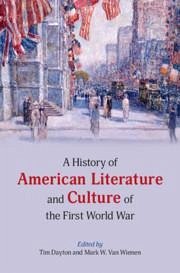
A History of American Literature and Culture of the First World War
Herausgeber: Dayton, Tim; Wienen, Mark W van
A History of American Literature and Culture of the First World War
Herausgeber: Dayton, Tim; Wienen, Mark W van
- Gebundenes Buch
- Merkliste
- Auf die Merkliste
- Bewerten Bewerten
- Teilen
- Produkt teilen
- Produkterinnerung
- Produkterinnerung
This book explores American literature and culture of the First World War while analyzing the war's historical context and significance.
Andere Kunden interessierten sich auch für
American Literature in Transition, 1970-1980134,99 €
African American Literature in Transition, 1800-1830: Volume 2, 1800-1830120,99 €
Vincent Sherry (ed.)The Cambridge Companion to the Literature of the First World War43,99 €
A History of California Literature148,99 €
Peter Brand / Lino Pertile (eds.)The Cambridge History of Italian Literature66,99 €
African American Literature in Transition, 1850-1865: Volume 4, 1850-1865126,99 €
Dennis WalderLiterature in the Modern World58,99 €-
-
-
This book explores American literature and culture of the First World War while analyzing the war's historical context and significance.
Produktdetails
- Produktdetails
- Verlag: Cambridge University Press
- Seitenzahl: 466
- Erscheinungstermin: 4. Februar 2021
- Englisch
- Abmessung: 229mm x 160mm x 33mm
- Gewicht: 794g
- ISBN-13: 9781108475327
- ISBN-10: 1108475329
- Artikelnr.: 60065492
- Herstellerkennzeichnung
- Libri GmbH
- Europaallee 1
- 36244 Bad Hersfeld
- gpsr@libri.de
- Verlag: Cambridge University Press
- Seitenzahl: 466
- Erscheinungstermin: 4. Februar 2021
- Englisch
- Abmessung: 229mm x 160mm x 33mm
- Gewicht: 794g
- ISBN-13: 9781108475327
- ISBN-10: 1108475329
- Artikelnr.: 60065492
- Herstellerkennzeichnung
- Libri GmbH
- Europaallee 1
- 36244 Bad Hersfeld
- gpsr@libri.de
Introduction. America's Great War at one hundred (and counting) Tim Dayton
and Mark W. Van Wienen; Part I. Genre and Medium: 1. Poetry: hegemonic
vistas Tim Dayton; 2. Fiction: a war remembered Scott D. Emmert; 3. Film:
mostly classical Hollywood cinema goes to war and sometimes brings it home
Leslie DeBauche; 4. Drama: from literary fantasy to gritty realism Brenda
Murphy; 5. Popular music: tin pan alley as national barometer John Roger
Paas; 6. Journalism: adventure and reckoning Joe Hayden; 7. Memoirs:
negotiating the great war's social memory Ian Andrew Isherwood; 8. Art and
illustration: modes of visual persuasion David M. Lubin; Part II. Settings
and Subjects: 9. The peace movement: rapid development, women's leadership,
regional diversity Kathleen Brown; 10. Americans in France: women writers
and international responsibility Jennifer Haytock; 11. German Americans:
dual loyalties and poetic adaptations of 'The watch on the Rhine' Lorie
Vanchena; 12. The English in America: cultural propaganda and its agents
Alisa Miller; 13. Preparedness: Theodore Roosevelt, Leonard Wood, and
rookie rhymes Adam Szetela; 14. Propaganda: martialing media Pearl James;
15. Conscientious objectors: conscience, courage, and resistance Scott H.
Bennett; 16. Volunteers: ambulance and nursing narratives Hazel Hutchison;
17. African Americans: defining freedom, citizenship, and patriotism
Françoise N. Hamlin; 18. In the Midwest: 'Borne back ceaselessly into the
past' David Rennie; 19. In the south: three Mississippi writers and the
Great War mobilization David A. Davis; 20. Revolution: winning the world,
losing the (middle) way Mark W. Van Wienen; 21. Monuments and memorials:
memory dissipated Mark Levitch; Part III. Transformations: 22. The nation:
forging one, finding many Jonathan Vincent; 23. Free speech: 'clear and
present danger' Ernest Freeberg; 24. Labour: from replaceable cogs to
corporate citizens Thomas Mackaman; 25. The veteran: parades, bitter
homecomings, and fictions of the doughboy's return Steven Trout; 26. The
military-industrial complex: practices, precedents, and literary
engagements Mark Whalan; 27. The world: race, red-baiting, and the
Wilsonian century Alexander Anievas.
and Mark W. Van Wienen; Part I. Genre and Medium: 1. Poetry: hegemonic
vistas Tim Dayton; 2. Fiction: a war remembered Scott D. Emmert; 3. Film:
mostly classical Hollywood cinema goes to war and sometimes brings it home
Leslie DeBauche; 4. Drama: from literary fantasy to gritty realism Brenda
Murphy; 5. Popular music: tin pan alley as national barometer John Roger
Paas; 6. Journalism: adventure and reckoning Joe Hayden; 7. Memoirs:
negotiating the great war's social memory Ian Andrew Isherwood; 8. Art and
illustration: modes of visual persuasion David M. Lubin; Part II. Settings
and Subjects: 9. The peace movement: rapid development, women's leadership,
regional diversity Kathleen Brown; 10. Americans in France: women writers
and international responsibility Jennifer Haytock; 11. German Americans:
dual loyalties and poetic adaptations of 'The watch on the Rhine' Lorie
Vanchena; 12. The English in America: cultural propaganda and its agents
Alisa Miller; 13. Preparedness: Theodore Roosevelt, Leonard Wood, and
rookie rhymes Adam Szetela; 14. Propaganda: martialing media Pearl James;
15. Conscientious objectors: conscience, courage, and resistance Scott H.
Bennett; 16. Volunteers: ambulance and nursing narratives Hazel Hutchison;
17. African Americans: defining freedom, citizenship, and patriotism
Françoise N. Hamlin; 18. In the Midwest: 'Borne back ceaselessly into the
past' David Rennie; 19. In the south: three Mississippi writers and the
Great War mobilization David A. Davis; 20. Revolution: winning the world,
losing the (middle) way Mark W. Van Wienen; 21. Monuments and memorials:
memory dissipated Mark Levitch; Part III. Transformations: 22. The nation:
forging one, finding many Jonathan Vincent; 23. Free speech: 'clear and
present danger' Ernest Freeberg; 24. Labour: from replaceable cogs to
corporate citizens Thomas Mackaman; 25. The veteran: parades, bitter
homecomings, and fictions of the doughboy's return Steven Trout; 26. The
military-industrial complex: practices, precedents, and literary
engagements Mark Whalan; 27. The world: race, red-baiting, and the
Wilsonian century Alexander Anievas.
Introduction. America's Great War at one hundred (and counting) Tim Dayton
and Mark W. Van Wienen; Part I. Genre and Medium: 1. Poetry: hegemonic
vistas Tim Dayton; 2. Fiction: a war remembered Scott D. Emmert; 3. Film:
mostly classical Hollywood cinema goes to war and sometimes brings it home
Leslie DeBauche; 4. Drama: from literary fantasy to gritty realism Brenda
Murphy; 5. Popular music: tin pan alley as national barometer John Roger
Paas; 6. Journalism: adventure and reckoning Joe Hayden; 7. Memoirs:
negotiating the great war's social memory Ian Andrew Isherwood; 8. Art and
illustration: modes of visual persuasion David M. Lubin; Part II. Settings
and Subjects: 9. The peace movement: rapid development, women's leadership,
regional diversity Kathleen Brown; 10. Americans in France: women writers
and international responsibility Jennifer Haytock; 11. German Americans:
dual loyalties and poetic adaptations of 'The watch on the Rhine' Lorie
Vanchena; 12. The English in America: cultural propaganda and its agents
Alisa Miller; 13. Preparedness: Theodore Roosevelt, Leonard Wood, and
rookie rhymes Adam Szetela; 14. Propaganda: martialing media Pearl James;
15. Conscientious objectors: conscience, courage, and resistance Scott H.
Bennett; 16. Volunteers: ambulance and nursing narratives Hazel Hutchison;
17. African Americans: defining freedom, citizenship, and patriotism
Françoise N. Hamlin; 18. In the Midwest: 'Borne back ceaselessly into the
past' David Rennie; 19. In the south: three Mississippi writers and the
Great War mobilization David A. Davis; 20. Revolution: winning the world,
losing the (middle) way Mark W. Van Wienen; 21. Monuments and memorials:
memory dissipated Mark Levitch; Part III. Transformations: 22. The nation:
forging one, finding many Jonathan Vincent; 23. Free speech: 'clear and
present danger' Ernest Freeberg; 24. Labour: from replaceable cogs to
corporate citizens Thomas Mackaman; 25. The veteran: parades, bitter
homecomings, and fictions of the doughboy's return Steven Trout; 26. The
military-industrial complex: practices, precedents, and literary
engagements Mark Whalan; 27. The world: race, red-baiting, and the
Wilsonian century Alexander Anievas.
and Mark W. Van Wienen; Part I. Genre and Medium: 1. Poetry: hegemonic
vistas Tim Dayton; 2. Fiction: a war remembered Scott D. Emmert; 3. Film:
mostly classical Hollywood cinema goes to war and sometimes brings it home
Leslie DeBauche; 4. Drama: from literary fantasy to gritty realism Brenda
Murphy; 5. Popular music: tin pan alley as national barometer John Roger
Paas; 6. Journalism: adventure and reckoning Joe Hayden; 7. Memoirs:
negotiating the great war's social memory Ian Andrew Isherwood; 8. Art and
illustration: modes of visual persuasion David M. Lubin; Part II. Settings
and Subjects: 9. The peace movement: rapid development, women's leadership,
regional diversity Kathleen Brown; 10. Americans in France: women writers
and international responsibility Jennifer Haytock; 11. German Americans:
dual loyalties and poetic adaptations of 'The watch on the Rhine' Lorie
Vanchena; 12. The English in America: cultural propaganda and its agents
Alisa Miller; 13. Preparedness: Theodore Roosevelt, Leonard Wood, and
rookie rhymes Adam Szetela; 14. Propaganda: martialing media Pearl James;
15. Conscientious objectors: conscience, courage, and resistance Scott H.
Bennett; 16. Volunteers: ambulance and nursing narratives Hazel Hutchison;
17. African Americans: defining freedom, citizenship, and patriotism
Françoise N. Hamlin; 18. In the Midwest: 'Borne back ceaselessly into the
past' David Rennie; 19. In the south: three Mississippi writers and the
Great War mobilization David A. Davis; 20. Revolution: winning the world,
losing the (middle) way Mark W. Van Wienen; 21. Monuments and memorials:
memory dissipated Mark Levitch; Part III. Transformations: 22. The nation:
forging one, finding many Jonathan Vincent; 23. Free speech: 'clear and
present danger' Ernest Freeberg; 24. Labour: from replaceable cogs to
corporate citizens Thomas Mackaman; 25. The veteran: parades, bitter
homecomings, and fictions of the doughboy's return Steven Trout; 26. The
military-industrial complex: practices, precedents, and literary
engagements Mark Whalan; 27. The world: race, red-baiting, and the
Wilsonian century Alexander Anievas.