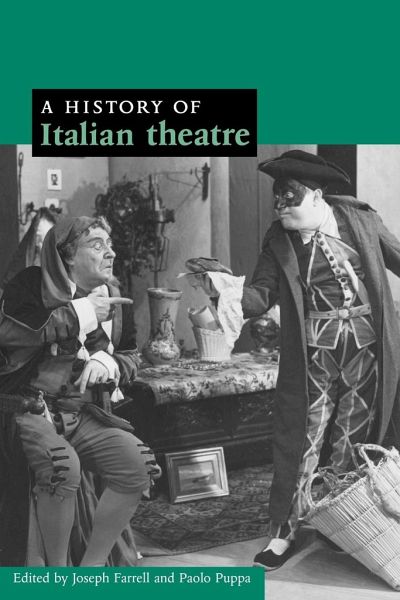
With the aim of providing a comprehensive history of Italian drama from its origins to the time of its publication in 2006, this book treats theatre in its widest sense, discussing the impact of all the elements and figures integral to the collaborative process of theatre-making. The impact of designers, actors, directors and impresarios as well as of playwrights is subjected to critical scrutiny, while individual chapters examine the changes in technology and shifts in the cultural climate which have influenced theatre. No other approach would be acceptable for Italian theatre, where from the…mehr
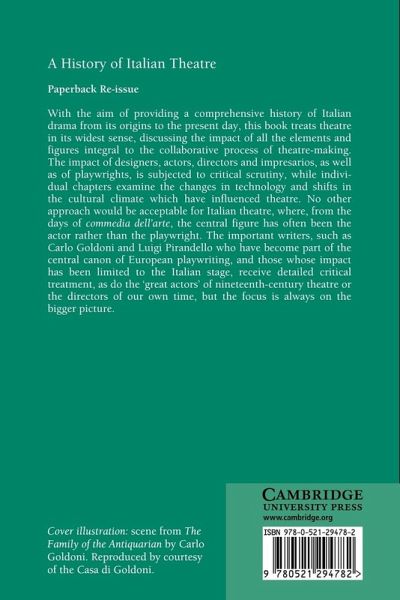
With the aim of providing a comprehensive history of Italian drama from its origins to the time of its publication in 2006, this book treats theatre in its widest sense, discussing the impact of all the elements and figures integral to the collaborative process of theatre-making. The impact of designers, actors, directors and impresarios as well as of playwrights is subjected to critical scrutiny, while individual chapters examine the changes in technology and shifts in the cultural climate which have influenced theatre. No other approach would be acceptable for Italian theatre, where from the days of commedia dell'arte, the central figure has often been the actor rather than the playwright. The important writers, such as Carlo Goldoni and Luigi Pirandello, receive detailed critical treatment, as do the 'great actors' of nineteenth-century theatre or the directors of our own time, but the focus is always on the bigger picture.
David Herbert Richards "D. H." Lawrence (11 September 1885 - 2 March 1930) was an English novelist, poet, playwright, essayist, literary critic and painter. His collected works represent, among other things, an extended reflection upon the dehumanising effects of modernity and industrialisation. Some of the issues Lawrence explores are emotional health, vitality, spontaneity and instinct. Lawrence's opinions earned him many enemies and he endured official persecution, censorship, and misrepresentation of his creative work throughout the second half of his life, much of which he spent in a voluntary exile which he called his "savage pilgrimage." At the time of his death, his public reputation was that of a pornographer who had wasted his considerable talents. E. M. Forster, in an obituary notice, challenged this widely held view, describing him as, "The greatest imaginative novelist of our generation." Lawrence is perhaps best known for his novels Sons and Lovers, The Rainbow, Women in Love and Lady Chatterley's Lover. Within these Lawrence explores the possibilities for life within an industrial setting. In particular Lawrence is concerned with the nature of relationships that can be had within such a setting. Though often classed as a realist, Lawrence in fact uses his characters to give form to his personal philosophy. His depiction of sexual activity, though seen as shocking when he first published in the early 20th century, has its roots in this highly personal way of thinking and being. It is worth noting that Lawrence was very interested in the sense of touch and that his focus on physical intimacy has its roots in a desire to restore an emphasis on the body, and re-balance it with what he perceived to be Western civilisation's over-emphasis on the mind.
Inhaltsangabe
1. In search of Italian theatre Joseph Farrell Part I. Middle Ages: 2. Secular and religious drama in the Middle Ages Nerida Newbigin Part II. The Renaissance Stage: 3. The Renaissance stage Richard Andrews 4. Comedy: erudite comedy Richard Andrews 5. Ariosto and Ferrara Peter Brand 6. Machiavelli and Florence Peter Brand 7. The Intronati and Sienese comedy Richard Andrews 8. Ruzante and the Veneto Ronnie Ferguson 9. Aretino and later comic playwrights Peter Brand 10. Tragedy Richard Andrews 11. Renaissance bibliography, pastoral drama Lisa Sampson 12. Commedia dell'arte Kenneth and Laura Richards Part III. Seventeenth Century: 13. The seventeenth-century stage Maurice Slawinski Part IV. Enlightenment Theatre: 14. Arrivals and departures Joseph Farrell 15. The Venetian stage Guido Nicastro 16. Carlo Goldoni, playwright and reformer Piermario Vescovo 17. Carlo Gozzi Alberto Beniscelli 18. Metastasio and melodramma Costantino Maeder 19. Vittorio Alfieri Gilberto Pizzamiglio Part V. Risorgimento and United Italy: 20. The Romantic theatre Ferdinando Taviani 21. The theatre of united Italy Paolo Puppa 22. The dialect theatres of Northern Italy Roberto Cuppone 23. Neopolitan theatre Gaetana Marrone 24. Sicilian dialect theatre Antonio Scuderi Part VI. The Modern Age: 25. Actors, authors and directors Joseph Farrell 26. Innovation and theatre of the grotesque Donatella Fischer 27. Luigi Pirandello Paolo Puppa 28. Italo Svevo, dramatist Paolo Puppa 29. D'Annunzio's theatre John Woodhouse 30. Theatre under fascism Clive Griffiths 31. Pier Paolo Pasolini Robert S. C. Gordon 32. Dario Fo Joseph Farrell 33. Women in theatre Sharon Wood 34. The contemporary scene Paolo Puppa.
1. In search of Italian theatre Joseph Farrell Part I. Middle Ages: 2. Secular and religious drama in the Middle Ages Nerida Newbigin Part II. The Renaissance Stage: 3. The Renaissance stage Richard Andrews 4. Comedy: erudite comedy Richard Andrews 5. Ariosto and Ferrara Peter Brand 6. Machiavelli and Florence Peter Brand 7. The Intronati and Sienese comedy Richard Andrews 8. Ruzante and the Veneto Ronnie Ferguson 9. Aretino and later comic playwrights Peter Brand 10. Tragedy Richard Andrews 11. Renaissance bibliography, pastoral drama Lisa Sampson 12. Commedia dell'arte Kenneth and Laura Richards Part III. Seventeenth Century: 13. The seventeenth-century stage Maurice Slawinski Part IV. Enlightenment Theatre: 14. Arrivals and departures Joseph Farrell 15. The Venetian stage Guido Nicastro 16. Carlo Goldoni, playwright and reformer Piermario Vescovo 17. Carlo Gozzi Alberto Beniscelli 18. Metastasio and melodramma Costantino Maeder 19. Vittorio Alfieri Gilberto Pizzamiglio Part V. Risorgimento and United Italy: 20. The Romantic theatre Ferdinando Taviani 21. The theatre of united Italy Paolo Puppa 22. The dialect theatres of Northern Italy Roberto Cuppone 23. Neopolitan theatre Gaetana Marrone 24. Sicilian dialect theatre Antonio Scuderi Part VI. The Modern Age: 25. Actors, authors and directors Joseph Farrell 26. Innovation and theatre of the grotesque Donatella Fischer 27. Luigi Pirandello Paolo Puppa 28. Italo Svevo, dramatist Paolo Puppa 29. D'Annunzio's theatre John Woodhouse 30. Theatre under fascism Clive Griffiths 31. Pier Paolo Pasolini Robert S. C. Gordon 32. Dario Fo Joseph Farrell 33. Women in theatre Sharon Wood 34. The contemporary scene Paolo Puppa.
Es gelten unsere Allgemeinen Geschäftsbedingungen: www.buecher.de/agb
Impressum
www.buecher.de ist ein Internetauftritt der buecher.de internetstores GmbH
Geschäftsführung: Monica Sawhney | Roland Kölbl | Günter Hilger
Sitz der Gesellschaft: Batheyer Straße 115 - 117, 58099 Hagen
Postanschrift: Bürgermeister-Wegele-Str. 12, 86167 Augsburg
Amtsgericht Hagen HRB 13257
Steuernummer: 321/5800/1497
USt-IdNr: DE450055826