

Andere Kunden interessierten sich auch für
") Letter Addressed To The Abbe Raynal On The Affairs Of North America (1782)13,99 €
Letter Addressed To The Abbe Raynal On The Affairs Of North America (1782)13,99 € A Letter from the Abbe Raynal to the National Assembly of France, on the Subject of the Revolution24,90 €
 Mary Cary15,99 €
 A Letter on the Purity of Our Glorious Immanuel's Human Nature, Addressed to the Followers of E. Irving24,90 €
 A Letter on the Subject of the Clergy Reserves, Addressed to the Very Rev. Principal Macfarlan and the Rev. Dr. Burns, D.D.14,90 €
 A Letter on the Abolition of the Slave Trade; Addressed to the freeholders and other inhabitants of Yorkshire59,90 €
 A Letter to Wm. E. Channing, D. D., in Reply to One Addressed to Him by R. R. Madden on the Abuse of the Flag of the United States in the Island of Cuba11,90 €
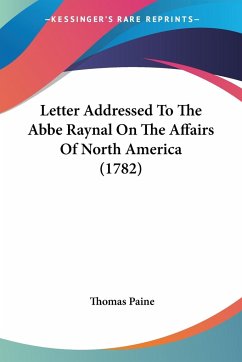




Thomas Paine at age 37 immigrated to the American colonies. He was an English pamphleteer, revolutionary, radical, inventor, and intellectual. His principle works were the pamphlet Common Sense (1776), advocating colonial America's independence from Great Britain, and The American Crisis (1776-1783), a pro-revolutionary pamphlet series. The original work in French, by the Abbe Raynal discussed the Revolution of North America. Because Abbe was far from the war, he occasionally was in error of the facts, or misconceived the causes or principles by which they were produced. Thomas Paine wrote this pamphlet in order to set the record straight.