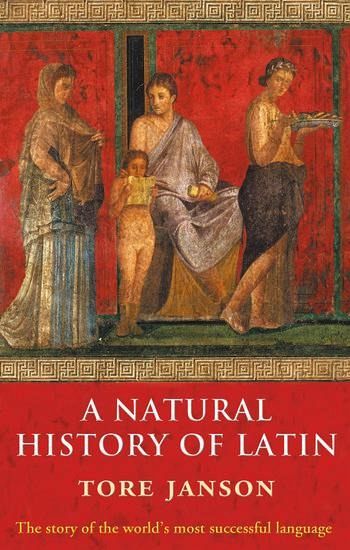
Tells the history of Latin from its origins. This book offers persuasive arguments for its value and gives access to its fascinating worlds. It describes how Latin spread through the classical world, its renewed importance in the Middle Ages, and its survival in modern times. It also shows how spoken and written Latin evolved in different places.
Tells the history of Latin from its origins. This book offers persuasive arguments for its value and gives access to its fascinating worlds. It describes how Latin spread through the classical world, its renewed importance in the Middle Ages, and its survival in modern times. It also shows how spoken and written Latin evolved in different places.
Tore Janson was Professor successively of Latin and African Languages at the University of Göteborg and is a world expert on the history of Languages. His books include A Short History of Languages (OUP 2002; hardback edition 2007).
Inhaltsangabe
Part I Latin and the Romans 1: Lingua latina: a first acquaintance 2: The earliest period of Rome 3: How Latin became Latin 4: From small town to great power 5: How bad were the Romans? 6: A voice from early Rome 7: The meeting with Greece 8: Theatre for the people 9: The age of revolutions 10: Writing, reading, listening, and speaking 11: Speeches, politics, and lawsuits 12: Cicero and rhetoric 13: The language of history 14: Imperium romanum: Augustus and the Roman Empire 15: Name and family 16: Years and months 17: Latin becomes the language of Europe 18: Poets and poetry 19: Philosophy: Lucretius, Cicero, Seneca 20: The Schools and Quintilian 21: The sciences 22: Everyday language 23: Laws and legal language 24: Tacitus, the emperors, and Britain 25: Christianity: from dangerous sect to state religion Part II Latin and Europe 26: Europe after Rome 27: From Latin to the Romance languages 28: Missionaries, Latin, and foreign languages 29: Latin in Britain 30: Latin in schools 31: Speaking and spelling 32: Books and scribes 33: Saints and heretics 34: The guardians of the heritage 35: Poetry after antiquity 36: Abelard and Heloise 37: The thinkers 38: The Renaissance 39: Doctors and their language 40: Linnaeus and Latin 41: Physicists, chemists, and others 42: Alchemy, witchcraft, and Harry Potter 43: Loanwords and neologisms 44: Latin and German 45: Latin and French 46: Latin and English 47: Latin and us Part III About the Grammar 48: Introduction 49: Pronunciation and stress 50: Sentences, verbs and nouns 51: Words and word classes 52: Nouns 53: Adjectives 54: Pronouns 55: THe forms of the verb 56: Amandi and amanda 57: How words are formed Glossary of words and expressions Part IV Basic Vocabulary Part V Common Phrases and Expressions Suggested reading Index
Part I Latin and the Romans 1: Lingua latina: a first acquaintance 2: The earliest period of Rome 3: How Latin became Latin 4: From small town to great power 5: How bad were the Romans? 6: A voice from early Rome 7: The meeting with Greece 8: Theatre for the people 9: The age of revolutions 10: Writing, reading, listening, and speaking 11: Speeches, politics, and lawsuits 12: Cicero and rhetoric 13: The language of history 14: Imperium romanum: Augustus and the Roman Empire 15: Name and family 16: Years and months 17: Latin becomes the language of Europe 18: Poets and poetry 19: Philosophy: Lucretius, Cicero, Seneca 20: The Schools and Quintilian 21: The sciences 22: Everyday language 23: Laws and legal language 24: Tacitus, the emperors, and Britain 25: Christianity: from dangerous sect to state religion Part II Latin and Europe 26: Europe after Rome 27: From Latin to the Romance languages 28: Missionaries, Latin, and foreign languages 29: Latin in Britain 30: Latin in schools 31: Speaking and spelling 32: Books and scribes 33: Saints and heretics 34: The guardians of the heritage 35: Poetry after antiquity 36: Abelard and Heloise 37: The thinkers 38: The Renaissance 39: Doctors and their language 40: Linnaeus and Latin 41: Physicists, chemists, and others 42: Alchemy, witchcraft, and Harry Potter 43: Loanwords and neologisms 44: Latin and German 45: Latin and French 46: Latin and English 47: Latin and us Part III About the Grammar 48: Introduction 49: Pronunciation and stress 50: Sentences, verbs and nouns 51: Words and word classes 52: Nouns 53: Adjectives 54: Pronouns 55: THe forms of the verb 56: Amandi and amanda 57: How words are formed Glossary of words and expressions Part IV Basic Vocabulary Part V Common Phrases and Expressions Suggested reading Index
Es gelten unsere Allgemeinen Geschäftsbedingungen: www.buecher.de/agb
Impressum
www.buecher.de ist ein Internetauftritt der buecher.de internetstores GmbH
Geschäftsführung: Monica Sawhney | Roland Kölbl | Günter Hilger
Sitz der Gesellschaft: Batheyer Straße 115 - 117, 58099 Hagen
Postanschrift: Bürgermeister-Wegele-Str. 12, 86167 Augsburg
Amtsgericht Hagen HRB 13257
Steuernummer: 321/5800/1497
USt-IdNr: DE450055826