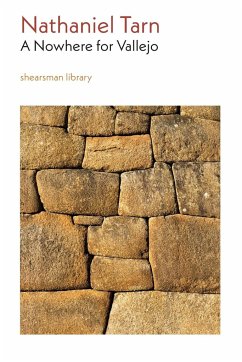
A Nowhere for Vallejo was first published in the UK 1972, and was a major staging post in the author's career, the penultimate volume to appear from a UK publisher before we issued the selected edition, Palenque, in the 1980s. The dramatic title sequence takes the form of an imaginary journey to the Inca empire, seen through the eyes of the first and last of the Inca emperors and of two great half-Inca writers, both of them exiles: Garcilaso de la Vega and César Vallejo. This sequence and 'Choices' were written in Guatemala during the summer of 1969 by Lake Atitlán where the author had carried…mehr
A Nowhere for Vallejo was first published in the UK 1972, and was a major staging post in the author's career, the penultimate volume to appear from a UK publisher before we issued the selected edition, Palenque, in the 1980s. The dramatic title sequence takes the form of an imaginary journey to the Inca empire, seen through the eyes of the first and last of the Inca emperors and of two great half-Inca writers, both of them exiles: Garcilaso de la Vega and César Vallejo. This sequence and 'Choices' were written in Guatemala during the summer of 1969 by Lake Atitlán where the author had carried out fieldwork as an anthropologist many years earlier. The book is completed by the 'October' sequence, which ends with the moving "in memoriam" poem 'Requiem pro duabus filiis Israel'.
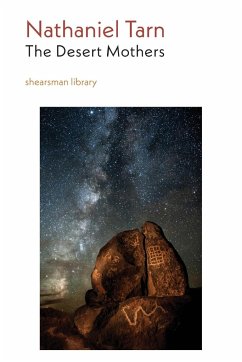
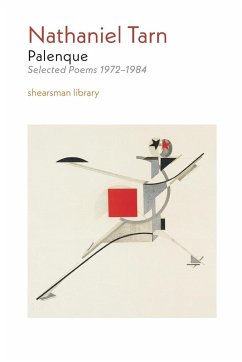
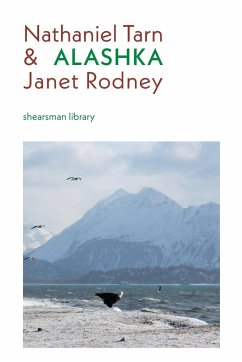
Franco-Anglo-American poet Nathaniel Tarn was born in 1928 and educated in France, Belgium and England, obtaining degrees from Cambridge, the Sorbonne and Chicago; he emigrated to the United States in 1970, where he taught at American universities until his retirement. He now lives just outside Santa Fe, New Mexico. Although he is perhaps best-known these days as a poet and essayist, he is also an anthropologist, with a particular interest in Highland Maya studies and the sociology of Buddhist institutions, and is also a translator of the highest order (see above all his versions of Neruda's The Heights of Macchu Picchu and Victor Segalen's Stelae). His first collection of poetry was Old Savage/Young City (London: Cape, 1964), which was followed the next year by his appearance in the seventh volume of the Penguin Modern Poets series. Three more collections followed in London, during which time he also became editor of Cape Goliard and founder-editor of the remarkable Cape Editions series of seminal modern texts: poetry, prose, anthropology, drama, many of them in pioneering translations. After he emigrated, only two more collections (the important volume "A Nowhere for Vallejo" and the ambitious book-length poem "Lyrics for the Bride of God") were to appear in the UK. Thereafter, with the exception of his Shearsman publications and one other volume, all of his work has appeared in the USA, most significantly: "The House of Leaves", "Atitlán/Alashka" (with Janet Rodney), "At the Western Gates", "Selected Poems 1950-2000", "Ins and Outs of the Forest Rivers" and the recent "Gondwana". There is also a significant volume of essays in "Views from the Weaving Mountain". Tarn's work is remarkable for expansiveness and its willingness to absorb material from very disparate sources-in this, it owes something to the examples of Pound and Olson, but also a lot to the author's own anthropological training, his knowledge of other languages and his interests in areas such as archaeology.
Es gelten unsere Allgemeinen Geschäftsbedingungen: www.buecher.de/agb
Impressum
www.buecher.de ist ein Internetauftritt der buecher.de internetstores GmbH
Geschäftsführung: Monica Sawhney | Roland Kölbl | Günter Hilger
Sitz der Gesellschaft: Batheyer Straße 115 - 117, 58099 Hagen
Postanschrift: Bürgermeister-Wegele-Str. 12, 86167 Augsburg
Amtsgericht Hagen HRB 13257
Steuernummer: 321/5800/1497
USt-IdNr: DE450055826