
Andere Kunden interessierten sich auch für
 A PASSIONATE PILGRIM11,99 €
 A Passionate Pilgrim24,90 €
 The Passionate Pilgrim or Eros and Anteros49,90 €
") A Passionate Pilgrim (1897)32,99 €
A Passionate Pilgrim (1897)32,99 € A Passionate Pilgrim15,99 €
 The Novels and Tales of Henry James: The Reverberator. Madame De Mauves. a Passionate Pilgrim. the Madonna of the Future. Louisa Pallant27,99 €
 The Works Of Christopher Marlowe: Hero And Leander. Ovid's Elegies. Epigrams By J. D. The 1st Book Of Lucan. The Passionate Shepherd To His Love. Frag26,99 €



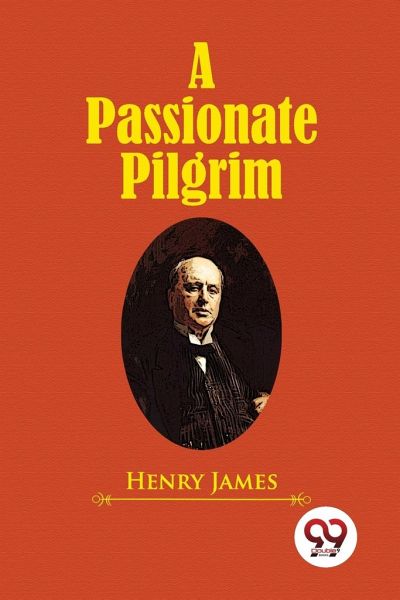
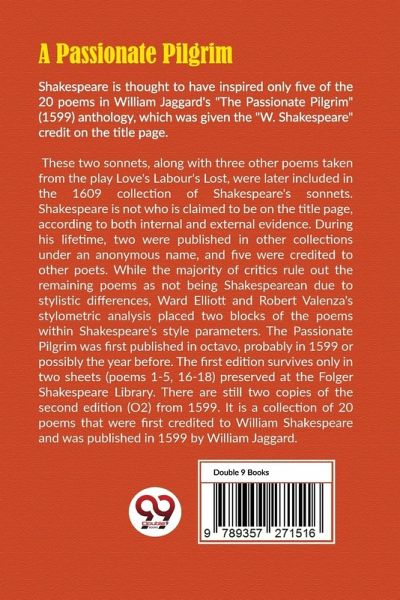
Shakespeare is thought to have inspired only five of the 20 poems in William Jaggard's "The Passionate Pilgrim" (1599) anthology, which was given the "W. Shakespeare" credit on the title page. These two sonnets, along with three other poems taken from the play Love's Labour's Lost, were later included in the 1609 collection of Shakespeare's sonnets. Shakespeare is not who is claimed to be on the title page, according to both internal and external evidence. During his lifetime, two were published in other collections under an anonymous name, and five were credited to other poets. While the majority of critics rule out the remaining poems as not being Shakespearean due to stylistic differences, Ward Elliott and Robert Valenza's stylometric analysis placed two blocks of the poems within Shakespeare's style parameters. The Passionate Pilgrim was first published in octavo, probably in 1599 or possibly the year before. The first edition survives only in two sheets (poems 1-5, 16-18) preserved at the Folger Shakespeare Library. There are still two copies of the second edition (O2) from 1599. It is a collection of 20 poems that were first credited to William Shakespeare and was published in 1599 by William Jaggard.