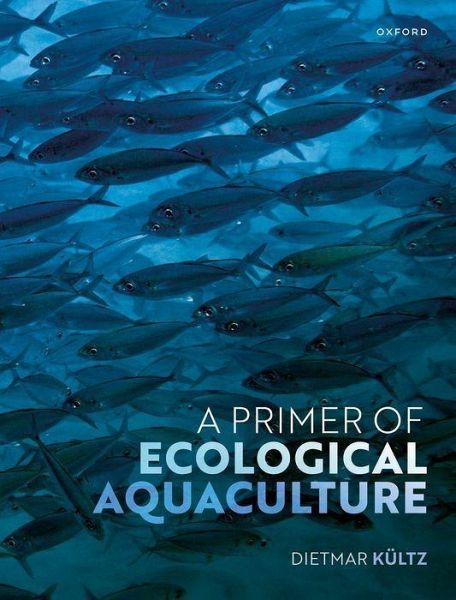
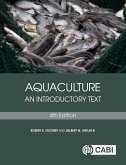
A concise primer that introduces students to the basic concepts, opportunities, and challenges of aquaculture with an emphasis on ecological considerations, providing a critical assessment of current aquaculture practices from a broad, interdisciplinary perspective.
A concise primer that introduces students to the basic concepts, opportunities, and challenges of aquaculture with an emphasis on ecological considerations, providing a critical assessment of current aquaculture practices from a broad, interdisciplinary perspective.
Dietmar Kültz is a Professor of Physiological Genomics at the College of Agricultural and Environmental Sciences, University of California, Davis, USA. His laboratory focuses on investigating the mechanisms of stress-induced evolution in fish and marine invertebrates. His research spans molecular to organism levels of biological complexity and utilizes reductionist synthetic biology, biochemical, and holistic systems level approaches to dissect causality between environmental effects on cells and organisms, physiological responses, and complex adaptive phenotypes. He teaches a molecular genetics laboratory course, an introductory aquaculture course, and a stress physiology course at UC Davis. Professor Kültz received his BSc/MS and doctoral degrees from the University of Rostock in Germany. He was a DAAD postdoctoral fellow at Oregon State University, a Fogarty Visiting Fellow at the NIH (Bethesda), and an Assistant Professor at the University of Florida before joining the faculty at UC Davis
Inhaltsangabe
Preface Part I: GENERAL PRINCIPLES OF ECOLOGICAL AQUACULTURE 1: Aquaculture Terminology and Basic Concepts 2: The Historical Origins of Aquaculture 3: Seafood and Beyond: Key Aquaculture Objectives 4: Aquaculture Systems as Mesocosms 5: Integrated Multitrophic Polycultures 6: Domestication of Aquaculture Species Part II: BIOLOGY AND CULTURE OF AQUATIC SPECIES 7: Overview of Aquaculture Species Diversity 8: Environmentally Sustainable Plant Aquaculture 9: Aquaculture of Sponges and Cnidarians 10: Mollusc Aquaculture 11: Crustacean Aquaculture 12: Ornamental Fishes 13: Aquaculture of Freshwater Fish 14: Anadromous Fish 15: Catadromous Fish Part III: WATER QUALITY PARAMETERS 16: Abiotic Parameters 17: Feeds, Waste, and Stress 18: Infectious Diseases
Preface Part I: GENERAL PRINCIPLES OF ECOLOGICAL AQUACULTURE 1: Aquaculture Terminology and Basic Concepts 2: The Historical Origins of Aquaculture 3: Seafood and Beyond: Key Aquaculture Objectives 4: Aquaculture Systems as Mesocosms 5: Integrated Multitrophic Polycultures 6: Domestication of Aquaculture Species Part II: BIOLOGY AND CULTURE OF AQUATIC SPECIES 7: Overview of Aquaculture Species Diversity 8: Environmentally Sustainable Plant Aquaculture 9: Aquaculture of Sponges and Cnidarians 10: Mollusc Aquaculture 11: Crustacean Aquaculture 12: Ornamental Fishes 13: Aquaculture of Freshwater Fish 14: Anadromous Fish 15: Catadromous Fish Part III: WATER QUALITY PARAMETERS 16: Abiotic Parameters 17: Feeds, Waste, and Stress 18: Infectious Diseases
Es gelten unsere Allgemeinen Geschäftsbedingungen: www.buecher.de/agb
Impressum
www.buecher.de ist ein Internetauftritt der buecher.de internetstores GmbH
Geschäftsführung: Monica Sawhney | Roland Kölbl | Günter Hilger
Sitz der Gesellschaft: Batheyer Straße 115 - 117, 58099 Hagen
Postanschrift: Bürgermeister-Wegele-Str. 12, 86167 Augsburg
Amtsgericht Hagen HRB 13257
Steuernummer: 321/5800/1497
USt-IdNr: DE450055826