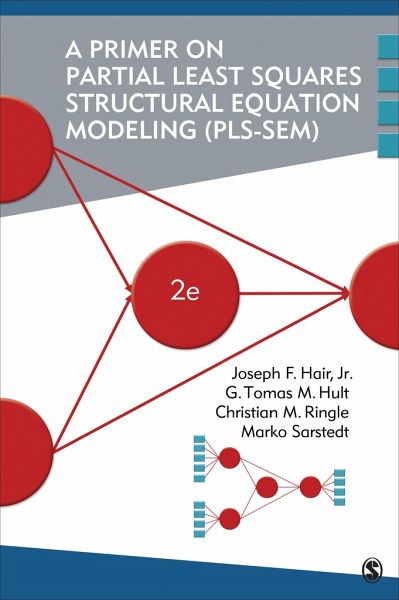
Written with those with limited mathematical and statistical knowledge in mind, this concise and practical guide helps researchers to do their research in new and alternative ways.
Written with those with limited mathematical and statistical knowledge in mind, this concise and practical guide helps researchers to do their research in new and alternative ways.
Joseph F. Hair, Jr. is Cleverdon Chair of Business, and director of the PhD degree in business administration, Mitchell College of Business, University of South Alabama. He previously held the Copeland Endowed Chair of Entrepreneurship and was Director of the Entrepreneurship Institute, Ourso College of Business Administration, Louisiana State University. Joe was recognized by Clarivate Analytics from 2018 through 2024 for being in the top 1% globally of all business and economics professors based on his citations and scholarly accomplishments, which exceed 550,000 over his career. He has authored more than 145 editions of his books, including Multivariate Data Analysis (8th edition, 2019; cited 240,000+ times), PLS-SEM Primer (4th edition; 2026); Advanced PLS (2nd edition, 2024); MKTG (14th edition, 2024); Essentials of Business Research Methods (5th edition, 2024); Essentials of Marketing Analytics (2nd edition, 2025); and Essentials of Marketing Research (6th edition, 2026). He also has published numerous articles in scholarly journals and was recognized as the Academy of Marketing Science Marketing Educator of the Year. As a popular guest speaker, Professor Hair often presents seminars on research techniques, multivariate data analysis, and marketing issues for organizations in Europe, Australia, China, India, and South America. He has a forthcoming book on Sales Analytics (Sage 2026).
Inhaltsangabe
Chapter 1: An Introduction to Structural Equation Modeling What Is Structural Equation Modeling? Considerations in Using Structural Equation Modeling Structural Equation Modeling With Partial Least Squares Path Modeling PLS-SEM, CB-SEM, and Regressions Based on Sum Scores Organization of Remaining Chapters Chapter 2: Specifying the Path Model and Examining Data Stage 1: Specifying the Structural Model Stage 2: Specifying the Measurement Models Stage 3: Data Collection and Examination Case Study Illustration: Specifying the PLS-SEM Model Path Model Creation Using the SmartPLS Software Chapter 3: Path Model Estimation Stage 4: Model Estimation and the PLS-SEM Algorithm Case Study Illustration: PLS Path Model Estimation (Stage 4) Chapter 4: Assessing PLS-SEM Results Part I: Evaluation of Reflective Measurement Models Overview of Stage 5: Evaluation of Measurement Models Stage 5a: Assessing Results of Reflective Measurement Models Case Study Illustration-Reflective Measurement Models Running the PLS-SEM Algorithm Reflective Measurement Model Evaluation Chapter 5: Assessing PLS-SEM Results Part II: Evaluation of the Formative Measurement Models Stage 5b: Assessing Results of Formative Measurement Models Bootstrapping Procedure Bootstrap Confidence Intervals Case Study Illustration-Evaluation of Formative Measurement Models Chapter 6: Assessing PLS-SEM Results Part III: Evaluation of the Structural Model Stage 6: Assessing PLS-SEM Structural Model Results Case Study Illustration-How Are PLS-SEM Structural Model Results Reported? Chapter 7: Mediator and Moderator Analysis Mediation Moderation Chapter 8: Outlook on Advanced Methods Importance-Performance Map Analysis Hierarchical Component Models Confirmatory Tetrad Analysis Dealing With Observed and Unobserved Heterogeneity Consistent Partial Least Squares
Chapter 1: An Introduction to Structural Equation Modeling What Is Structural Equation Modeling? Considerations in Using Structural Equation Modeling Structural Equation Modeling With Partial Least Squares Path Modeling PLS-SEM, CB-SEM, and Regressions Based on Sum Scores Organization of Remaining Chapters Chapter 2: Specifying the Path Model and Examining Data Stage 1: Specifying the Structural Model Stage 2: Specifying the Measurement Models Stage 3: Data Collection and Examination Case Study Illustration: Specifying the PLS-SEM Model Path Model Creation Using the SmartPLS Software Chapter 3: Path Model Estimation Stage 4: Model Estimation and the PLS-SEM Algorithm Case Study Illustration: PLS Path Model Estimation (Stage 4) Chapter 4: Assessing PLS-SEM Results Part I: Evaluation of Reflective Measurement Models Overview of Stage 5: Evaluation of Measurement Models Stage 5a: Assessing Results of Reflective Measurement Models Case Study Illustration-Reflective Measurement Models Running the PLS-SEM Algorithm Reflective Measurement Model Evaluation Chapter 5: Assessing PLS-SEM Results Part II: Evaluation of the Formative Measurement Models Stage 5b: Assessing Results of Formative Measurement Models Bootstrapping Procedure Bootstrap Confidence Intervals Case Study Illustration-Evaluation of Formative Measurement Models Chapter 6: Assessing PLS-SEM Results Part III: Evaluation of the Structural Model Stage 6: Assessing PLS-SEM Structural Model Results Case Study Illustration-How Are PLS-SEM Structural Model Results Reported? Chapter 7: Mediator and Moderator Analysis Mediation Moderation Chapter 8: Outlook on Advanced Methods Importance-Performance Map Analysis Hierarchical Component Models Confirmatory Tetrad Analysis Dealing With Observed and Unobserved Heterogeneity Consistent Partial Least Squares
Es gelten unsere Allgemeinen Geschäftsbedingungen: www.buecher.de/agb
Impressum
www.buecher.de ist ein Internetauftritt der buecher.de internetstores GmbH
Geschäftsführung: Monica Sawhney | Roland Kölbl | Günter Hilger
Sitz der Gesellschaft: Batheyer Straße 115 - 117, 58099 Hagen
Postanschrift: Bürgermeister-Wegele-Str. 12, 86167 Augsburg
Amtsgericht Hagen HRB 13257
Steuernummer: 321/5800/1497
USt-IdNr: DE450055826