
Andere Kunden interessierten sich auch für
 Calculations Of Inorganic Chemistry And Qualitative Analysis17,99 €
 Qualitative Inorganic Analysis46,99 €
 Synthetic Inorganic Chemistry20,99 €
 Exercises in Qualitative Chemistry17,99 €
 Short Notes on Applied and Advanced Inorganic Materials Chemistry9,99 €
 Systematic Inorganic Chemistry25,99 €
 Inorganic Chemistry, Theoretical and Practical: A Manual for Students in Advanced Classes25,99 €


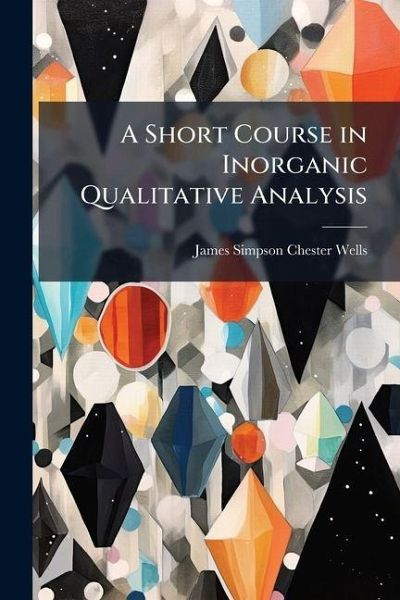
"A Short Course in Inorganic Qualitative Analysis: For Engineering Students" by James Simpson Chester Wells, originally published in 1909, provides a foundational guide to inorganic qualitative analysis tailored for students in engineering. This text offers a concise yet comprehensive overview of essential techniques and principles involved in identifying inorganic substances through chemical analysis. Designed to meet the specific needs of engineering students, the book emphasizes practical applications and clear explanations, making complex concepts accessible to those new to the field. Explore the enduring relevance of classic chemical methodologies with this valuable resource, perfect for historical science enthusiasts and students alike. This work has been selected by scholars as being culturally important, and is part of the knowledge base of civilization as we know it. This work was reproduced from the original artifact, and remains as true to the original work as possible. Therefore, you will see the original copyright references, library stamps (as most of these works have been housed in our most important libraries around the world), and other notations in the work. This work is in the public domain in the United States of America, and possibly other nations. Within the United States, you may freely copy and distribute this work, as no entity (individual or corporate) has a copyright on the body of the work. As a reproduction of a historical artifact, this work may contain missing or blurred pages, poor pictures, errant marks, etc. Scholars believe, and we concur, that this work is important enough to be preserved, reproduced, and made generally available to the public. We appreciate your support of the preservation process, and thank you for being an important part of keeping this knowledge alive and relevant.