
Andere Kunden interessierten sich auch für
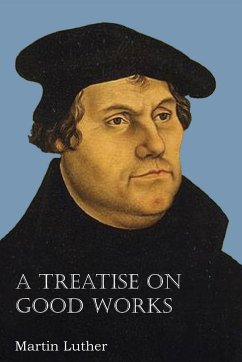
 A Treatise on Good Works49,90 €
 A Treatise on Good Works29,90 €
 Sermons on Evil-Speaking29,90 €
 Sermons on Evil-Speaking49,90 €
 A Discourse on the Sins of the Tongue32,90 €
 A Discourse on the Sins of the Tongue11,90 €
 The Death of Death in the Death of Christ25,90 €







It was not Luther's intention to speak only on the essence of good works and their fundamental relation to faith; he would show, too, how the "best work," faith, must prove itself in every way a living faith, according to the other commandments. Luther does not proceed to this part until in the fundamental part he has said with emphasis, that the believer, the spiritual man, needs no such instruction (I Timothy 1:9), but that he of his own accord and at all times does good works "as his faith, his confidence, teaches him." Only "because we do not all have such faith, or are unmindful of it," does such instruction become necessary. From the fact, that according to the First Commandment, we acquire a pure heart and confidence toward God, he derives the good work of the Second Commandment, namely, "to praise God, to acknowledge His grace, to render all honor to Him alone." From the same source he derives the good work of the Third Commandment, namely, "to observe divine services with prayer and the hearing of preaching, to incline the imagination of our hearts toward God's benefits, and, to that end, to mortify and overcome the flesh."