
Patrick Colquhoun
A Treatise on the Police of the Metropolis
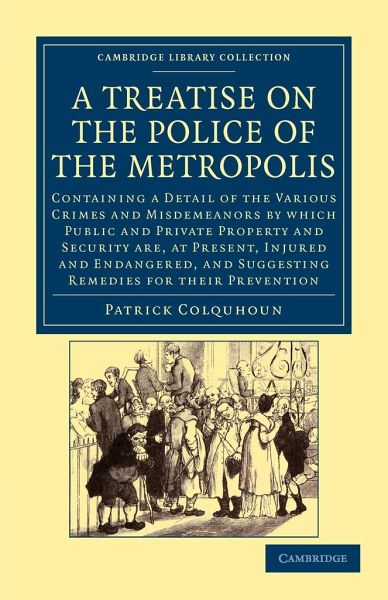
Patrick Colquhoun
A Treatise on the Police of the Metropolis
- Broschiertes Buch
- Merkliste
- Auf die Merkliste
- Bewerten Bewerten
- Teilen
- Produkt teilen
- Produkterinnerung
- Produkterinnerung
Patrick Colquhoun (1745-1820) was one of the founders, in 1798, of the Thames River Police. Initially a merchant based in Glasgow, he later moved to London and was appointed as a magistrate in the East End. In 1796, he published (anonymously) a report on the types of crime in the capital, and the need for regulation of the behaviour of the inhabitants to suppress it. The work examines the different categories of crime in London, such as illegal trading in the docks, fraud, burglary, and robbery. Later chapters discuss the issue of punishment as well as the changes Colquhoun believed were…mehr
Patrick Colquhoun (1745-1820) was one of the founders, in 1798, of the Thames River Police. Initially a merchant based in Glasgow, he later moved to London and was appointed as a magistrate in the East End. In 1796, he published (anonymously) a report on the types of crime in the capital, and the need for regulation of the behaviour of the inhabitants to suppress it. The work examines the different categories of crime in London, such as illegal trading in the docks, fraud, burglary, and robbery. Later chapters discuss the issue of punishment as well as the changes Colquhoun believed were required in the existing police force. In this 1797 fourth edition - one of six later editions that were published by 1799 - Colquhoun added a lengthy exposition on gambling. Although many of his measures were considered unworkable, Colquhoun's ideas played an important part in the development of modern policing.
Produktdetails
- Produktdetails
- Verlag: Cambridge University Press
- Seitenzahl: 514
- Erscheinungstermin: 24. Januar 2012
- Englisch
- Abmessung: 216mm x 140mm x 30mm
- Gewicht: 718g
- ISBN-13: 9781108043922
- ISBN-10: 1108043925
- Artikelnr.: 34962042
- Herstellerkennzeichnung
- Libri GmbH
- Europaallee 1
- 36244 Bad Hersfeld
- gpsr@libri.de
- Verlag: Cambridge University Press
- Seitenzahl: 514
- Erscheinungstermin: 24. Januar 2012
- Englisch
- Abmessung: 216mm x 140mm x 30mm
- Gewicht: 718g
- ISBN-13: 9781108043922
- ISBN-10: 1108043925
- Artikelnr.: 34962042
- Herstellerkennzeichnung
- Libri GmbH
- Europaallee 1
- 36244 Bad Hersfeld
- gpsr@libri.de
Patrick Colquhoun (1745-1820) was a pivotal figure in the development of police institutions in the 18th and early 19th centuries. A Scotsman by birth, Colquhoun's role as a magistrate in London provided him with the experience and insights that he would later distill into his seminal work, 'A Treatise on the Police of the Metropolis' (1796). This treatise, regarded as a foundational text on urban policing, detailed the systemic issues plaguing London's public order and proposed a series of reforms to improve the existing state of affairs. His advocacy for a preventive police force not only highlighted the necessity of crime prevention over punishment but also laid the groundwork for what would become the Metropolitan Police Service, established in 1829. Colquhoun's intellectual contributions to the field of public safety are underscored by his keen analysis of the socio-economic factors contributing to crime, and his approaches echo in contemporary policing practices. As an author, his literary style is characterized by a blending of empirical observations with a prescriptive tone, aimed at persuading policymakers and public officials of the need for systematic changes. Colquhoun's work is reflective of the emerging utilitarian philosophy of the time, emphasizing rationality and efficiency in public administration. His treatise remains a relevant historical document, studied by academics interested in the history of law enforcement and social reform.
To the reader; Advertisement to the fourth edition; Introduction.
Containing a general view of the evils arising from the imperfections of
the criminal code, and the deficiencies in the general system of police,
explained under nine different heads; 1. The prominent causes of the
increase of crimes considered. Propositions for improving public houses. An
estimate of the depredations on public and private property, committed in
the metropolis and its vicinity, calculated to amount to two millions one
hundred thousand pounds sterling in the course of a year; 2. The cause and
progress of small thefts explained, and shewn to arise from the vast number
of receivers in the metropolis. Their great increase of late years, and
evil tendency. Remedies suggested; 3. The vast extent of property laden and
unladen in the Port of London, in the course of a year. The pillage and
plunder of merchandize and naval stores upon the wharfs and quays, and from
ships and vessels in the River Thames explained. The facilities afforded by
receivers of stolen goods, in connection with these plunderers. Remedies
proposed; 4. Reflections on the causes of the prevailing abuses, frauds,
plunder, and pillage, in the public arsenals, and in ships of war and
transports. The means of improving the laws. The existing abuses analized.
Remedies proposed and explained; 5. On the perpetration of the more
atrocious offences of burglary and highway robbery. The different classes
of delinquents engaged in these offences. The means used to accomplish
their purposes. Remedies suggested for the purpose of detection and
prevention; 6. On the coinage and circulation of base money. The process in
coining each species of counterfeit money explained. The extensive trade in
sending base coin to the country. Its universal circulation in the
metropolis. Foreign money also counterfeited. The vast extent of the evil.
The defects in the present laws explained. Remedies proposed; 7. On the
subject of forgeries, frauds, and the offences of cheating, swindling, and
gambling. The evils arising from these practices in the metropolis, and
also from the lottery, &c. elucidated and explained, and various remedies
suggested; 8. Relative to receivers of stolen goods in general. Their evil
tendency as the nourishers and supporters of thieves. Their increase
attributed to the imperfection of the laws. Their modes of dealing
explained. Their profit immense. The laws relative to receivers reviewed.
Amendments in them proposed, and remedies suggested; 9. On the means of
detecting offenders. The utility of officers of justice as safeguards to
the community. Their powers explained. Rewards granted in certain cases on
the conviction of offenders. 1000 peace officers and 2044 watchmen and
patroles in the metropolis. A general view of the magistracy. The great
inconvenience of the present system. Remedies proposed; 10. Crimes and
punishments in general. General reflection on the nature and effect of
different degrees of punishment. The utility of rendering the laws perfect,
so as to operate as a means of preventing crimes. General rules suggested
for attaining this object, illustrated by various observations on the
criminal code. A review of the various offences and punishments, exhibiting
the unnecessary severity of the laws, and their imperfections with regard
to punishments. The new code of the Emperor Joseph, shortly detailed.
Concluding reflections; 11. On punishments. The mode authorised by the
ancient and modern laws. A detail of the various crimes punished by the
laws of England. The evil tendency of pardons explained. Death. The hulks.
Transportation. Penitentiary houses. Various improvements suggested with
regard to the mode of punishment, with an immediate view to the prevention
of crimes; 12. The police of the metropolis considered and explained. The
system of 1792, and that of the C
Containing a general view of the evils arising from the imperfections of
the criminal code, and the deficiencies in the general system of police,
explained under nine different heads; 1. The prominent causes of the
increase of crimes considered. Propositions for improving public houses. An
estimate of the depredations on public and private property, committed in
the metropolis and its vicinity, calculated to amount to two millions one
hundred thousand pounds sterling in the course of a year; 2. The cause and
progress of small thefts explained, and shewn to arise from the vast number
of receivers in the metropolis. Their great increase of late years, and
evil tendency. Remedies suggested; 3. The vast extent of property laden and
unladen in the Port of London, in the course of a year. The pillage and
plunder of merchandize and naval stores upon the wharfs and quays, and from
ships and vessels in the River Thames explained. The facilities afforded by
receivers of stolen goods, in connection with these plunderers. Remedies
proposed; 4. Reflections on the causes of the prevailing abuses, frauds,
plunder, and pillage, in the public arsenals, and in ships of war and
transports. The means of improving the laws. The existing abuses analized.
Remedies proposed and explained; 5. On the perpetration of the more
atrocious offences of burglary and highway robbery. The different classes
of delinquents engaged in these offences. The means used to accomplish
their purposes. Remedies suggested for the purpose of detection and
prevention; 6. On the coinage and circulation of base money. The process in
coining each species of counterfeit money explained. The extensive trade in
sending base coin to the country. Its universal circulation in the
metropolis. Foreign money also counterfeited. The vast extent of the evil.
The defects in the present laws explained. Remedies proposed; 7. On the
subject of forgeries, frauds, and the offences of cheating, swindling, and
gambling. The evils arising from these practices in the metropolis, and
also from the lottery, &c. elucidated and explained, and various remedies
suggested; 8. Relative to receivers of stolen goods in general. Their evil
tendency as the nourishers and supporters of thieves. Their increase
attributed to the imperfection of the laws. Their modes of dealing
explained. Their profit immense. The laws relative to receivers reviewed.
Amendments in them proposed, and remedies suggested; 9. On the means of
detecting offenders. The utility of officers of justice as safeguards to
the community. Their powers explained. Rewards granted in certain cases on
the conviction of offenders. 1000 peace officers and 2044 watchmen and
patroles in the metropolis. A general view of the magistracy. The great
inconvenience of the present system. Remedies proposed; 10. Crimes and
punishments in general. General reflection on the nature and effect of
different degrees of punishment. The utility of rendering the laws perfect,
so as to operate as a means of preventing crimes. General rules suggested
for attaining this object, illustrated by various observations on the
criminal code. A review of the various offences and punishments, exhibiting
the unnecessary severity of the laws, and their imperfections with regard
to punishments. The new code of the Emperor Joseph, shortly detailed.
Concluding reflections; 11. On punishments. The mode authorised by the
ancient and modern laws. A detail of the various crimes punished by the
laws of England. The evil tendency of pardons explained. Death. The hulks.
Transportation. Penitentiary houses. Various improvements suggested with
regard to the mode of punishment, with an immediate view to the prevention
of crimes; 12. The police of the metropolis considered and explained. The
system of 1792, and that of the C
To the reader; Advertisement to the fourth edition; Introduction.
Containing a general view of the evils arising from the imperfections of
the criminal code, and the deficiencies in the general system of police,
explained under nine different heads; 1. The prominent causes of the
increase of crimes considered. Propositions for improving public houses. An
estimate of the depredations on public and private property, committed in
the metropolis and its vicinity, calculated to amount to two millions one
hundred thousand pounds sterling in the course of a year; 2. The cause and
progress of small thefts explained, and shewn to arise from the vast number
of receivers in the metropolis. Their great increase of late years, and
evil tendency. Remedies suggested; 3. The vast extent of property laden and
unladen in the Port of London, in the course of a year. The pillage and
plunder of merchandize and naval stores upon the wharfs and quays, and from
ships and vessels in the River Thames explained. The facilities afforded by
receivers of stolen goods, in connection with these plunderers. Remedies
proposed; 4. Reflections on the causes of the prevailing abuses, frauds,
plunder, and pillage, in the public arsenals, and in ships of war and
transports. The means of improving the laws. The existing abuses analized.
Remedies proposed and explained; 5. On the perpetration of the more
atrocious offences of burglary and highway robbery. The different classes
of delinquents engaged in these offences. The means used to accomplish
their purposes. Remedies suggested for the purpose of detection and
prevention; 6. On the coinage and circulation of base money. The process in
coining each species of counterfeit money explained. The extensive trade in
sending base coin to the country. Its universal circulation in the
metropolis. Foreign money also counterfeited. The vast extent of the evil.
The defects in the present laws explained. Remedies proposed; 7. On the
subject of forgeries, frauds, and the offences of cheating, swindling, and
gambling. The evils arising from these practices in the metropolis, and
also from the lottery, &c. elucidated and explained, and various remedies
suggested; 8. Relative to receivers of stolen goods in general. Their evil
tendency as the nourishers and supporters of thieves. Their increase
attributed to the imperfection of the laws. Their modes of dealing
explained. Their profit immense. The laws relative to receivers reviewed.
Amendments in them proposed, and remedies suggested; 9. On the means of
detecting offenders. The utility of officers of justice as safeguards to
the community. Their powers explained. Rewards granted in certain cases on
the conviction of offenders. 1000 peace officers and 2044 watchmen and
patroles in the metropolis. A general view of the magistracy. The great
inconvenience of the present system. Remedies proposed; 10. Crimes and
punishments in general. General reflection on the nature and effect of
different degrees of punishment. The utility of rendering the laws perfect,
so as to operate as a means of preventing crimes. General rules suggested
for attaining this object, illustrated by various observations on the
criminal code. A review of the various offences and punishments, exhibiting
the unnecessary severity of the laws, and their imperfections with regard
to punishments. The new code of the Emperor Joseph, shortly detailed.
Concluding reflections; 11. On punishments. The mode authorised by the
ancient and modern laws. A detail of the various crimes punished by the
laws of England. The evil tendency of pardons explained. Death. The hulks.
Transportation. Penitentiary houses. Various improvements suggested with
regard to the mode of punishment, with an immediate view to the prevention
of crimes; 12. The police of the metropolis considered and explained. The
system of 1792, and that of the C
Containing a general view of the evils arising from the imperfections of
the criminal code, and the deficiencies in the general system of police,
explained under nine different heads; 1. The prominent causes of the
increase of crimes considered. Propositions for improving public houses. An
estimate of the depredations on public and private property, committed in
the metropolis and its vicinity, calculated to amount to two millions one
hundred thousand pounds sterling in the course of a year; 2. The cause and
progress of small thefts explained, and shewn to arise from the vast number
of receivers in the metropolis. Their great increase of late years, and
evil tendency. Remedies suggested; 3. The vast extent of property laden and
unladen in the Port of London, in the course of a year. The pillage and
plunder of merchandize and naval stores upon the wharfs and quays, and from
ships and vessels in the River Thames explained. The facilities afforded by
receivers of stolen goods, in connection with these plunderers. Remedies
proposed; 4. Reflections on the causes of the prevailing abuses, frauds,
plunder, and pillage, in the public arsenals, and in ships of war and
transports. The means of improving the laws. The existing abuses analized.
Remedies proposed and explained; 5. On the perpetration of the more
atrocious offences of burglary and highway robbery. The different classes
of delinquents engaged in these offences. The means used to accomplish
their purposes. Remedies suggested for the purpose of detection and
prevention; 6. On the coinage and circulation of base money. The process in
coining each species of counterfeit money explained. The extensive trade in
sending base coin to the country. Its universal circulation in the
metropolis. Foreign money also counterfeited. The vast extent of the evil.
The defects in the present laws explained. Remedies proposed; 7. On the
subject of forgeries, frauds, and the offences of cheating, swindling, and
gambling. The evils arising from these practices in the metropolis, and
also from the lottery, &c. elucidated and explained, and various remedies
suggested; 8. Relative to receivers of stolen goods in general. Their evil
tendency as the nourishers and supporters of thieves. Their increase
attributed to the imperfection of the laws. Their modes of dealing
explained. Their profit immense. The laws relative to receivers reviewed.
Amendments in them proposed, and remedies suggested; 9. On the means of
detecting offenders. The utility of officers of justice as safeguards to
the community. Their powers explained. Rewards granted in certain cases on
the conviction of offenders. 1000 peace officers and 2044 watchmen and
patroles in the metropolis. A general view of the magistracy. The great
inconvenience of the present system. Remedies proposed; 10. Crimes and
punishments in general. General reflection on the nature and effect of
different degrees of punishment. The utility of rendering the laws perfect,
so as to operate as a means of preventing crimes. General rules suggested
for attaining this object, illustrated by various observations on the
criminal code. A review of the various offences and punishments, exhibiting
the unnecessary severity of the laws, and their imperfections with regard
to punishments. The new code of the Emperor Joseph, shortly detailed.
Concluding reflections; 11. On punishments. The mode authorised by the
ancient and modern laws. A detail of the various crimes punished by the
laws of England. The evil tendency of pardons explained. Death. The hulks.
Transportation. Penitentiary houses. Various improvements suggested with
regard to the mode of punishment, with an immediate view to the prevention
of crimes; 12. The police of the metropolis considered and explained. The
system of 1792, and that of the C