
Andere Kunden interessierten sich auch für
 Aspects of Tenses, Modality, and Evidentiality120,99 €
 Linguistic Typology of Arabic71,99 €
 An Historical Syntax of the English Language88,99 €
 The Web of Knowledge47,99 €
 An Historical Syntax of the English Language88,99 €
 An Historical Syntax of the English Language88,99 €
 Latin Primer: A Guide to the Study of Latin Grammar, With Exercises for Translation15,99 €
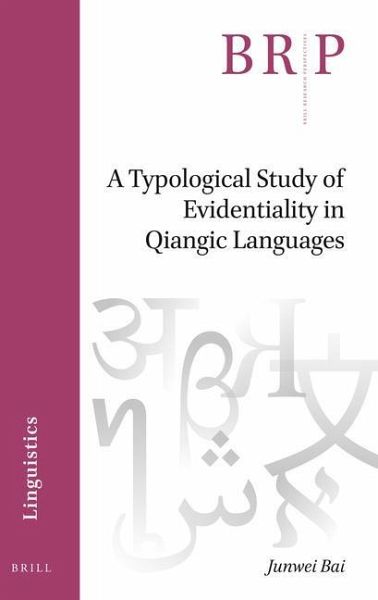
As an intriguing but little understood language group within the Tibeto-Burman family, Qiangic languages are widely reported to have evidentiality, the grammatical means of expressing information source. How does this category function in this language group? Does it show any common features across these languages? And does it have any unique properties? Drawing on data from over a dozen languages and dialects, and cast within an informative typological framework, this study is the first attempt to answer these questions. It is found that evidentiality in Qiangic languages can be classified into three broad types. The study further demonstrates that modern systems cannot be inherited from Proto-Qiangic, and it also reveals certain features of the reported evidential that seem to be typologically rare.