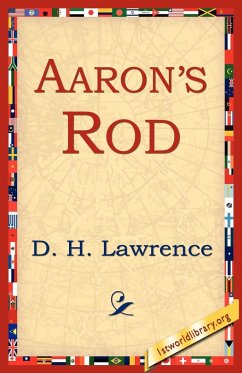
Purchase one of 1st World Library's Classic Books and help support our free internet library of downloadable eBooks. Visit us online at www.1stWorldLibrary.ORG - - There was a large, brilliant evening star in the early twilight, and underfoot the earth was half frozen. It was Christmas Eve. Also the War was over, and there was a sense of relief that was almost a new menace. A man felt the violence of the nightmare released now into the general air. Also there had been another wrangle among the men on the pit-bank that evening. Aaron Sisson was the last man on the little black railway-line…mehr
Purchase one of 1st World Library's Classic Books and help support our free internet library of downloadable eBooks. Visit us online at www.1stWorldLibrary.ORG - - There was a large, brilliant evening star in the early twilight, and underfoot the earth was half frozen. It was Christmas Eve. Also the War was over, and there was a sense of relief that was almost a new menace. A man felt the violence of the nightmare released now into the general air. Also there had been another wrangle among the men on the pit-bank that evening. Aaron Sisson was the last man on the little black railway-line climbing the hill home from work. He was late because he had attended a meeting of the men on the bank. He was secretary to the Miners Union for his colliery, and had heard a good deal of silly wrangling that left him nettled.
Born on September 11, 1885, in Eastwood, Nottinghamshire, England, David Herbert Lawrence was the fourth child of a coal miner and a former schoolteacher. His upbringing in a working-class family deeply influenced his literary themes, particularly the tensions between industrialization and nature. Lawrence's early education and experiences in his hometown laid the foundation for his future works.In 1912, Lawrence met Frieda Weekley, with whom he eloped to Europe, marking the beginning of his extensive travels. This period saw the creation of some of his most significant novels, including Sons and Lovers (1913) and The Rainbow (1915), which explored complex human relationships and societal constraints. His candid portrayal of sexuality and critique of industrial society often led to controversy and censorship.Despite facing persecution and public misrepresentation, Lawrence continued to produce influential works across various genres. His final novel, Lady Chatterley's Lover (1928), was notorious for its explicit content and faced numerous legal challenges. Lawrence's relentless exploration of human emotions and social norms has solidified his legacy as a pivotal figure in modernist literature.
Es gelten unsere Allgemeinen Geschäftsbedingungen: www.buecher.de/agb
Impressum
www.buecher.de ist ein Internetauftritt der buecher.de internetstores GmbH
Geschäftsführung: Monica Sawhney | Roland Kölbl | Günter Hilger
Sitz der Gesellschaft: Batheyer Straße 115 - 117, 58099 Hagen
Postanschrift: Bürgermeister-Wegele-Str. 12, 86167 Augsburg
Amtsgericht Hagen HRB 13257
Steuernummer: 321/5800/1497
USt-IdNr: DE450055826