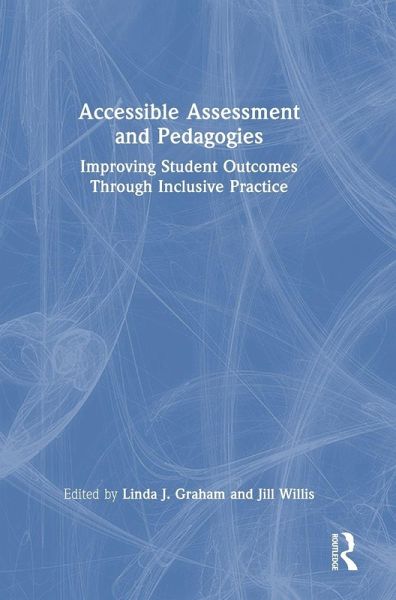
This book is an evidence-based, practical guide to enable pre- and in-service teachers, system and school leaders to maximise students' understanding of classroom teaching and assessment, improving outcomes and expanding opportunities for all students.
This book is an evidence-based, practical guide to enable pre- and in-service teachers, system and school leaders to maximise students' understanding of classroom teaching and assessment, improving outcomes and expanding opportunities for all students.
Linda J. Graham is Professor and Director of the Centre for Inclusive Education (C4IE) at Queensland University of Technology (QUT), Australia. She specialises in identifying and addressing factors that prevent students from accessing and benefitting from education. Linda has published more than 100 books, chapters, and journal articles on inclusive education, as well as numerous pieces published in The Conversation. Jill Willis is Professor in the School of Education at Queensland University of Technology. She specialises in collaborative research that promotes positive outcomes for students in complex educational contexts such as equity in assessment, wellbeing in school learning spaces, and teacher agency in quality frameworks.
Inhaltsangabe
Part I: The Why, The What, The Who & The How 1. Introducing the Accessible Assessment ARC Linkage Project 2. What is Accessibility and Why Does it Matter? 3. Understanding Language and Attentional Difficulties Part II: Designing Out Barriers in Summative Assessment 4. The Process of Accessible Assessment Redesign 5. Do Accessible Assessment Task Sheets Work? 6. The Assessment Crucible Effect Part III: Removing Barriers to Classroom Learning 7. Common Barriers That Impact Student Learning 8. Teachers Busting Barriers by Engaging in Accessible Pedagogies 9. Did Teachers' Use of Accessible Pedagogies Make Any Difference to Students? Part IV: Upping the Accessibility Ante with AAfL 10. Accessible Assessment for Learning 11. Starting with Success Criteria 12. Student Experience as a Force for Accessibility in Assessment for Learning Part V: Other Important Ingredients for Success 13. Teachers Reflecting on Going Okay (or not!) 14. Leveraging Accessibility for Whole School Improvement 15. Conclusion (or is it...?)
Part I: The Why, The What, The Who & The How 1. Introducing the Accessible Assessment ARC Linkage Project 2. What is Accessibility and Why Does it Matter? 3. Understanding Language and Attentional Difficulties Part II: Designing Out Barriers in Summative Assessment 4. The Process of Accessible Assessment Redesign 5. Do Accessible Assessment Task Sheets Work? 6. The Assessment Crucible Effect Part III: Removing Barriers to Classroom Learning 7. Common Barriers That Impact Student Learning 8. Teachers Busting Barriers by Engaging in Accessible Pedagogies 9. Did Teachers' Use of Accessible Pedagogies Make Any Difference to Students? Part IV: Upping the Accessibility Ante with AAfL 10. Accessible Assessment for Learning 11. Starting with Success Criteria 12. Student Experience as a Force for Accessibility in Assessment for Learning Part V: Other Important Ingredients for Success 13. Teachers Reflecting on Going Okay (or not!) 14. Leveraging Accessibility for Whole School Improvement 15. Conclusion (or is it...?)
Es gelten unsere Allgemeinen Geschäftsbedingungen: www.buecher.de/agb
Impressum
www.buecher.de ist ein Internetauftritt der buecher.de internetstores GmbH
Geschäftsführung: Monica Sawhney | Roland Kölbl | Günter Hilger
Sitz der Gesellschaft: Batheyer Straße 115 - 117, 58099 Hagen
Postanschrift: Bürgermeister-Wegele-Str. 12, 86167 Augsburg
Amtsgericht Hagen HRB 13257
Steuernummer: 321/5800/1497
USt-IdNr: DE450055826