
Andere Kunden interessierten sich auch für
 U.S. Strategic Framework for the Indo-Pacific and Foreign Threats to the 2020 Elections11,99 €
 The Indo-Pacific and Its Strategic Challenges11,99 €
 Handbook of Indo-Pacific Studies52,99 €
 The U.S. Indo-Pacific Strategy & The Prospect of Forging A New Multipolar World16,99 €
 Japan and its Partners in the Indo-Pacific56,99 €
 Navigating International Order Transition in the Indo-Pacific56,99 €
 China's Assertive Posturing in the Indo-Pacific & Prospects for Indo-ASEAN Collaboration49,99 €


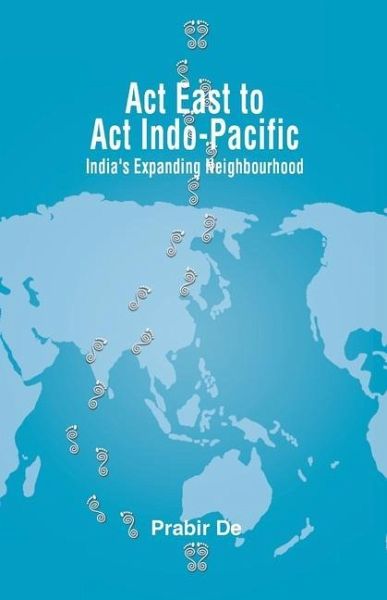
India is known as a leading voice in international affairs. India's economic size, vast and growing market, democratic institutions, access to ocean and foundation of science largely explain why India continues to play an important role in global and regional affairs. India is the only country in Asia having the heft to counterbalance China and thus welcomed by many countries in Asia and the Pacific. India has embarked on a period of radical changes in its foreign and economic policies. Faced with a major slowdown of India's trade with Southeast and East Asia in 2014-15, the government responded by initiating far-reaching Act East Policy (AEP) aimed at greater economic integration with South, Southeast and East Asian nations. Started with a fresh vigour in 2014, AEP has gained a new momentum while acting on the east. The Act 'East' is now getting transformed into Act 'Indo-Pacific'. This book presents short essays written by the author on several key aspects of India's economic relations and the challenges faced by India in the post-AEP period. Ten broad themes are analysed in this book: BBIN, BIMSTEC, SAARC, ASEAN, MGC, Act East - North East, BCIM, BRI, Act Far East and Indo-Pacific. This volume highlights what, in author's best judgement, should be the direction for India's expanding neighbourhood. It is an economist's insight and field experience based analysis that offers guidelines for international cooperation. This volume is an invaluable companion for the policymakers, academia, students of international relations, diplomats and the general readership as well. India's foreign policy started attracting renewed global attention since the beginning of the economic reforms in 1991 which led to the gradual opening of the Indian economy. India's trade has expanded manifold and today contributes over 40 per cent of its GDP, as compared about 3 per cent before. In PPP terms, India is the world's one of the top five largest economies. Clearly, the world expects India to play a larger role, commensurate with its size and growing power. In rising protectionism worldwide, countries, particularly developing and LDCs are looking towards a greater regional cooperation.