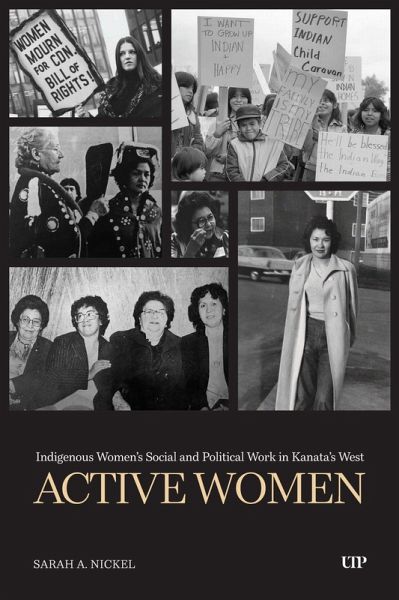
Auxiliary Organizations examines how, from the 1930s to the 1980s, Indigenous women in Kanataâ s West identified everyday challenges and responded with purposeful, multifaceted social and political action â uncovering the deep commitment and care driving their activism.
Auxiliary Organizations examines how, from the 1930s to the 1980s, Indigenous women in Kanataâ s West identified everyday challenges and responded with purposeful, multifaceted social and political action â uncovering the deep commitment and care driving their activism.
Sarah Nickel is an associate professor of history at the University of Alberta and Canada Research Chair (Tier 2) in Indigenous Politics and Gender.
Inhaltsangabe
Dedication Acknowledgments Abbreviations Indigenous Placenames Introduction: “Doing what needed to be done”: Indigenous Women’s Responsibilities and Leadership Part I: Active Women – Organizing across the West Chapter 1: “To take an active role”: Indigenous Women’s Early Mobilizing Chapter 2: “Our banners were up big time”: Indigenous Women’s Provincial Organizing Part II: Organizing across Boundaries Chapter 3: Creating a National Movement Chapter 4: “Our shared struggles”: Indigenous Women’s Rights and Transracial Coalition-Building during International Women’s Year, 1975 Part III: Concerning Children’s Care: Childcare Activism Chapter 5: “A crying need for a day care centre”: Indigenous-Run Day Cares, 1967–1985 Chapter 6: Case Study: Saskatchewan Native Women’s Movement and Day Cares in Kisiskâciwan Chapter 7: “The crying need for Indian foster homes”: Indigenous Women Challenge State Child Welfare Practices Chapter 8: Case Studies in Community Care: The VANWS Foster Care Project and Splatsín te Secwépemc By-Law for the Care of Our Indian Children, 1980 Part IV: Indigenous Women Respond to Crisis Chapter 9: “It’s something we’ve just got to begin to do ourselves”: Beginning the Indigenous Women’s Shelter Movement in Kanata’s West Chapter 10: Case Study: “They were so against us”: The Saskatchewan Native Women’s Movement and Battered Women’s Shelters Chapter 11: Coming Home: Creating Halfway Houses for Indigenous Women Conclusion: Caring for Community: Indigenous Women’s Impact Appendix 1 Appendix 2 Appendix 3 Index
Dedication Acknowledgments Abbreviations Indigenous Placenames Introduction: “Doing what needed to be done”: Indigenous Women’s Responsibilities and Leadership Part I: Active Women – Organizing across the West Chapter 1: “To take an active role”: Indigenous Women’s Early Mobilizing Chapter 2: “Our banners were up big time”: Indigenous Women’s Provincial Organizing Part II: Organizing across Boundaries Chapter 3: Creating a National Movement Chapter 4: “Our shared struggles”: Indigenous Women’s Rights and Transracial Coalition-Building during International Women’s Year, 1975 Part III: Concerning Children’s Care: Childcare Activism Chapter 5: “A crying need for a day care centre”: Indigenous-Run Day Cares, 1967–1985 Chapter 6: Case Study: Saskatchewan Native Women’s Movement and Day Cares in Kisiskâciwan Chapter 7: “The crying need for Indian foster homes”: Indigenous Women Challenge State Child Welfare Practices Chapter 8: Case Studies in Community Care: The VANWS Foster Care Project and Splatsín te Secwépemc By-Law for the Care of Our Indian Children, 1980 Part IV: Indigenous Women Respond to Crisis Chapter 9: “It’s something we’ve just got to begin to do ourselves”: Beginning the Indigenous Women’s Shelter Movement in Kanata’s West Chapter 10: Case Study: “They were so against us”: The Saskatchewan Native Women’s Movement and Battered Women’s Shelters Chapter 11: Coming Home: Creating Halfway Houses for Indigenous Women Conclusion: Caring for Community: Indigenous Women’s Impact Appendix 1 Appendix 2 Appendix 3 Index
Es gelten unsere Allgemeinen Geschäftsbedingungen: www.buecher.de/agb
Impressum
www.buecher.de ist ein Internetauftritt der buecher.de internetstores GmbH
Geschäftsführung: Monica Sawhney | Roland Kölbl | Günter Hilger
Sitz der Gesellschaft: Batheyer Straße 115 - 117, 58099 Hagen
Postanschrift: Bürgermeister-Wegele-Str. 12, 86167 Augsburg
Amtsgericht Hagen HRB 13257
Steuernummer: 321/5800/1497
USt-IdNr: DE450055826