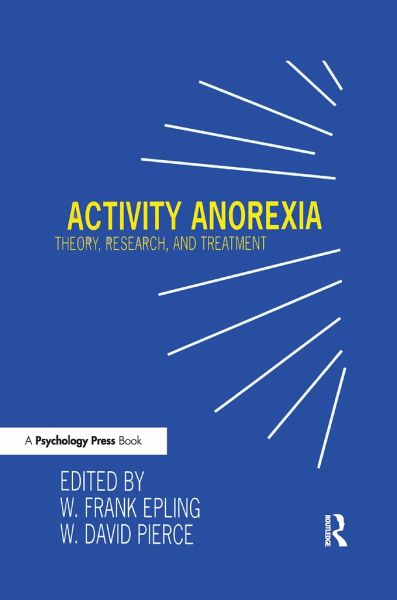
This volume provides researchers and clinicians with an insight into recent developments in activity anorexia. Much of the basic information on the topic has come from animal literature; the theory of activity anorexia is built on an animal model of self-starvation (rats placed on a single daily feeding run more and more, over days stop eating, and die of starvation). Additionally, experiments that for ethical or practical reasons could not be done with humans may be conducted with other animals. The animal research is extending the understanding of biologically-based reward mechanisms that…mehr
This volume provides researchers and clinicians with an insight into recent developments in activity anorexia. Much of the basic information on the topic has come from animal literature; the theory of activity anorexia is built on an animal model of self-starvation (rats placed on a single daily feeding run more and more, over days stop eating, and die of starvation). Additionally, experiments that for ethical or practical reasons could not be done with humans may be conducted with other animals. The animal research is extending the understanding of biologically-based reward mechanisms that regulate eating and exercise, environment-behavior interactions that affect anorexia, and the biochemical changes that accompany physical activity and starvation. Increasingly, however, the impact of physical activity on human anorexia is being directly investigated--eight out of fourteen research chapters in this volume are based on human research. Some researchers are interested in the impact of hyperactivity and caloric restriction on human reproductive function. Other authors are investigating physically active subgroups of people considered to be at risk for anorexia. Finally, several clinician/researchers suggest how physical activity and extreme dieting interact for anorexia nervosa patients. Chapter authors were asked to present their views independent of the editors' argument that, when it is present, physical activity is central to anorexia. Many of the contributors disagree with the editors about the details of activity anorexia. A few suggest that excessive physical activity is either incidental to, or an epiphenomenon of, anorexia. Most authors are, however, in accord with the view that physical activity reduces food consumption which further drives up activity that results in even less caloric intake. No matter what their perspective, all contributors agree that hyperactivity frequently accompanies self-starvation in humans and other animals. The end result is a lively book that provides a source of ideas for both researchers and practitioners.
Contents: Contributors. Preface. Part I: Principles and Processes of Activity Anorexia.W.F. Epling W.D. Pierce An Overview of Activity Anorexia. T.S. Rieg Validity Criteria for Animal Models of Anorexia Nervosa Involving Activity. W.D. Pierce W.F. Epling Theoretical Developments in Activity Anorexia. Part II: Behavioral Foundations of Activity Anorexia.T.W. Belke Investigating the Reinforcing Properties of Running: Or Running is Its Own Reward. W.M. Beneke J.G. Vander Tuig Effects of Dietary Protein and Food Restriction on Voluntary Running of Rats Living in Activity Wheels. L.E. Doerries Gender Differences in Activity-Based Anorexia: Predictable Paradoxical or Enigmatic? Part III: Physiological Foundations of Activity Anorexia.P.F. Aravich Adverse Effects of Exercise Stress and Restricted Feeding in the Rat: Theoretical and Neurobiological Considerations. K.M. Pirke The Role of Neurotransmitters in Activity Anorexia in the Rat. J.C. Russel The Induction and Maintenance of Hyperactivity During Food Restriction in Rats. Part IV: Extending Activity Anorexia to Humans.E.B. Geer M.P. Warren Nutrition Physical Activity Menstrual Cycle and Anorexia. D.C. Cumming The Female Athlete Triad and the Critical Body Fat Hypothesis. D.G. Symbaluk The Effects of Food Restriction and Training on Male Athletes. G. Wheeler Exercise Sports and Anorexia. Part V: Clinical Observations and Implications of Activity Anorexia.A. Yates Athletes Eating Disorders and the Overtraining Syndrome. C.C. Beumont P.J.V. Beumont S.W. Touyz The Problem of Excessive Physical Activity in Patients with Anorexia Nervosa. J.L. Katz Clinical Observations on the Physical Activity of Anorexia Nervosa. C. Davis The Interdependence of Obsessive-Compulsiveness Physical Activity and Starvation: A Model for Anorexia Nervosa.
Contents: Contributors. Preface. Part I: Principles and Processes of Activity Anorexia.W.F. Epling W.D. Pierce An Overview of Activity Anorexia. T.S. Rieg Validity Criteria for Animal Models of Anorexia Nervosa Involving Activity. W.D. Pierce W.F. Epling Theoretical Developments in Activity Anorexia. Part II: Behavioral Foundations of Activity Anorexia.T.W. Belke Investigating the Reinforcing Properties of Running: Or Running is Its Own Reward. W.M. Beneke J.G. Vander Tuig Effects of Dietary Protein and Food Restriction on Voluntary Running of Rats Living in Activity Wheels. L.E. Doerries Gender Differences in Activity-Based Anorexia: Predictable Paradoxical or Enigmatic? Part III: Physiological Foundations of Activity Anorexia.P.F. Aravich Adverse Effects of Exercise Stress and Restricted Feeding in the Rat: Theoretical and Neurobiological Considerations. K.M. Pirke The Role of Neurotransmitters in Activity Anorexia in the Rat. J.C. Russel The Induction and Maintenance of Hyperactivity During Food Restriction in Rats. Part IV: Extending Activity Anorexia to Humans.E.B. Geer M.P. Warren Nutrition Physical Activity Menstrual Cycle and Anorexia. D.C. Cumming The Female Athlete Triad and the Critical Body Fat Hypothesis. D.G. Symbaluk The Effects of Food Restriction and Training on Male Athletes. G. Wheeler Exercise Sports and Anorexia. Part V: Clinical Observations and Implications of Activity Anorexia.A. Yates Athletes Eating Disorders and the Overtraining Syndrome. C.C. Beumont P.J.V. Beumont S.W. Touyz The Problem of Excessive Physical Activity in Patients with Anorexia Nervosa. J.L. Katz Clinical Observations on the Physical Activity of Anorexia Nervosa. C. Davis The Interdependence of Obsessive-Compulsiveness Physical Activity and Starvation: A Model for Anorexia Nervosa.
Es gelten unsere Allgemeinen Geschäftsbedingungen: www.buecher.de/agb
Impressum
www.buecher.de ist ein Internetauftritt der buecher.de internetstores GmbH
Geschäftsführung: Monica Sawhney | Roland Kölbl | Günter Hilger
Sitz der Gesellschaft: Batheyer Straße 115 - 117, 58099 Hagen
Postanschrift: Bürgermeister-Wegele-Str. 12, 86167 Augsburg
Amtsgericht Hagen HRB 13257
Steuernummer: 321/5800/1497
USt-IdNr: DE450055826