
Andere Kunden interessierten sich auch für
 The Nursing Professional's Approach to Bioethical Dilemmas to Bioethical Dilemmas29,99 €
 TRUTH vs. DECEPTION - Liberty vs. Tyranny21,99 €
 The Effect of Citrated Blood on Serum Calcium15,99 €
 Graft vs. Host Disease77,99 €
 Growing Costs of U.S. Health Care Corporate Power vs. Human Rights22,99 €
 Handbook of Calcium-Based Materials, Two-Volume Set331,99 €
![Small and Simple Doses Contrasted With Bleeding and Confused Drugging, or, Homoeopathy Vs. Allopathy [microform]: a Lecture Delivered Before the Homoe]( "Small and Simple Doses Contrasted With Bleeding and Confused Drugging, or, Homoeopathy Vs. Allopathy [microform]: a Lecture Delivered Before the Homoe") Small and Simple Doses Contrasted With Bleeding and Confused Drugging, or, Homoeopathy Vs. Allopathy [microform]: a Lecture Delivered Before the Homoe14,99 €
Small and Simple Doses Contrasted With Bleeding and Confused Drugging, or, Homoeopathy Vs. Allopathy [microform]: a Lecture Delivered Before the Homoe14,99 €




![Small and Simple Doses Contrasted With Bleeding and Confused Drugging, or, Homoeopathy Vs. Allopathy [microform]: a Lecture Delivered Before the Homoe](https://bilder.buecher.de/produkte/65/65512/65512203m.jpg "Small and Simple Doses Contrasted With Bleeding and Confused Drugging, or, Homoeopathy Vs. Allopathy [microform]: a Lecture Delivered Before the Homoe")
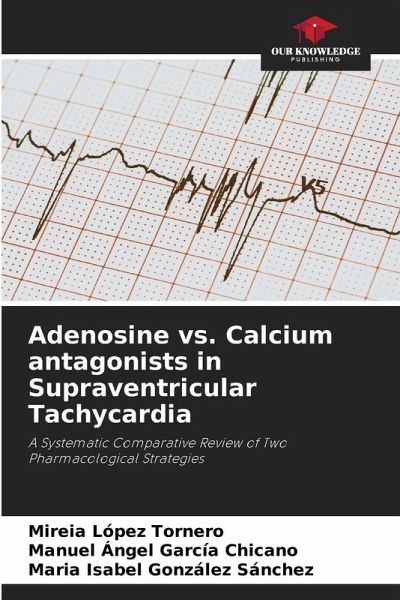
Adenosine and calcium antagonists demonstrate equivalent efficacy in the conversion of stable supraventricular tachycardia (SVT) to sinus rhythm. The choice between them is not based on success rate, but on their different safety and pharmacokinetic profiles. Adenosine is the first-line drug recommended by clinical guidelines due to its ultra-short half-life of less than 10 seconds, which ensures that its common adverse effects (chest pain, dyspnea) are extremely brief and self-limiting. Its action is almost immediate, causing a transient block of the AV node that effectively interrupts the arrhythmia circuit. On the other hand, verapamil has a slower onset of action and a prolonged duration of effect. Its main risk is hypotension, which may be sustained and require additional management. Therefore, it is considered a second-line alternative, ideal for patients in whom adenosine is contraindicated or has proven ineffective. In conclusion, the preference for adenosine is due to its superior safety profile, not to greater efficacy, consolidating it as the most prudent option for most patients.