
Nicht lieferbar
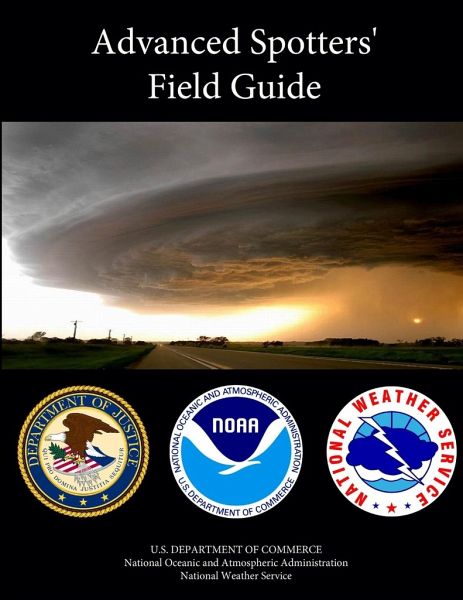
Advanced Spotters' Field Guide - Commerce, U S Department of; Administration, National Oceanic and Atm; Service, National Weather
Schade – dieser Artikel ist leider ausverkauft. Sobald wir wissen, ob und wann der Artikel wieder verfügbar ist, informieren wir Sie an dieser Stelle.
  • Broschiertes Buch

The National Weather Service (NWS) has a number of devices for detecting severe thunderstorms. Included in these are radar, satellite, and lightning detection networks. However, the most important tool for observing thunderstorms is the trained eye of the storm spotter. While radar is used quite often in severe storm warnings, conventional weather radar will only indicate areas and intensities of precipitation. It does not give any indication of cloud formations or wind fields associated with a storm. Doppler radar, which is being introduced across the country, will give some indication of air…mehr

Produktbeschreibung
The National Weather Service (NWS) has a number of devices for detecting severe thunderstorms. Included in these are radar, satellite, and lightning detection networks. However, the most important tool for observing thunderstorms is the trained eye of the storm spotter. While radar is used quite often in severe storm warnings, conventional weather radar will only indicate areas and intensities of precipitation. It does not give any indication of cloud formations or wind fields associated with a storm. Doppler radar, which is being introduced across the country, will give some indication of air motions inside a storm. Doppler radar, though, will not give these indications down to ground level. It is impossible for any radar to detect every severe weather event in its coverage area, and radar occasionally suggests severe weather when, in fact, none is present.